
H E D G E F U N D P R O F E S S I O N A L S
Mortgages structured around performance-linked pay, volatile bonus income, and fund manager compensation
Whether you're an analyst buying your first London flat, a portfolio manager with income that swings year on year, or a partner whose compensation spans base salary, discretionary bonus, profit distributions, and deferred awards — we understand how your pay works and which lenders will assess it most favourably.
W H Y A S P E C I A L I S T B R O K E RWhy Hedge Fund Professionals Need a Specialist Mortgage Broker
You earn well. You'll probably be fine. That's the assumption — and for straightforward cases, it's often right. But hedge fund compensation creates specific problems that most mortgage brokers have never encountered, because the income structures don't fit the models lenders are built to assess.
The core challenge is volatility — not in the sense that your career is unstable, but in the way your compensation moves year on year. A portfolio manager earning £150k base with a £400k bonus one year and a £200k bonus the next hasn't become less creditworthy. The desk had a weaker year, or the fund's performance fee didn't hit the high-water mark. The underlying role, seniority, and earning capacity haven't changed. But a lender looking at two years of income sees a 33% drop in total compensation — and that triggers caution.
Most mainstream lenders deal with this by averaging — they take your bonus over two or three years and use a percentage of the average. But averaging only helps when your income is rising or stable. When your latest bonus is lower than the previous year, almost every mainstream lender will default to the latest figure rather than the average. They're not interested in what you earned last year if this year was weaker — they want to stress-test against the lower number. That means a single weaker bonus year can disproportionately affect your borrowing capacity, even if it's clearly an anomaly driven by fund performance rather than anything about your role or career trajectory. The methodology varies enormously between lenders, and the outcome on the same set of numbers can differ by hundreds of thousands of pounds in borrowing capacity.
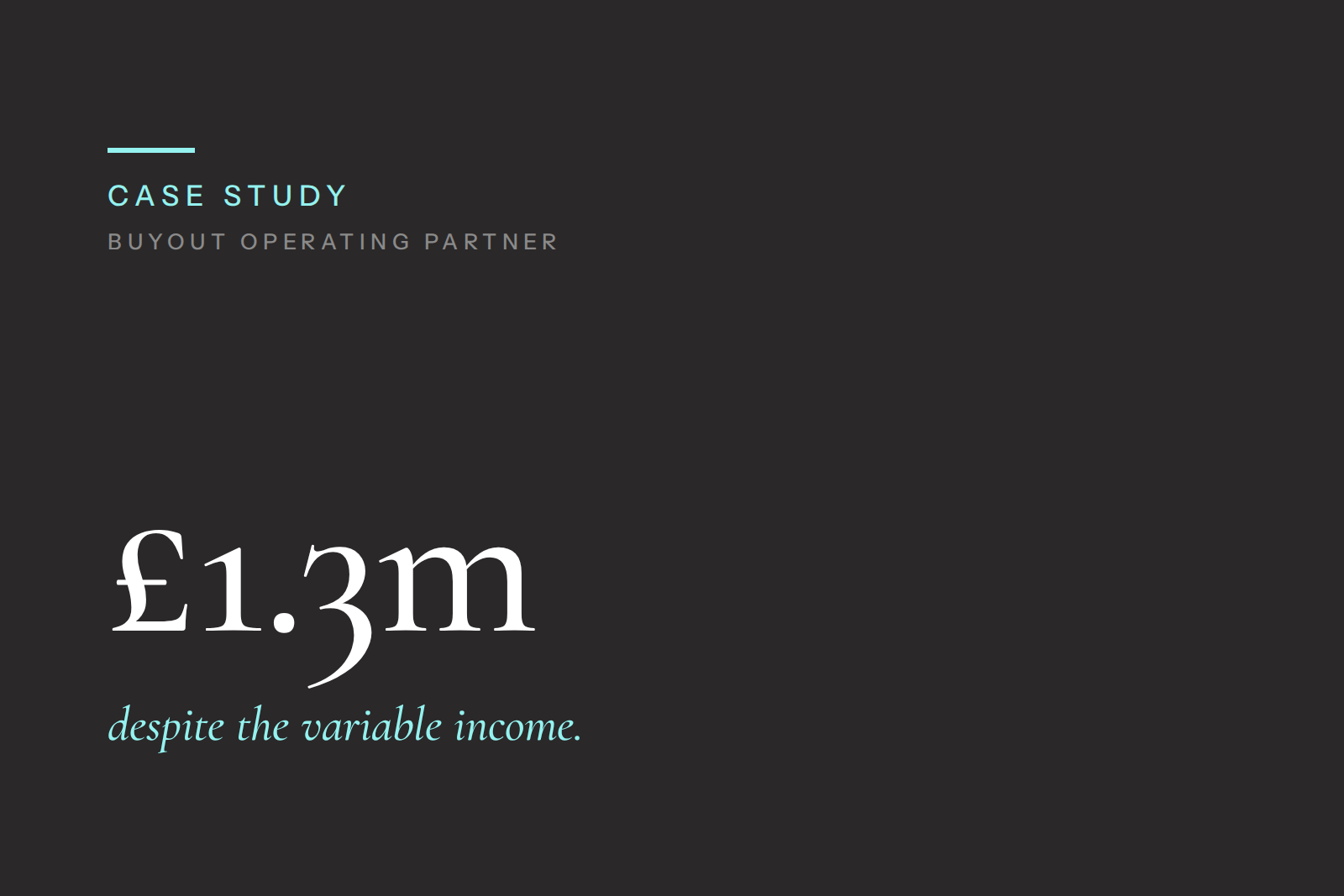
Then there's the composition of income. Hedge fund professionals are often paid through a combination of base salary, discretionary cash bonus, deferred bonus (sometimes in fund units or restricted stock), profit distributions from the fund entity, and — at senior levels — a share of the performance fee or carry. Lenders don't treat all of these equally. Base salary is straightforward. Cash bonus is assessable but subject to averaging and discounting. Deferred awards are harder — most lenders exclude unvested amounts. Performance fee distributions and carry are the most difficult: excluded by almost all mainstream lenders, and treated cautiously even by private banks unless there's a multi-year track record.
We work with hedge fund professionals at every level — from junior analysts at multi-strategy platforms buying their first property, to partners at established funds purchasing £3m+ family homes. We know which lenders handle this income well, which don't, and how to present the case so the right income gets counted. Usually, we can give you a clear answer on what's achievable within the first call.
Y O U R T E A M
David Walsh
Director & Mortgage Broker
Founder of Kite Mortgages. Specialist in complex income structures for City professionals. Advises on mortgage strategy for high earners with partnership income, bonus-heavy pay, equity compensation, and foreign currency earnings.
View profile →
Simon Hart
Mortgage & Protection Adviser
Mortgage adviser at Kite Mortgages. Specialises in high-value purchases and remortgages for City professionals. Works with clients navigating complex income structures including variable pay, carried interest, and multi-currency earnings.
View profile →I N C O M E A S S E S S M E N THow Lenders Assess Hedge Fund Income
Analysts and Junior Portfolio Managers
At the earlier stages of a hedge fund career, the mortgage process is relatively similar to other bonus-led finance roles. You're typically employed on PAYE with a base salary and a discretionary annual bonus. The base is usually modest relative to total compensation — £80k to £150k is typical at analyst level in London — with the bonus making up a significant and sometimes dominant share of the package.
Lenders will take base salary at face value. The variable that matters is bonus treatment. Most mainstream lenders average bonus income over two years and use a percentage of that average — commonly 50 to 75%. Some cap the bonus at the level of base salary, which is particularly punishing for hedge fund professionals, where bonuses routinely exceed base.
The practical challenge at this level is that your borrowing capacity may feel constrained relative to your total earnings. An analyst on £100k base with bonuses of £80k and £120k over the last two years has a two-year average of £100k. If the lender uses 50% of the average and caps at base, assessed income drops to £100k + £50k = £150k. At 5x, that's £750k. The same analyst, placed with a lender that uses 75% of the average with no cap, is assessed at £100k + £75k = £175k — and borrows £875k. Same person, same P60, £125k difference.
If you're a first-time buyer at this stage, the strategy is to select the lender with the most favourable bonus treatment for your specific numbers and structure. We model this across multiple lenders to find the best fit before submitting an application.
Senior Analysts and Portfolio Managers
At portfolio manager level, the income picture shifts. Bonuses are larger — often multiples of base salary — and tied more directly to the performance of the desk, strategy, or pod you manage. This is where the year-on-year volatility that characterises hedge fund income starts to matter most for mortgage purposes.
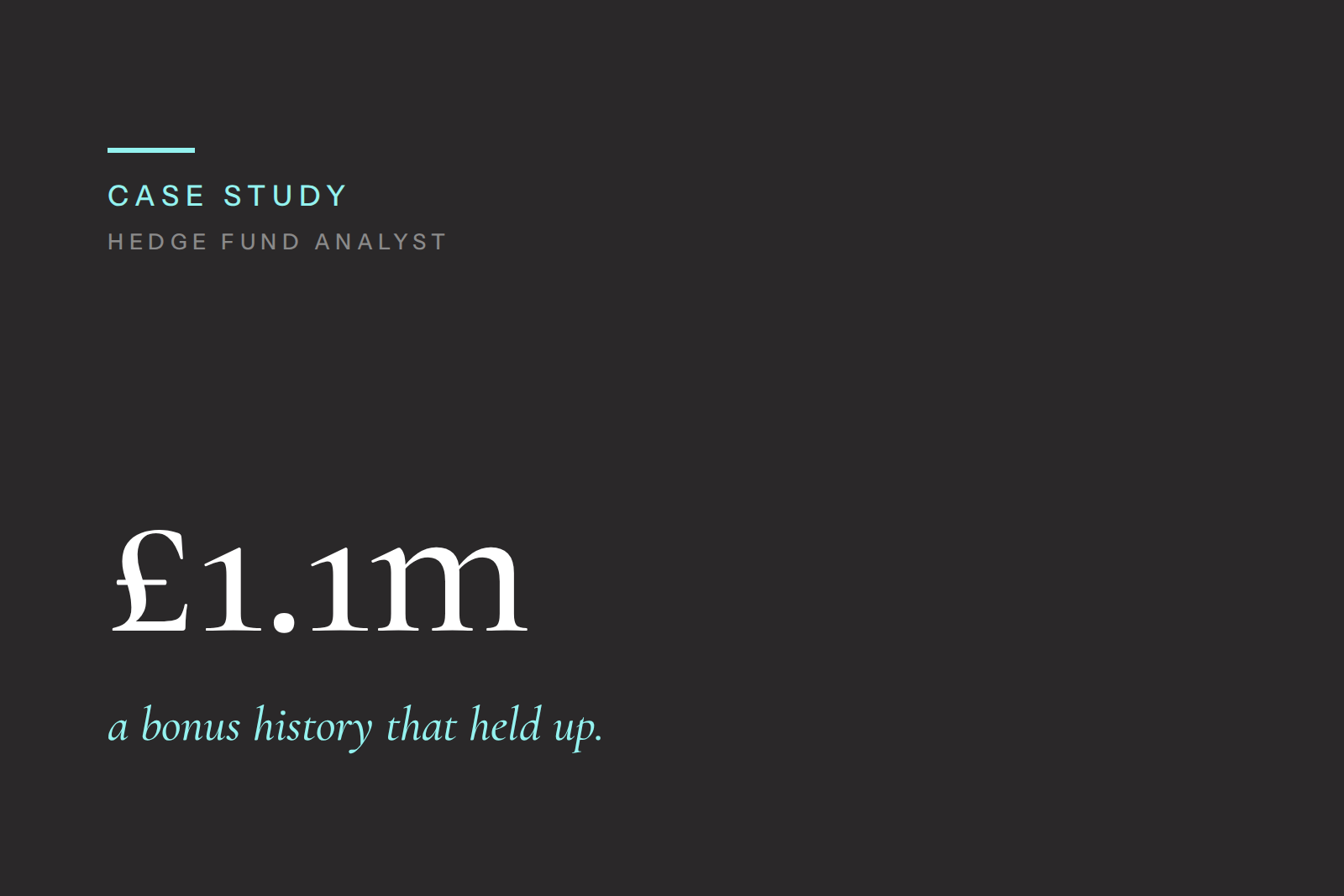
A portfolio manager with a £150k base and bonuses of £300k, £500k, and £250k over three years hasn't had an unstable career. The numbers reflect fund performance, market conditions, and the inherent variability of performance-linked pay. But a lender looking at the latest bonus of £250k — down from £500k — won't average the two. Almost every mainstream lender will default to the latest figure when it's lower than the prior year. They treat the drop as the new baseline, not the anomaly.
The key variables at this level are: whether the lender uses the latest bonus or an average (and critically, averaging only applies when income is rising — when it drops, the latest figure is almost always used), what percentage they apply, and whether they cap bonus relative to base salary. The difference between a lender that uses the latest year at 50% and one that takes 75% with no cap can be enormous — but neither will average upward from a weaker year.
There's a timing element too. If you're applying just after a strong bonus year — and it's higher than the previous year — lenders will average the two, which works in your favour. But if you're applying after a weaker year, they'll use the latest (lower) figure rather than averaging. This makes timing critical for hedge fund professionals. If you know your next bonus is expected to recover, waiting until after it's paid can dramatically improve the outcome. Some lenders will also consider an employer projection letter or a bonus that's been confirmed but not yet paid, which can materially change the calculation.
This is where lender selection and timing of application matter most. We run your numbers across the full range of relevant lenders, model the outcome at different application dates if your bonus cycle is approaching, and advise on the optimal timing.
Fund Partners and Senior Leadership
At partner level, compensation becomes genuinely complex. You may have a base salary from the management company, a discretionary bonus, a share of the fund's performance fee (the "carry" or incentive allocation), distributions from the GP entity, deferred awards paid in fund units, and — in some structures — co-investment returns or profit share from a proprietary capital allocation.
The mortgage challenge is similar to private equity partners, but with an important difference: hedge fund performance fees are typically more volatile than PE carry, because they're tied to annual or rolling performance rather than individual deal exits over a fund lifecycle. A PE partner's carry arrives in lumps tied to portfolio realisations. A hedge fund partner's performance fee can vary dramatically year on year based on the fund's return relative to the high-water mark.
Most mainstream lenders exclude performance fee income and fund distributions from affordability entirely. They'll assess you on salary and bonus only — which, for a partner whose total compensation is £800k+ but whose base and bonus are £300k, means the affordability calculation captures less than half of actual income.
The routes to bridging that gap are:
Deferred Compensation and Fund Units
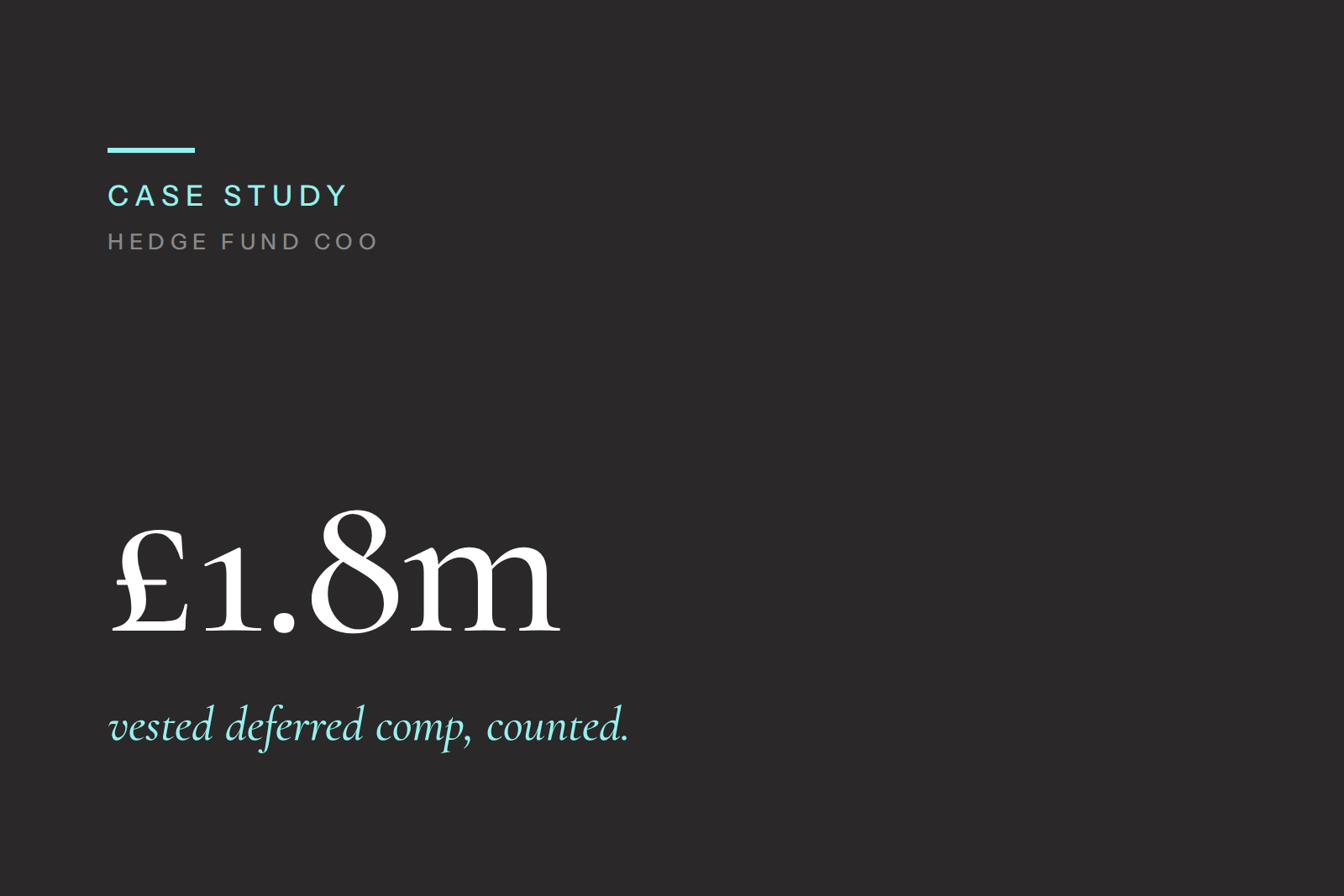
Many hedge funds pay a portion of bonuses on a deferred basis — typically 30 to 50% of the total, vesting over two to four years. Some pay the deferred element in cash; others pay in fund units that convert to cash at vesting, tied to the fund's NAV at that point.
From a mortgage perspective, the distinction matters. Deferred cash that has vested and been received is just income — it appears on your bank statements and P60, and lenders will treat it like any other bonus payment. Unvested deferred cash is harder: most lenders exclude it because it's contingent on continued employment and, in some cases, on fund performance.
Deferred bonus paid in fund units is the most complex. Even when vested, the value fluctuates with the fund's NAV. Lenders are cautious about income that's tied to investment performance. If you've received fund unit distributions consistently over two or more years, we can present this as a track record — but it typically requires a private bank or a mainstream lender willing to exercise underwriter discretion.
The practical advice is: if you're planning a purchase and have significant deferred awards approaching their vesting date, timing the application so the vested amounts hit your bank statements before you apply can materially improve the outcome. We'll advise on whether it's worth waiting or whether current income is sufficient.
Multi-Manager and Pod-Based Structures
If you work within a multi-manager or pod-based fund — Millennium, Citadel, Balyasny, Point72 and similar platforms — your compensation structure has specific features that affect the mortgage process.
Base salaries at multi-manager platforms tend to be competitive but the real upside is in the performance-related component, which is typically a percentage of the P&L your pod or team generates. This means your bonus can swing more dramatically than at a single-manager fund, because it's directly tied to the performance of your specific book rather than the fund as a whole.
Lenders don't understand pod economics. They see a bonus that went from £500k to £150k and interpret it as instability. In reality, one year was exceptional and the other was a drawdown year that's entirely normal within the context of a risk-adjusted trading strategy. Presenting this context to underwriters requires explanation — not just documents.
The other complication is tenure. Multi-manager platforms are known for shorter employment cycles than traditional hedge funds. If you've been at your current platform for under two years, some lenders will question the stability of the income. We know which lenders are comfortable with shorter employment histories in a multi-manager context, and how to present the career trajectory across platforms as continuity rather than instability.
B O R R O W I N G P O W E RHow Much Can a Hedge Fund Professional Borrow?
Most hedge fund professionals with clean credit and manageable outgoings can expect to borrow between 4.5 and 5.5 times their assessed income. Some lenders offer enhanced multiples — up to 6x — for recognised professionals at certain income thresholds and LTV levels.
But the income multiple is only part of the equation. What matters is what the lender counts as "income" in the first place.
Consider two scenarios with the same person — a portfolio manager on £150k base with bonuses of £250k and £350k over the last two years:
M O R T G A G E S T R U C T U R E SStructures for Hedge Fund Professionals
Interest-Only for Hedge Fund Professionals
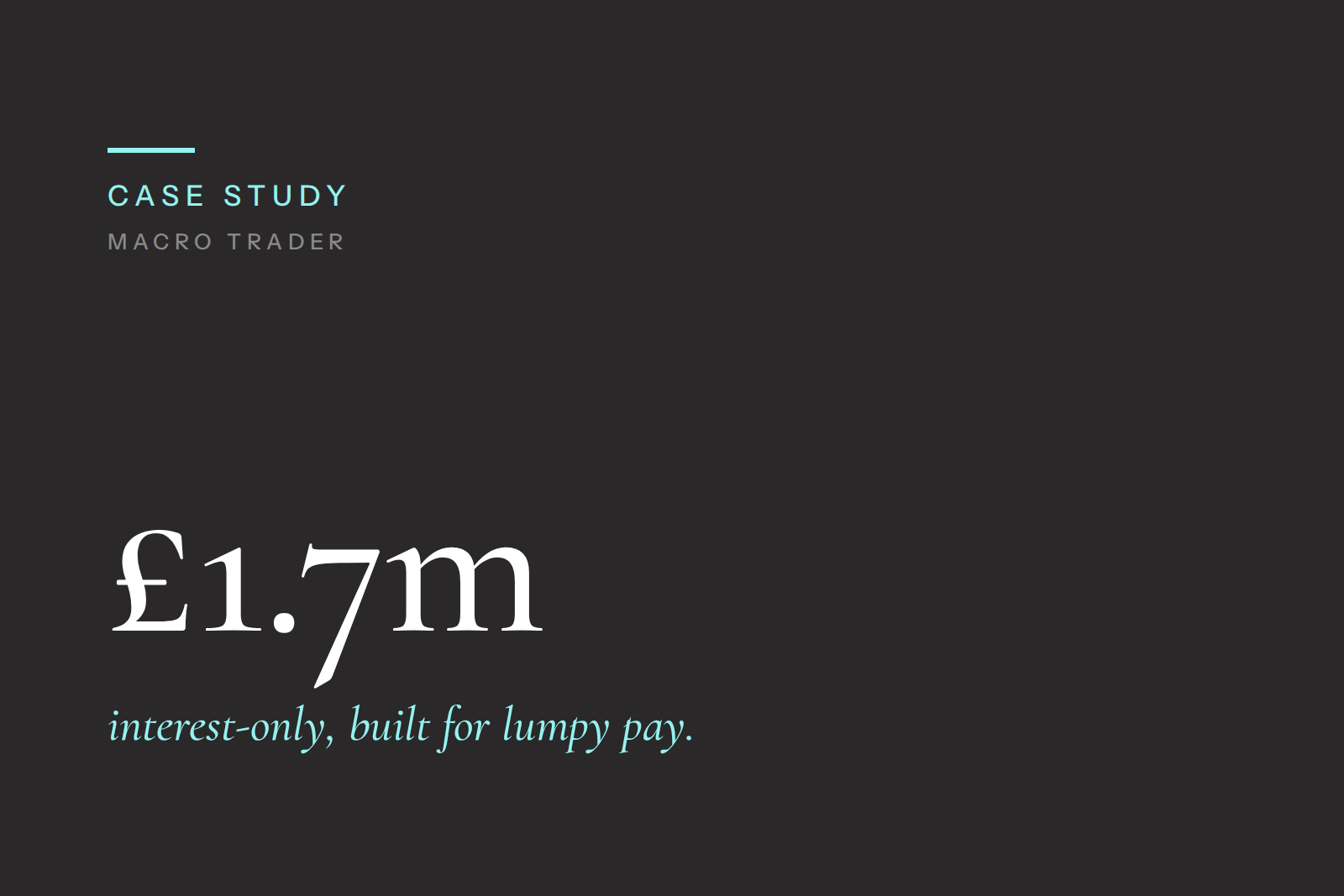
Interest-only is particularly relevant if your income is variable but your long-term earning capacity is strong. If you’re in a period where bonuses are lower — because the fund is below its high-water mark, or you’ve recently moved to a new platform and are rebuilding a track record — interest-only keeps monthly commitments low while you wait for income to normalise.
Most lenders offer interest-only on the first portion of the loan — typically up to 75% LTV — with the remainder on capital repayment. The requirement is a credible repayment strategy. For hedge fund professionals, this typically means demonstrating that future income, investment realisations, or property sale will cover the capital balance.
Part interest-only is the most common structure we use for hedge fund clients — it reduces monthly outgoings materially while maintaining a disciplined repayment path on the non-interest-only portion.
Offset for Volatile Cash Flows
If you hold significant cash — from a strong bonus year, deferred awards that have recently vested, or reserves set aside for tax liabilities — an offset mortgage lets you reduce the interest you pay without locking the cash away.
Your savings sit in a linked account and offset your mortgage balance, so you pay interest only on the net amount. If you have a £1.5m mortgage and £300k in the offset account waiting for a tax bill and next year’s living costs, you only pay interest on £1.2m — but you keep full access to the £300k when you need it.
The rate is typically slightly higher than a standard product, but the net effect is substantial if you’re routinely parking £200k+ alongside the mortgage. This is particularly useful for hedge fund professionals who experience large but irregular cash inflows — a strong bonus year might deliver £300k+ in cash, but you need to retain a significant portion for tax and lifestyle before the next bonus cycle.
I N T E R N A T I O N A L P A YForeign Currency Income
Hedge funds are a global industry, and many London-based professionals receive part or all of their compensation in US dollars, Swiss francs, or euros. Some are employed by a US or Swiss entity with a London office. Others receive bonuses denominated in a foreign currency even while employed on a GBP contract.
Foreign currency income adds a layer of complexity to the mortgage process. Not all lenders accept it, and those that do typically apply a discount — commonly 10 to 25% — to account for exchange rate risk. The discount varies by currency and by lender.
We work with all four major UK lenders that accept foreign currency income and know how to maximise what they'll count. The difference between lenders on a $300k USD salary can be over £150k in borrowing power — before you even consider the bonus treatment.
L E N D E R S E L E C T I O N
Private Bank vs High Street
Our position is consistent: if it works with a mainstream lender, go mainstream. The rates are lower, the fees are lower, and mainstream large-loans teams are now very capable with complex income — including hedge fund compensation.
For many hedge fund professionals — particularly those at analyst, senior analyst, and PM level — salary and bonus income alone, with the right lender, will support the borrowing they need. We see more hedge fund clients complete on mainstream terms than most expect, provided the income is positioned correctly and the right lender is selected.
Private banks come into play when salary and bonus alone genuinely aren't enough — either because the loan is very large relative to assessable income, because you need the lender to consider performance fee distributions or fund returns, or because you want fully flexible interest-only on the entire loan amount. In those cases, the bespoke underwriting justifies the higher cost.
But the premium is real. A private bank charging 0.5% more on a £2m mortgage costs you £10,000 a year in additional interest. Unless the flexibility is necessary, you're better off on the high street.
We'll always show you both options when both are viable. An informed decision based on a real comparison is always better than being pushed toward one route.
C A R E E R T I M I N G
Timing Your Mortgage Around Career Changes
Hedge fund careers move fast, and the income patterns don't follow the predictable trajectory lenders prefer. Here's how common career transitions affect the mortgage process.
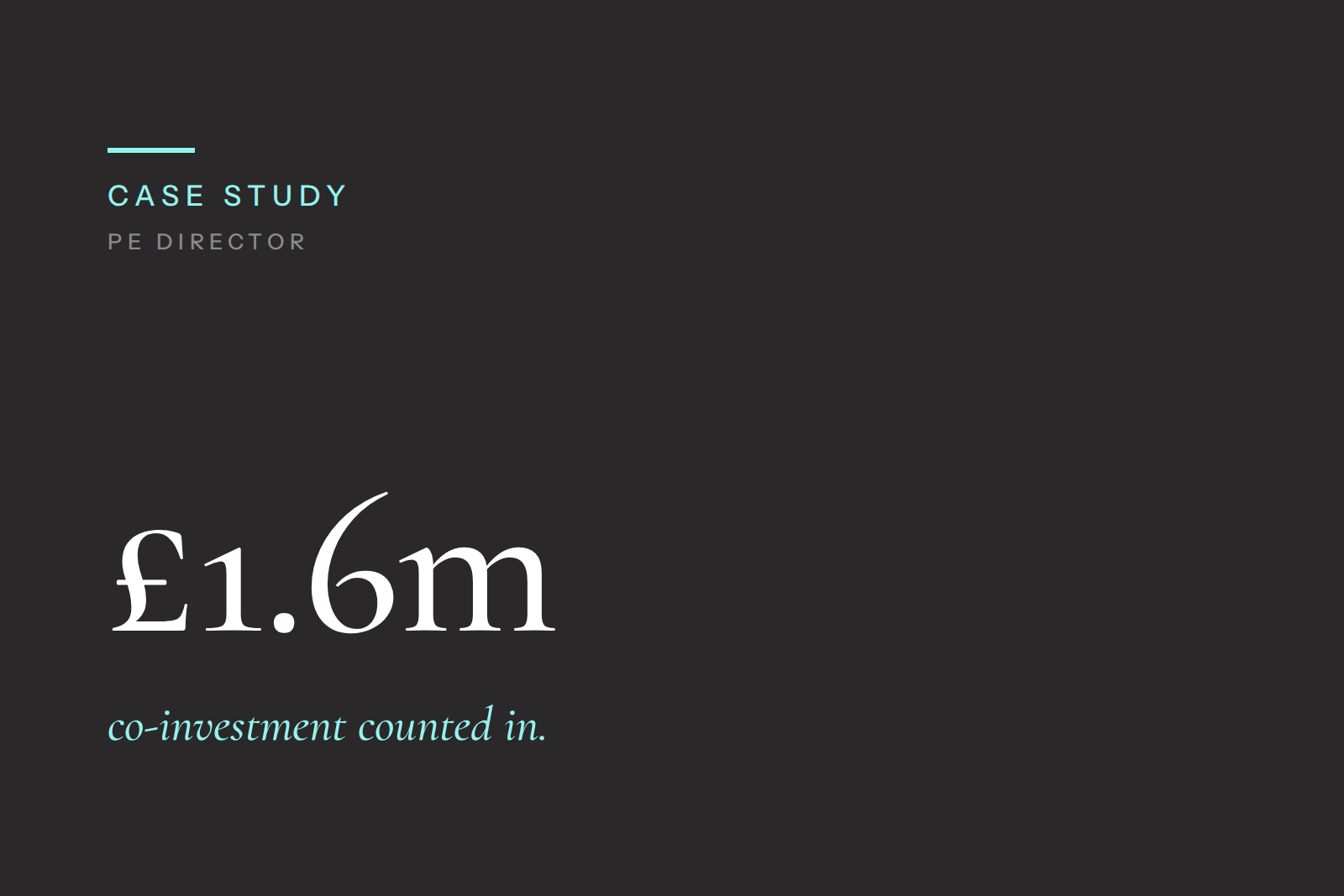
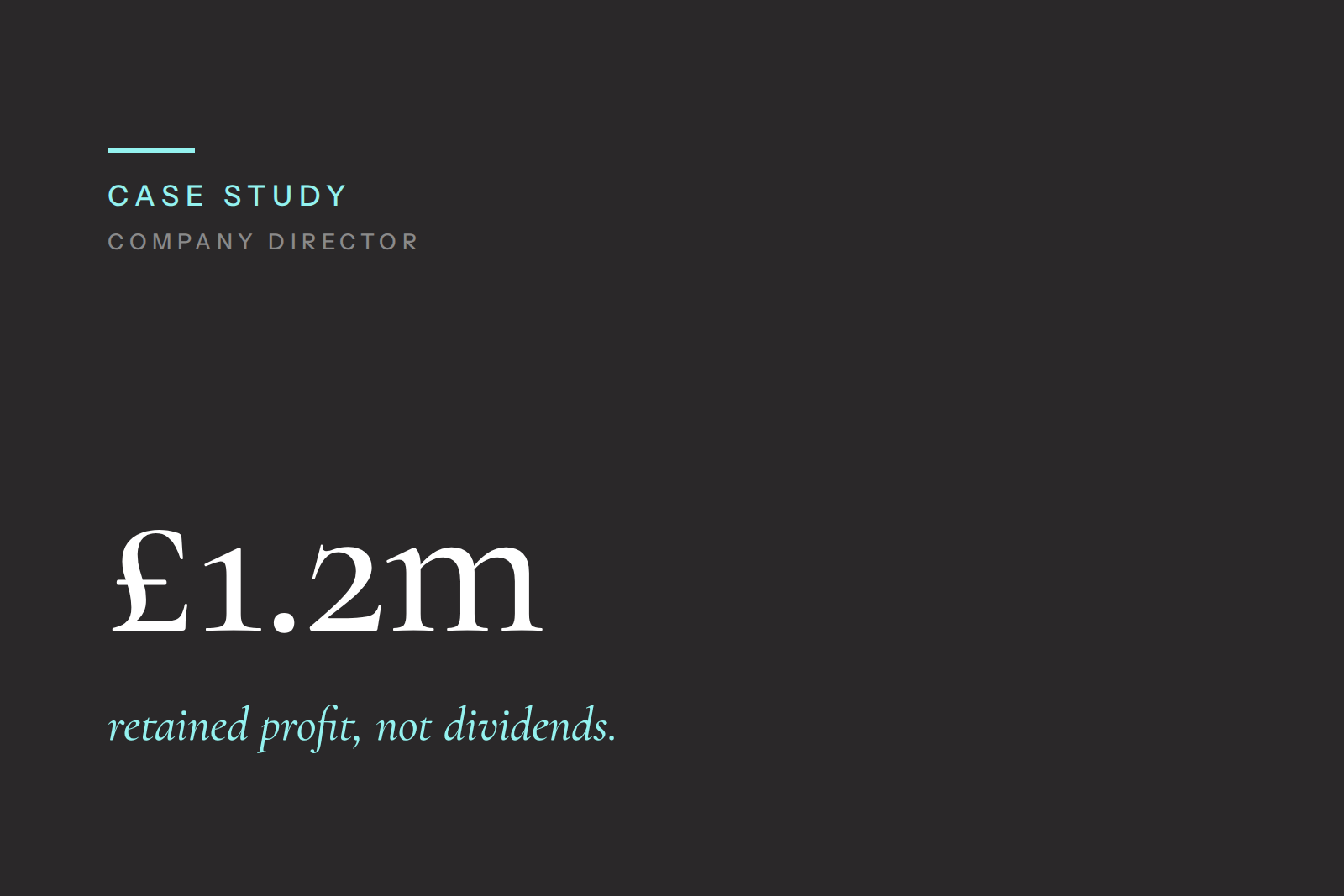
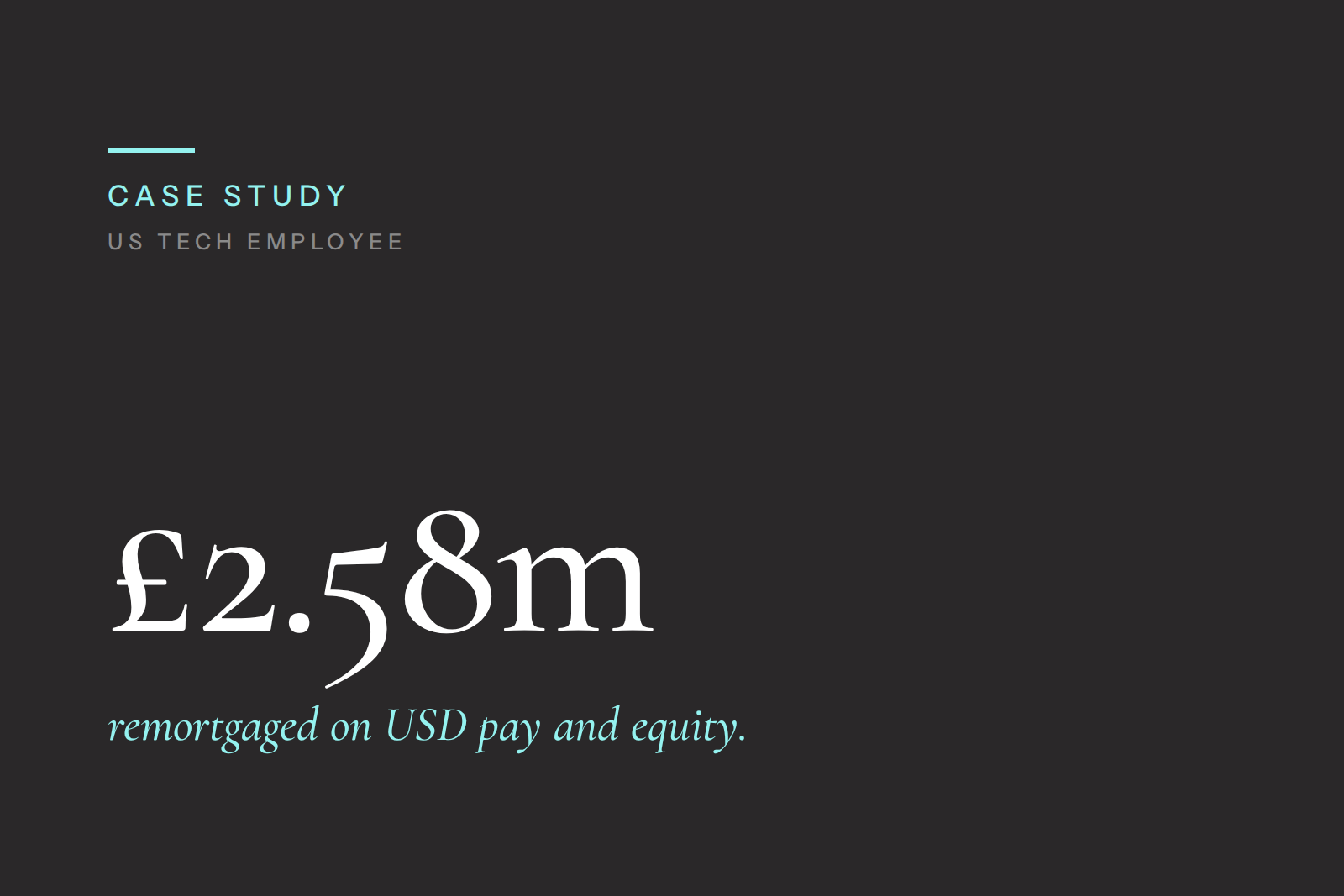
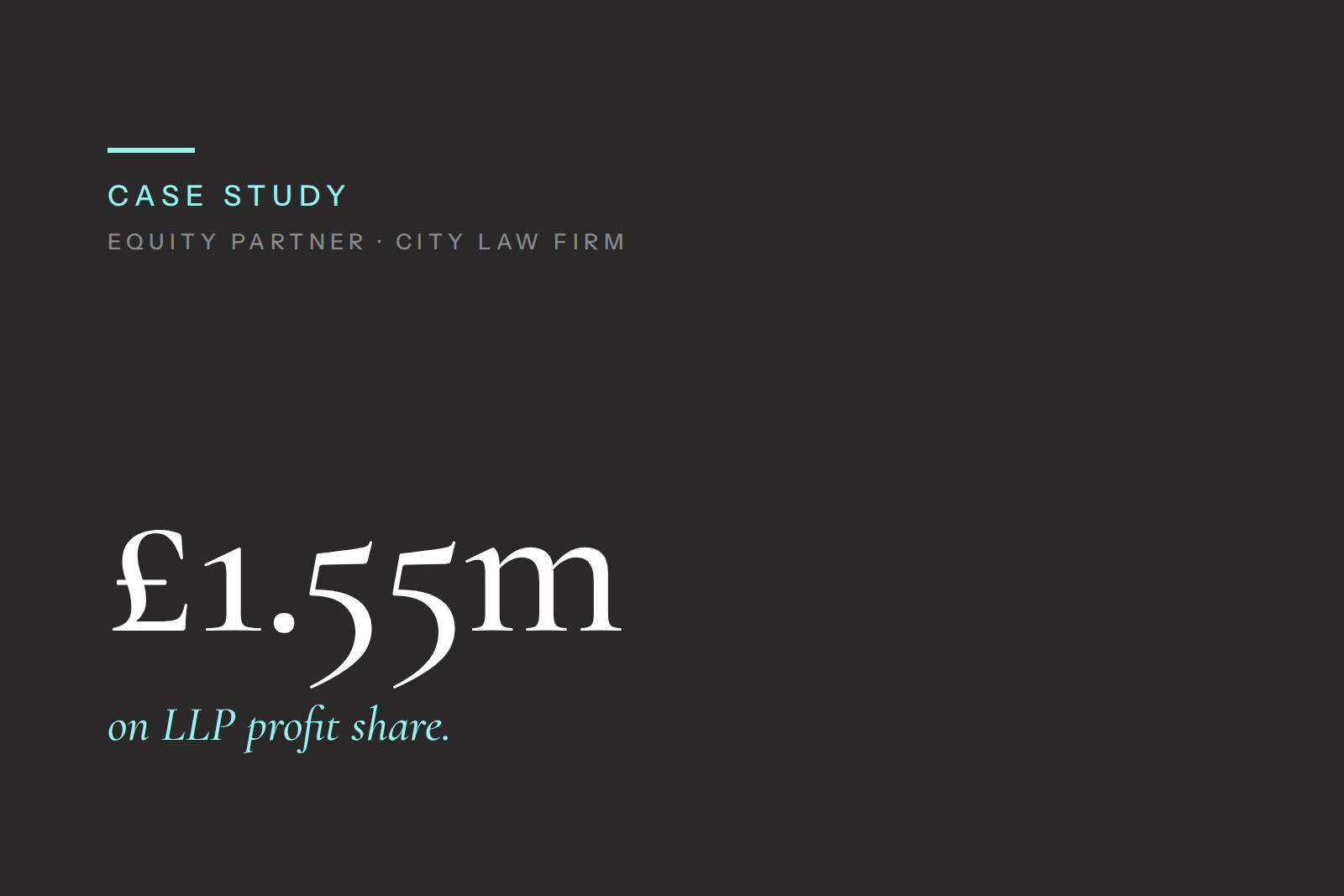
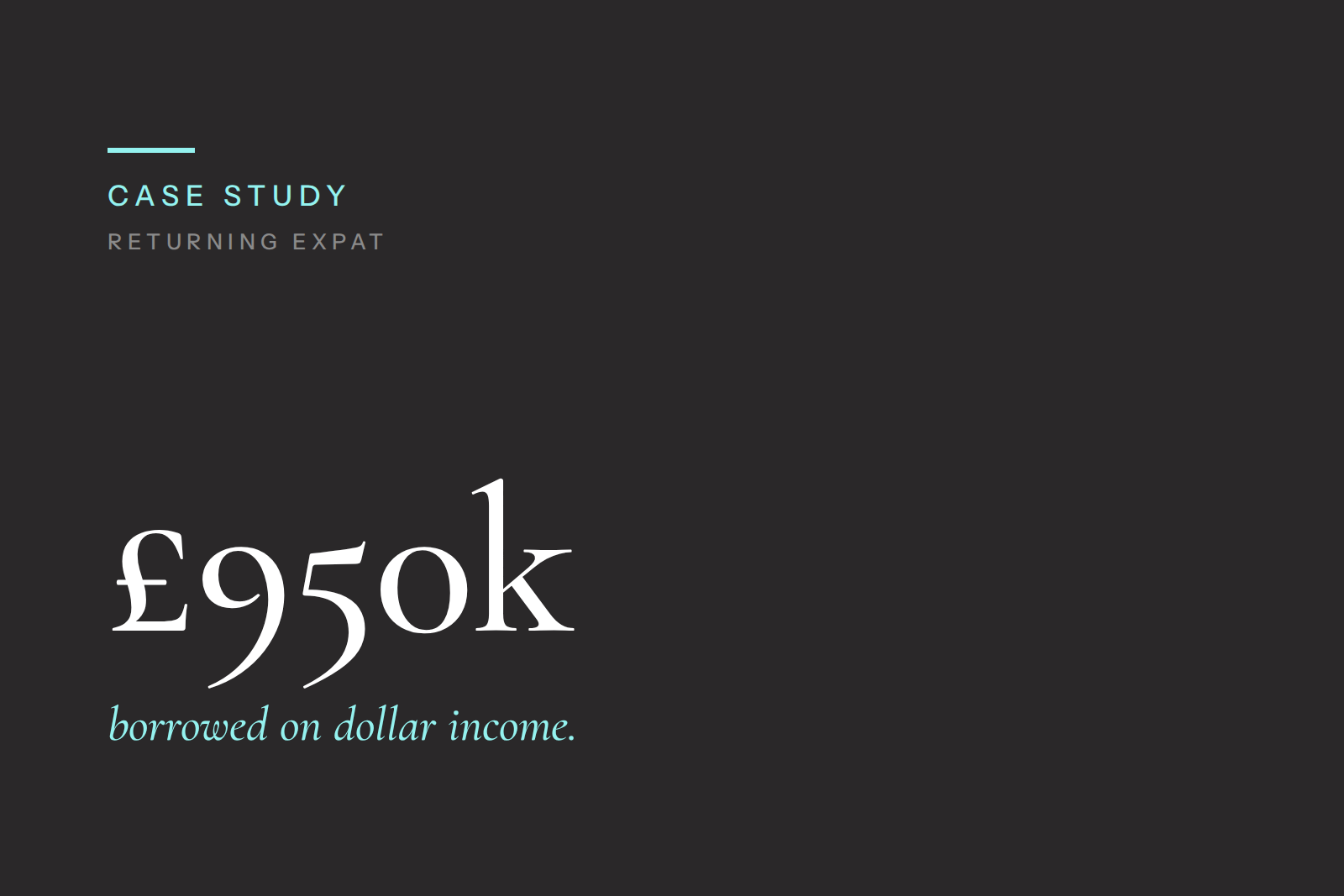
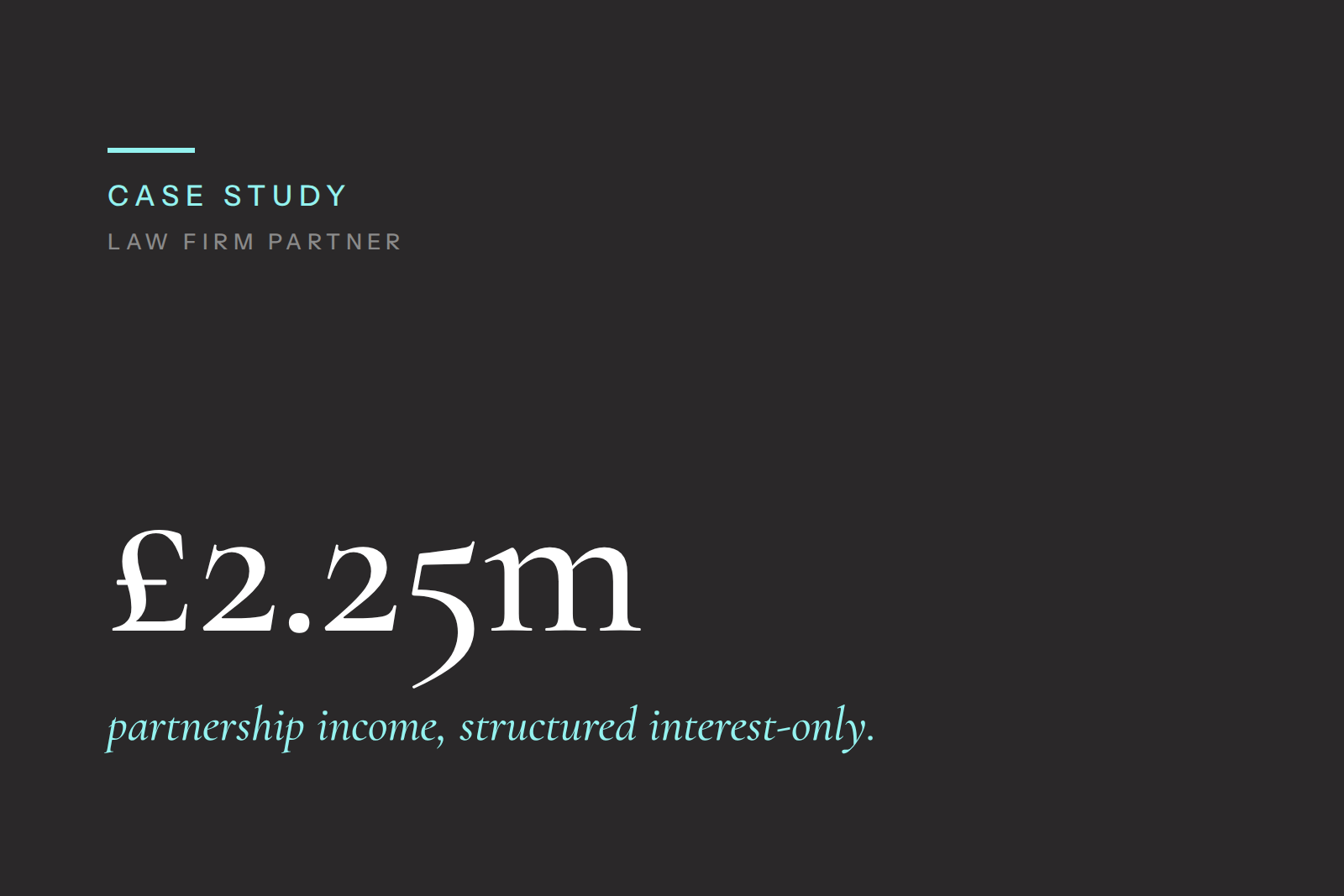
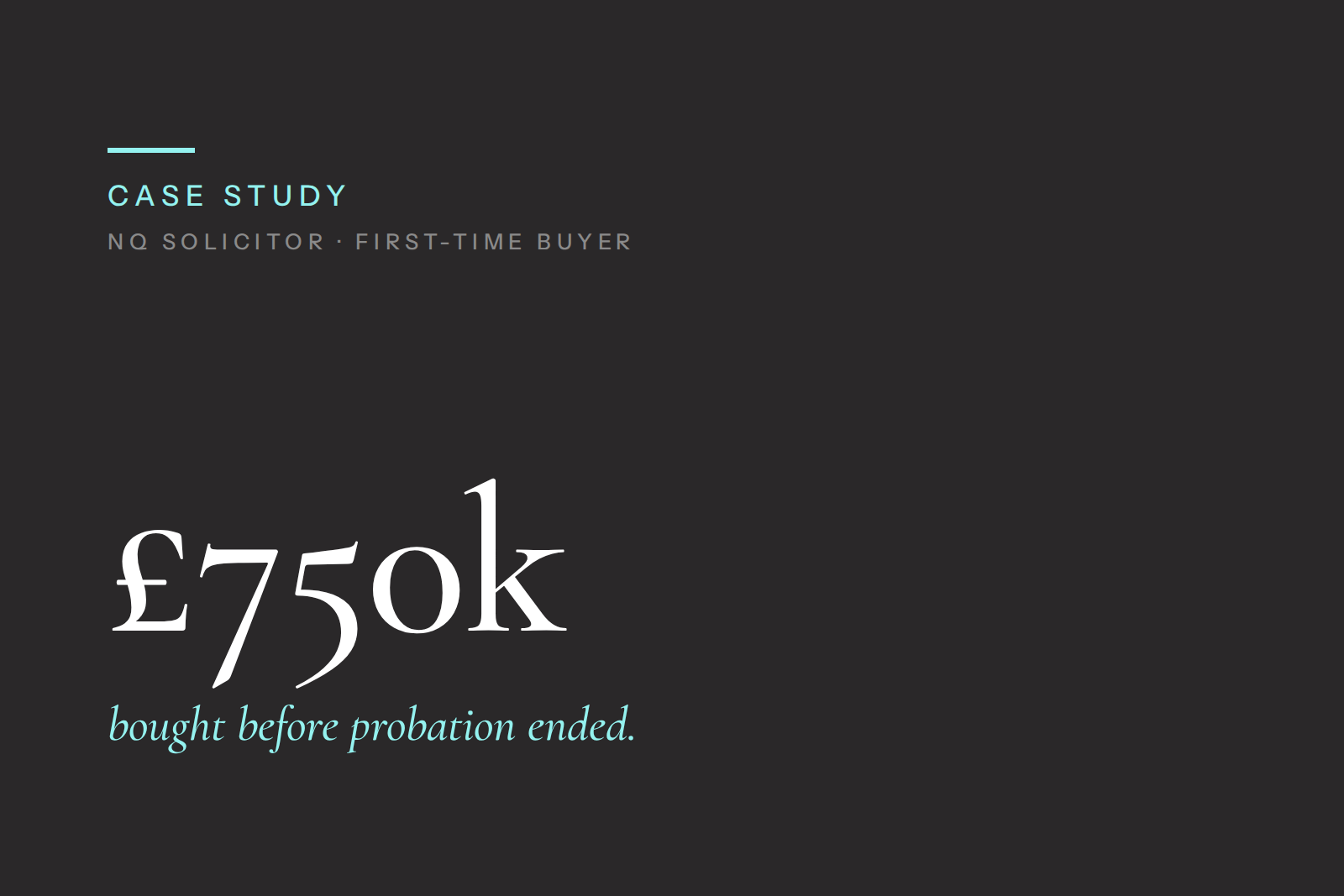
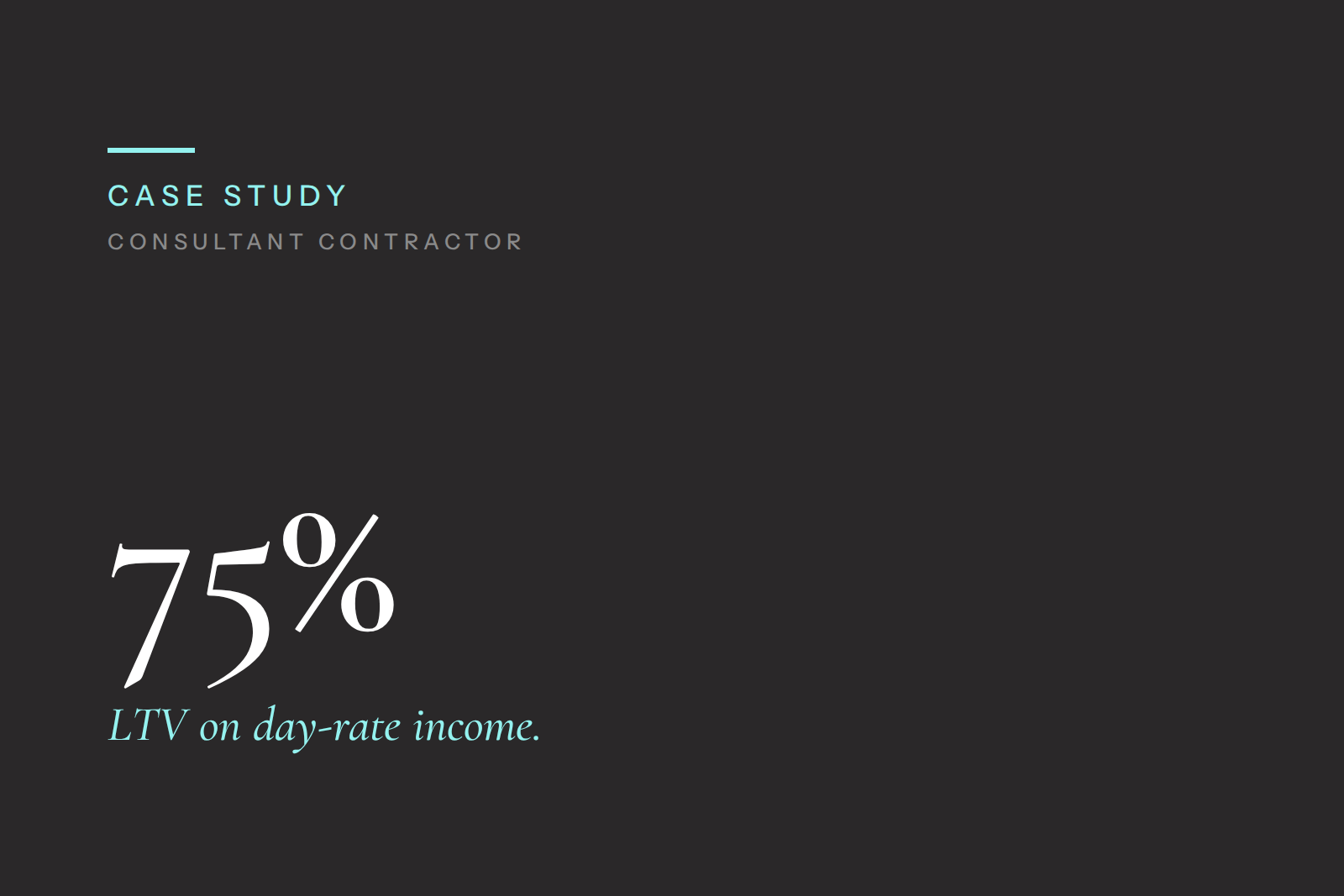
C A S E S T U D I E SHow we've helped hedge fund professionals










R E L A T E D G U I D E S
Explore related guides
Complex Income Structures
How lenders assess multi-source, variable, and non-standard income
Large Loans
Routes for borrowing above £1m via high street and private banks
Interest-Only Mortgages
When paying interest only makes sense for high earners with variable income
Offset Mortgages
Reduce interest costs while keeping access to cash for tax, bonuses, and irregular inflows
Private Bank Mortgages
When bespoke underwriting is worth the premium
Foreign Currency Income
Getting a UK mortgage when you’re paid in USD, EUR, or CHF
A R T I C L E SArticles for hedge fund professionals








F A Q sFrequently Asked Questions
-
Yes — most lenders accept bonus income even when it varies. The method of assessment is what matters. Lenders typically average your bonus over two or three years and then use a percentage of that average. Some cap the bonus at the level of your base salary, which is restrictive when bonuses significantly exceed base. Others apply no cap and use a higher percentage. The difference between lenders on the same income can be hundreds of thousands of pounds in borrowing capacity. We model the outcome across relevant lenders to find the best fit for your specific numbers.
-
Most mainstream lenders exclude performance fee income and fund-level distributions from affordability calculations entirely. They treat it as too unpredictable to include. Where performance fees have been paid consistently over two or more years, some private banks and a small number of mainstream large-loans teams will consider them as part of a holistic assessment — but this requires careful presentation and supporting evidence. We advise on whether your track record is sufficient and which lenders are likely to accept it.
-
Typically between 4.5 and 5.5 times assessed income, with some lenders offering up to 6x for recognised professionals. But the more important question is what the lender counts as income. Two lenders looking at the same P60 can produce borrowing figures that differ by £500k or more, depending on how they treat the bonus — averaging method, percentage applied, and whether they cap bonus relative to base salary.
-
Almost every mainstream lender will use your latest bonus figure when it's lower than the prior year — they don't average upward from a drop. This means a single weaker year can significantly reduce borrowing capacity, even if it's clearly an anomaly driven by fund performance. Timing is the most effective lever: if your next bonus is expected to recover, waiting until after it's paid changes the calculation entirely, because lenders will then average the two years (with the higher figure being the latest). We'll model the difference and advise on whether the timing shift is worth the delay.
-
The compensation structure at multi-manager platforms can create specific challenges. Bonuses tied to pod or desk P&L tend to swing more dramatically than at single-manager funds. Lenders see the volatility without understanding the context. Additionally, some lenders view shorter tenures at multi-manager platforms with caution. We know which lenders are comfortable with this income pattern and how to present it effectively.
-
Yes, but it depends on how long you've been at the new fund. Most lenders want at least one year of income at the current employer, and many prefer two. Some will accept a combination of current and previous employer income if you've stayed in a comparable role. If you've just moved and want to buy, we'll identify lenders that take the most pragmatic view of cross-firm transitions — and advise on whether waiting for the first bonus cycle improves the outcome enough to justify it.
-
Yes. Part interest-only is one of the most common structures we use. It keeps monthly commitments manageable — particularly useful if you're in a period where bonus income is lower than usual or you've recently made a fund move. Full interest-only is available through private banks and some mainstream lenders, subject to a credible repayment strategy.
-
Our default is mainstream if it fits — the rates and fees are lower. We find that more hedge fund clients can complete on mainstream terms than most expect, provided the income is positioned correctly. Private banks come into play when salary and bonus alone aren't enough, when the loan is very large relative to assessable income, or when you need the lender to consider performance fees, fund distributions, or overall net worth. We'll show you both options when both are viable.
-
We'll give you indicative figures the same day as our first call — usually within a few hours. Once we have your documents (typically P60s, recent payslips, bonus award letters, and bank statements), we run a Decision in Principle within 24 hours.
-
Yes. Our fees are fixed and depend only on the complexity of your case, not on the size of the loan. Standard cases, which cover the majority of residential mortgages, are £750. Specialist cases, which involve additional structuring or documentation (for example foreign currency mortgages, equity compensation including Restricted Stock Units (RSUs), and expatriate or overseas mortgages), are £1,250. Whichever applies, the fee is payable in two stages: part on receipt of your mortgage offer and the balance on completion. Each payment is non-refundable once made. We also receive a commission from the lender, which will be shown on your mortgage illustration. We will tell you which fee applies, and when each part is payable, on our first call and confirm it in writing before any work begins. Existing Kite Mortgages clients pay no fee to remortgage their current home. Full details are on our fees page.
C L I E N T R E V I E W S
What our clients say
H O W I T W O R K SFour steps to your mortgage
01
Initial call
A 30–40-minute conversation to understand your situation, income structure, and what you’re looking to do. We’ll give you indicative figures the same day.
02
Documents & DIP
We tell you exactly what we need — typically P60s, payslips, bonus award letters, and bank statements. For fund distributions or performance fee income, we may ask for SA302s and Tax Year Overviews. Once received, we run a Decision in Principle within 24 hours.
03
Application & management
We handle everything from full application through to completion — managing the lender, chasing solicitors, updating your agent, and keeping you informed throughout.
04
Ongoing monitoring
We check rates on all live cases every two weeks. If a better deal becomes available before completion, we’ll flag it. After completion, we’ll contact you before your deal expires to review your options.
We also review your protection needs alongside the mortgage. Many hedge fund professionals have employer-provided life cover and income protection, but these typically lapse if you leave the fund — and the gap can be substantial at senior levels. We’ll highlight where your employer cover falls short and give you the option to put personal protection in place.