
C O M P L E X I N C O M E
Complex income mortgage: how to package multiple income streams into a single mortgage application
You earn well. The issue isn't affordability — it's that your income arrives from several directions at once. Salary, bonus, equity awards, rental income, consultancy fees, dividends. Each one is straightforward on its own. Combined, they create a packaging challenge that most lenders aren't set up to handle efficiently.
Y O U R T E A MYou'll speak with a broker who packages multi-stream income applications every week

David Walsh
Director & Mortgage Broker
Founder of Kite Mortgages. Specialist in complex income structures for City professionals. Advises on mortgage strategy for high earners with partnership income, bonus-heavy pay, equity compensation, and foreign currency earnings.
View profile →
Simon Hart
Mortgage & Protection Adviser
Mortgage adviser at Kite Mortgages. Specialises in high-value purchases and remortgages for City professionals. Works with clients navigating complex income structures including variable pay, carried interest, and multi-currency earnings.
View profile →T H E K E Y D I S TI N C T I O NWhat Makes Income Complex for Mortgage Purposes?
From a lender's perspective, complexity isn't about how much you earn. It's about how predictable your income appears on paper.
A straightforward case is someone employed full-time on a PAYE salary with no other income. Lenders take 100% of that figure. The underwriting is largely automated. The affordability calculation is mechanical.
Anything beyond that introduces complexity. A bonus adds one layer. An RSU vesting schedule adds another. Foreign currency income adds another. Rental income from a buy-to-let portfolio adds another. Self-employed income from a side consultancy or directorship adds another still.
Each additional income stream requires its own documentation, its own lender policy, and its own assessment methodology. The challenge compounds: it's not that any single element is unmanageable. It's that combining them creates a case that doesn't fit neatly into any lender's standard process.
T H E P A C K A G I N G C H A L L E N G E
The Real Challenge Isn't Your Income — It's Packaging It
This is the distinction most people miss, and it's the reason this page exists.
If your only complexity is a large annual bonus, the problem is straightforward: find a lender with favourable bonus treatment. If it's RSUs, find one that accepts equity compensation. If it's foreign currency, find one with a competitive haircut.
But if you have salary plus bonus plus RSUs plus foreign currency plus rental income — possibly across more than one entity — the challenge changes completely. You're no longer looking for a lender that's good at one thing. You're looking for a lender whose policy handles the full combination without rejecting or severely discounting any critical component.
That lender may not be the one with the best rate. It may not be the one with the most generous bonus treatment. It's the one whose underwriting process can accommodate multiple income types simultaneously, assess them under a single affordability framework, and issue an offer within a reasonable timeframe.
More Income Doesn't Always Mean More Borrowing
This is counterintuitive, but it's something we see regularly. Adding a fourth or fifth income stream to an application can sometimes reduce your options rather than increase them.
The reason is practical. Every additional income type requires additional documentation, triggers additional underwriting questions, and introduces additional risk factors for the lender to assess. A case that's clean on salary and bonus alone may become slow, conditional, or declined when you layer in rental income from a portfolio of buy-to-lets, dividends from a family investment company, and consultancy fees from a part-time advisory role.
The broker's job isn't to throw everything at the wall. It's to work out the minimum income combination needed to achieve the borrowing you want, present it in the cleanest possible way, and leave the rest off the application entirely.
Start with salary and fixed drawings. If that's enough, stop there. If not, add bonuses. Still not enough? Add profit share. Then RSUs. Then carry. Work through the income in order of complexity, and stop as soon as affordability is covered. Every additional layer you include raises more questions, requires more documents, and slows the case down.
T H E I N C O M E H I E R A C H Y
How We Structure a Multi-Stream Application
Every income type sits somewhere on a spectrum from simple to complex. The further you go, the fewer lenders will engage — and the more documentation you'll need to provide.
What This Means in Practice
For a senior investment banker earning £200k base with a £300k annual bonus, the application may not need to reference RSUs or rental income at all. Base plus bonus may deliver more than enough borrowing, and adding the other income streams would only complicate the underwriting.
For a private equity VP on £250k base with irregular carry payments, the application needs to work on salary and bonus alone — because carry is excluded by almost every lender. Knowing this in advance shapes the entire strategy: you structure around what's usable rather than what you actually earn.
For a tech leader earning £180k base in USD, with £150k in annual RSU vesting and a UK rental property, the application requires a lender that accepts foreign currency income, treats equity compensation favourably, and can handle rental income within the same affordability assessment. That narrows the field significantly.
S E L F E M P L O Y E D & L L P
Dividends, Investment Income, and Rental Income
These income types are where the variation between lenders is most extreme — and where getting it wrong can cost the most time.
Dividends from a Limited Company
If you're a company director paying yourself a low salary and extracting profits as dividends, lenders split into two camps. Some will assess only salary plus dividends drawn. Others will use salary plus your share of net profits — the logic being that you could withdraw the money even if you haven't. The difference in assessed income can be significant: a director taking £12k salary and £50k dividends from a company earning £200k net profit might be assessed on £62k by one lender and £112k by another.
We typically recommend the salary-plus-net-profit approach where it's available and where the company accounts support it. But the right method depends on the company structure, the number of directors, and how the accounts present the figures.
Investment Income
Income from stocks, shares, and investment portfolios is treated in several ways. Some lenders take the dividend or interest income shown on your tax calculation (SA302) and average it over two years. Others apply a notional return to the portfolio value — commonly 3% to 5% per annum — regardless of what you've actually drawn. A third approach, used by some private banks, divides the total portfolio value by the mortgage term to calculate an annual income equivalent.
If you have £10m in investments and a 25-year mortgage term, that last method treats £400,000 per year as income — potentially transforming the affordability picture. But it's available only through private banks, typically on loans above £1m.
Rental Income
Rental income from buy-to-let properties can support a residential mortgage application, but it introduces its own layer of complexity. Lenders apply stress tests to rental income, assess it after mortgage payments on the BTL properties, and may require a surplus to count it at all. If you own four or more mortgaged rental properties, most lenders classify you as a portfolio landlord, triggering additional underwriting requirements including a full asset-and-liability schedule.
In many cases, if you can achieve the borrowing you need without including rental income, it's cleaner to leave it off. The documentation burden and additional scrutiny can slow a case down without materially improving the outcome.
See our detailed guide on combining salary, bonus, RSUs, and rental income →
D U A L I N C O M E S T R U C T U R E S
Mixed Employed and Self-Employed Income
One of the most common complex income patterns we see is someone with a salaried role and a self-employed income stream running alongside it — a consultancy, a directorship, or a sole trader business.
Lenders handle this in different ways. Some will assess the employed income on its own terms and the self-employed income separately, combining the two for a total affordability figure. Others want both income streams to have the same duration of evidence — typically two years of accounts for the self-employed element, even if the employed income has been stable for much longer.
The critical question is whether you actually need the self-employed income for affordability. If your employed income alone supports the borrowing, including the self-employed element can trigger additional documentation requirements (tax calculations, business accounts, accountant's references) that slow the process without adding value. If you do need both, the broker's job is to find a lender that handles the combination without penalising you for having more than one income type.
Second jobs follow a similar pattern. Most lenders want you to have held the second role for at least six months alongside your primary employment, and they'll want evidence that both are sustainable. Again, only include the second job if the additional income is needed for affordability.
M U L T I - E N T I T Y I N C O M E
Income from Multiple Entities
Some of the most complex cases we handle involve income flowing from several entities simultaneously: a salary from an employer, drawings from an LLP, dividends from a personal investment company, and rental income from properties held in a separate limited company.
The challenge here is not just the number of income streams — it's the number of sets of accounts. Each entity may require its own company accounts, its own tax documentation, and its own explanation of how income flows from the entity to the individual. Lenders need to trace the money from source to applicant, and the more entities involved, the longer that paper trail becomes.
Private banks tend to handle multi-entity income more effectively than high street lenders. They're set up for manual underwriting and can take a holistic view of the applicant's financial position rather than assessing each entity against a rigid policy. For cases involving three or more entities, private bank lending is often the most practical route — not because it offers the best rate, but because it's the only route that can process the case within a reasonable timeframe.
L E N D E R R O U T I N GWhen to Use High Street Lenders and When to Go Private
The decision between high street and private bank lending often comes down to how many income types are involved and how large the loan is.
High street lenders — including their large-loan teams, which typically handle loans above £750k to £1m — can manage most two-income-type cases efficiently. Salary plus bonus, salary plus self-employed income, salary plus rental. Their processes are faster, their rates are more competitive, and for many professionals the outcome is better than what a private bank would offer.
Private banks become the better route when you're dealing with three or more income types, income from multiple entities, unusually large loans, or income types that high street lenders either don't accept or treat very conservatively (carried interest, investment portfolio income, foreign currency from certain jurisdictions). The trade-off is typically higher rates and fees, a longer process, and minimum lending thresholds — usually £1m or above.
We always start with the high street. If the case works there — on rate, terms, and affordability — that's usually the best outcome. Private banks are the fallback for cases where the high street can't accommodate the full income picture, not the default for anyone who earns a lot.
D O C U M E N T R E Q U I R E M E N T SDocuments You'll Typically Need
The documentation for a complex income application depends entirely on which income types are included. Below is the full list — but remember, you'll only need the sections that apply to you. Part of our job is telling you exactly which documents to prepare based on the lender we're targeting.
Employment Income
Latest three months’ payslips
Including any that show bonus, commission, or overtime payments
P60 for the last 1–2 tax years
Confirms total PAYE earnings including variable elements
Employment contract or offer letter
Required if you’ve recently changed roles — confirms salary, start date, and probation terms
Bonus or commission confirmation letter
On employer letterhead — confirming amount, payment date, and whether guaranteed or discretionary
Equity Compensation
Employer equity plan summary and vesting schedule
Shows grant dates, vesting dates, and number of units at each stage
Broker or platform statements
Showing shares sold and proceeds received — vested and cashed is strongest
Bank statements showing GBP credits
Matching vesting dates — underwriters need to trace the money from vest to bank account
Award letters for unvested grants
Some lenders request these for context even if unvested awards aren’t used for affordability
Self-Employed / Director Income
Tax calculations (SA302) and tax year overviews
For the last 2 years — this is the primary evidence for self-employed income
Company or business accounts
Limited company accounts, sole trader accounts, or LLP accounts for the last 2 years
Accountant’s reference or projection letter
Required if income has changed materially — confirms current trading and expected earnings
Rental Income
SA302s and tax year overviews covering rental income
Shows rental profit declared to HMRC over the last 1–2 years
Assured shorthold tenancy agreements
For each rental property — confirms tenant, rent amount, and tenancy term
Mortgage statements for each buy-to-let
Lenders need to see your existing BTL commitments to assess net rental position
Portfolio schedule
Property address, value, rent, mortgage balance, and monthly payment for each property — required for portfolio landlords (4+ mortgaged properties)
Investment / Dividend Income
Portfolio statements from investment manager or platform
Showing current value, income generated, and investment mix
Tax calculations showing dividend or investment income
SA302s for the last 2 years — lenders use the declared figures for averaging
Company accounts (if dividends from a personal company)
Required for salary-plus-net-profit assessments — shows retained earnings and distributable reserves
Letter from fund manager
Confirming portfolio value and income generated — some private banks require this for notional return calculations
All Applications
Photo ID and proof of address
Passport or driving licence plus a recent utility bill or bank statement
Bank statements (3–6 months)
For the account receiving your primary income — lenders check income credits and spending patterns
Proof of deposit and source of funds
Savings statements, gift letters, or sale proceeds — the full audit trail from source to solicitor
Credit report
We’ll run this on your behalf — no need to provide separately
W H O T H I S A P P L I E S T OFind the guide for your specific role
Complex income takes different forms depending on your profession. If you know which income type is creating the primary challenge, start with the relevant pillar page — then come back here for the packaging strategy.
Private Equity Professionals
Carried interest, co-invest, deferred compensation, and partnership structures. PE income is among the most complex to underwrite — and most of it needs to be excluded from standard affordability.
View guide →
Hedge Fund Professionals
Performance-linked pay, volatile year-on-year earnings, and multi-currency bonus structures. Most hedge fund cases require careful selection between high street and private bank routes.
View guide →
Trading & Investment Professionals
Bonus-dominant pay, risk-linked compensation, and prop trading income. Standard income models often fail for traders and structurers.
View guide →
Investment Banking Professionals
Large discretionary bonuses, sign-on payments, and deferred compensation. When bonus exceeds base salary, lender selection determines the outcome.
View guide →
Tech & Product Leaders
RSUs, stock options, ESPP, and USD-denominated income. Equity compensation and foreign currency often overlap for UK employees of US tech firms.
View guide →
Lawyers & Law Firm Partners
LLP drawings, profit share, partnership capital accounts, and the transition from salaried to equity partner. Income structure changes at every career stage.
View guide →
R E L A T E D G U I D E S
Explore related guides
Bonus Income Mortgages
How lenders assess annual and quarterly bonuses — averaging methods, inclusion rates, and which banks count 100% vs 50%
Equity Compensation & RSU Mortgages
RSUs, stock options, ESPP, and deferred equity awards — vested vs unvested, lender policies, and how to evidence equity income
Foreign Currency Income Mortgages
How UK lenders assess non-sterling earnings — currency haircuts, exchange rate treatment, and which banks accept which currencies
Private Bank Mortgages
When bespoke underwriting is worth the premium — AUM requirements, relationship lending, and how private banks handle multi-stream income
Large Mortgage Loans
Routes to borrowing above £1m via high street large-loan teams and private banks — where complex income often intersects with large loan requirements
Interest-Only for High Earners
When interest-only makes sense as part of a broader wealth strategy — and how multi-stream income supports the required repayment vehicle
A R T I C L E SArticles on complex and multi-stream income



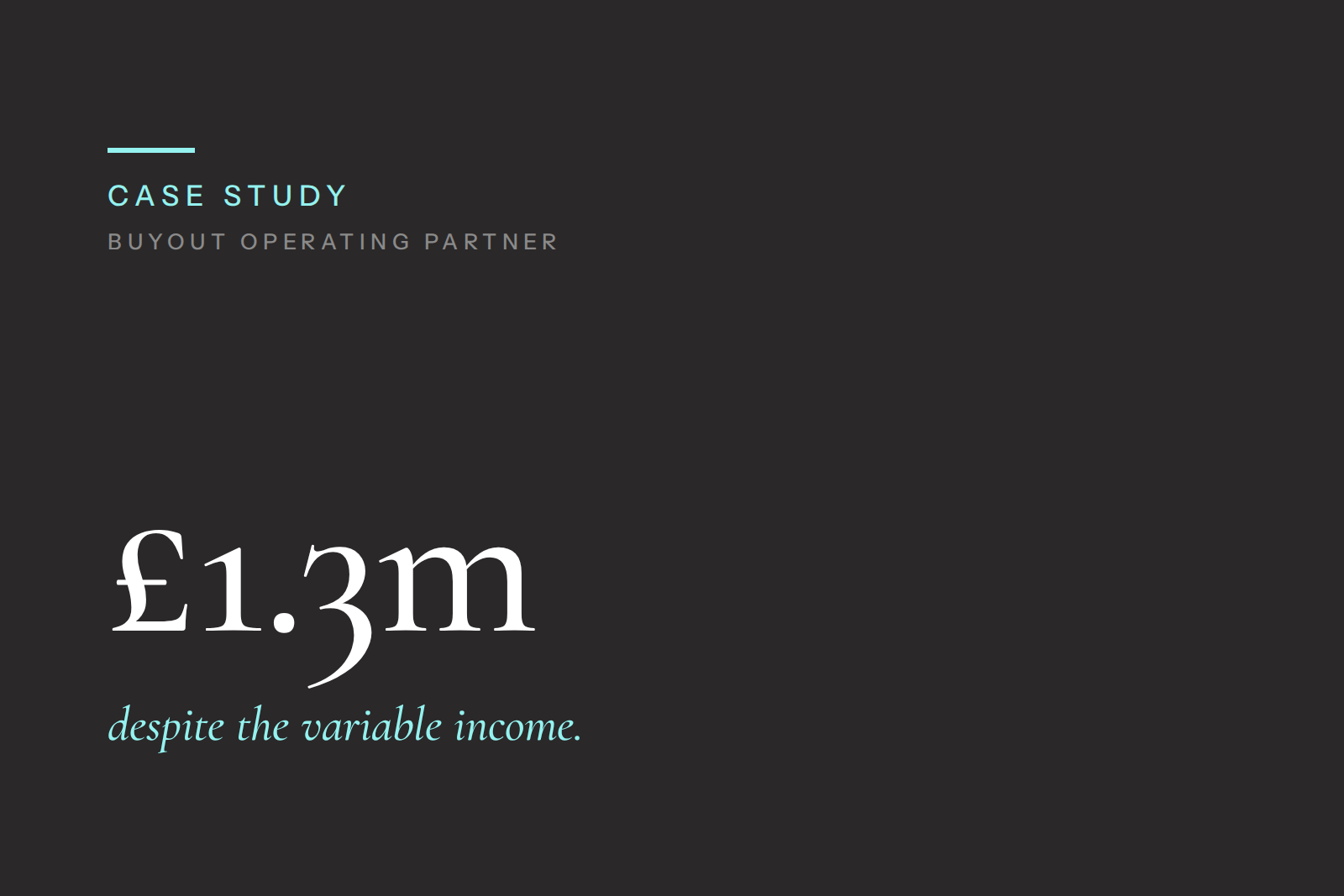
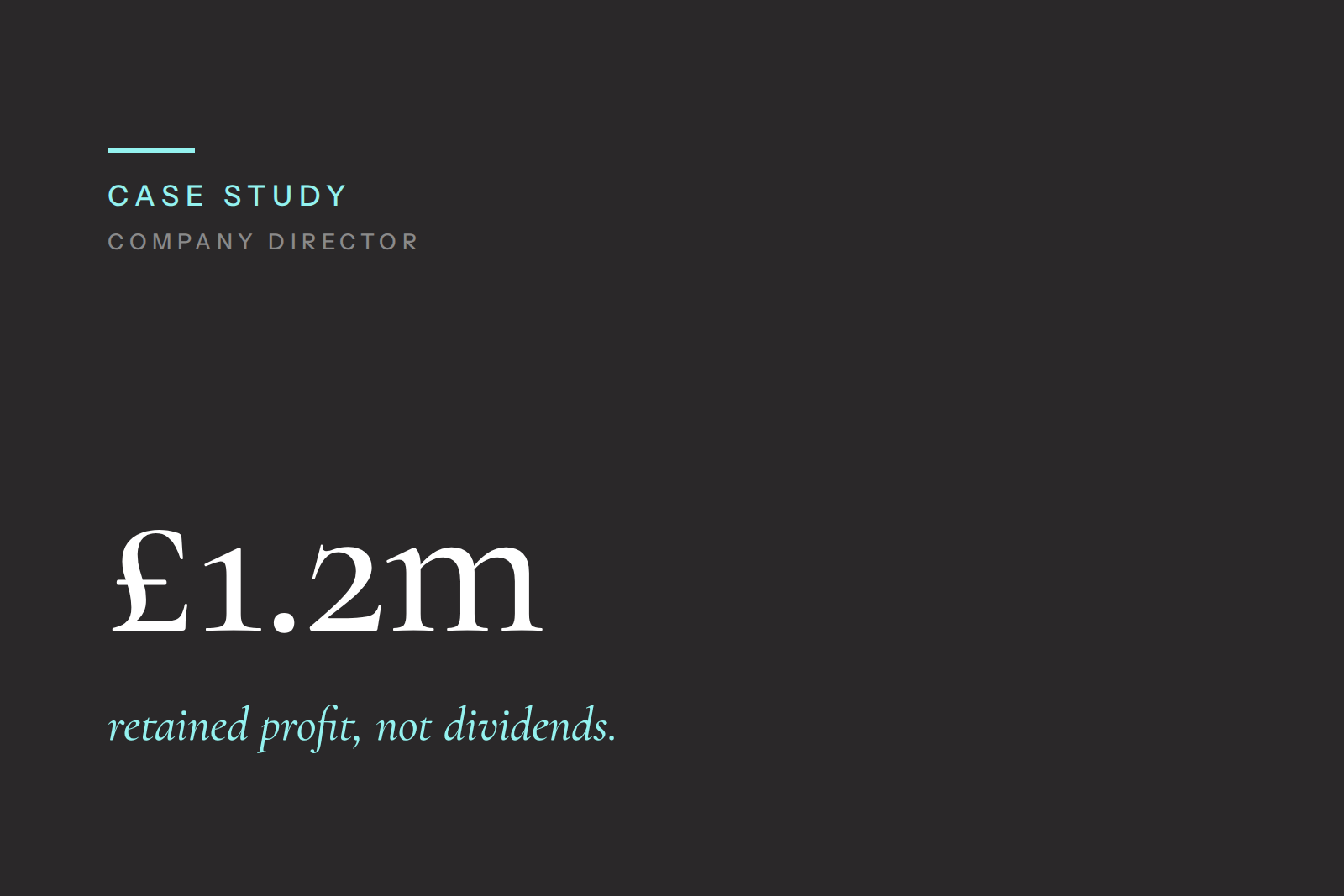
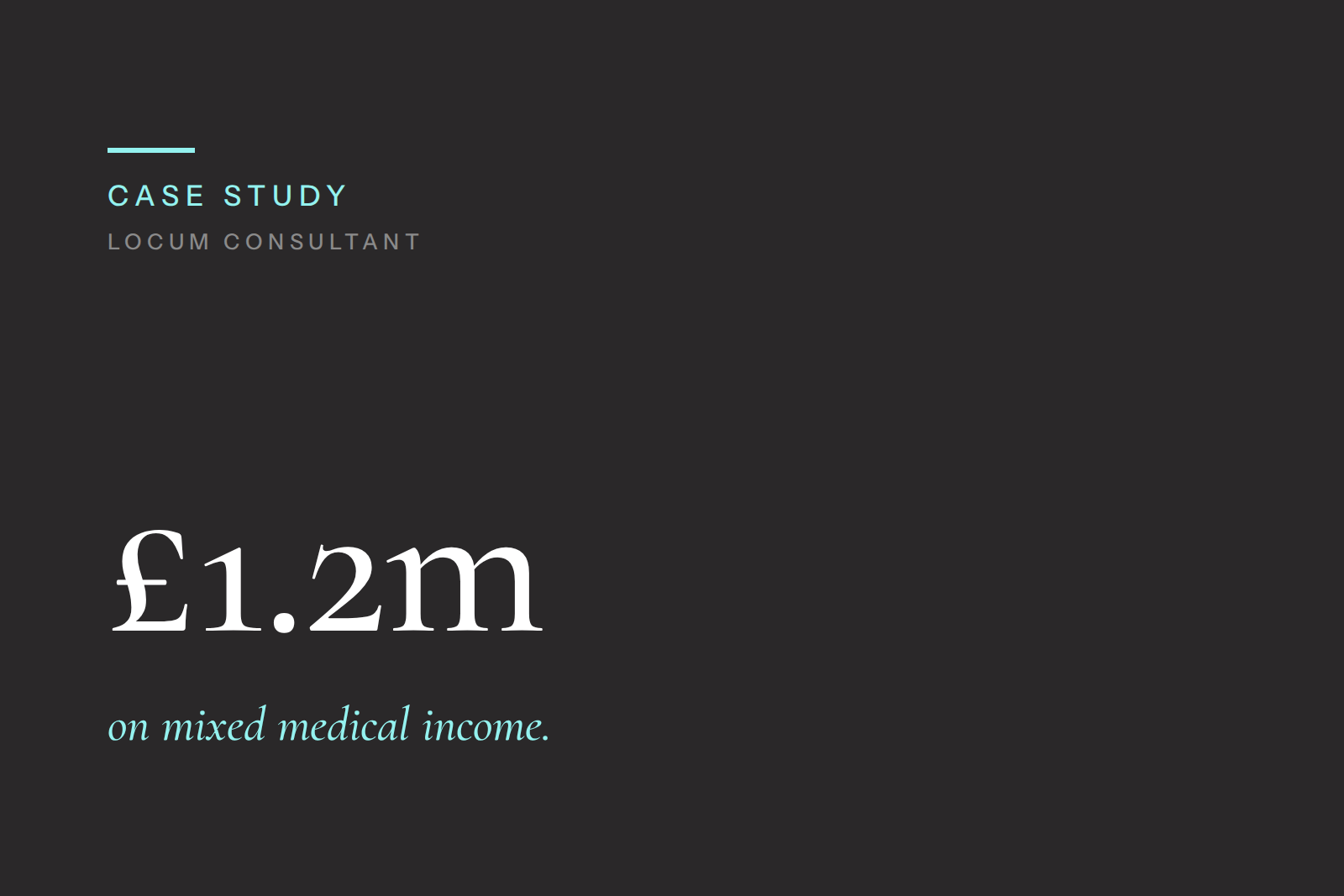
C A S E S T U D I E SHow we've helped clients with complex income



F A Q sFrequently Asked Questions
-
Anything beyond a single PAYE salary on a permanent contract. In practice, this includes annual or quarterly bonuses, commission, RSUs and stock options, partnership drawings and profit share, foreign currency income, self-employed income alongside employment, rental income, dividends from a personal company, and investment income. The complexity isn't usually any single stream — it's combining several of them in a way that a lender can assess within its standard affordability framework.
-
Yes. Most lenders will consider more than one income type, though each stream requires its own evidence and is assessed according to the lender's specific policy. The key is lender selection: the bank that treats your bonus most favourably may not be the one that also accepts your RSU income or your rental portfolio. A broker's job is to find the lender whose policy handles the full combination, not just the individual components.
-
You need to declare all income on the application form — but that doesn't mean every income stream needs to be used for affordability. There's an important distinction. We'll include the income streams that strengthen your application with the target lender and present additional streams as context rather than core affordability. Adding income types that the lender treats unfavourably, or that trigger disproportionate documentation requirements, can slow the case down or reduce your options.
-
It depends on the lender. Some assess only the dividends you've actually drawn (salary plus dividends). Others will use salary plus your share of the company's net profits — which can substantially increase assessed income. The right approach depends on your company structure, the number of shareholders, and how the accounts present the figures. If dividends are your primary income, lender selection is critical.
-
Yes. Lenders can assess both income types, though the self-employed element typically requires two years of tax calculations (SA302s) and business accounts. The employed income is assessed separately on its own terms. Some lenders handle this combination more smoothly than others — and if your employed income alone supports the borrowing, it may be cleaner to apply on that basis and avoid the additional self-employed documentation entirely.
-
In practical terms, a straightforward case has one or two predictable income types, requires standard documentation, and can be processed through a lender's automated or semi-automated underwriting. A complex case has three or more income types, variable or irregular payment patterns, income from multiple entities, or income types that require manual underwriting. The main consequences are a longer process, more documentation, and a narrower choice of suitable lenders.
-
Start with the high street. If your case works there — on rate, terms, and affordability — the outcome is usually better: faster processing, lower fees, and more competitive rates. Private banks become the better option when the high street can't accommodate the full income picture — typically when you're dealing with three or more income types, income from multiple entities, or income types like carried interest or investment portfolio returns that high street lenders either exclude or treat very conservatively. Most private banks require minimum lending of £1m or above.
-
A specialist broker knows which lenders' policies handle which income combinations most effectively — and critically, which income to include and which to leave off. We model affordability across multiple lenders before submitting anything, identify the minimum income package needed to achieve your borrowing target, prepare the documentation in the format the chosen lender expects, and handle underwriter queries so the case moves through smoothly. For genuinely complex income, the difference between a well-packaged application and a poorly presented one can be the difference between an offer and a decline.
W H Y U S E A B R O K E RHow Kite Mortgages Helps With Complex Income
We don't try to use all your income. We work out which combination gets you the borrowing you need with the least friction — then we present it in the way the target lender expects to see it.
We know which high street lenders handle two-income-type cases well, which large-loan teams can accommodate three or more, and which private banks are worth the trade-off when the high street can't manage the full picture. We also know when to leave income off — because sometimes the fastest route to an offer is a simpler application, not a more comprehensive one.
We'll review your full income picture, model affordability across the relevant lenders, tell you exactly which documents to prepare, and package the case so underwriters see clarity rather than complexity.