
L A W Y E R S & L A W F I R M P A R T N E R S
Mortgage broker for solicitors, barristers, and law firm partners
Whether you're a newly qualified solicitor, salaried partner, or equity partner at a City law firm, we understand how your income works — and which lenders treat it most favourably.
W H Y A S P E C I A L I S T B R O K E RWhy Lawyers Need a Specialist Mortgage Broker
You earn well. You'll probably be fine. That's what most solicitors and law firm partners assume — and in most cases, they're right. But the way your income is structured can introduce complications that a generalist broker simply won't anticipate.
If you're an associate on PAYE, the process is usually straightforward. But the moment your income includes partnership drawings, profit share, discretionary bonuses, or foreign currency elements, you move into territory where lender treatment varies dramatically. The difference between the right lender and the wrong one can be hundreds of thousands of pounds in borrowing power.
We work with lawyers at every career stage — from newly qualified solicitors buying their first flat, to equity partners at Magic Circle firms purchasing £2m+ family homes. We understand the income structures, we know the lender landscape, and we do enough of these cases that we can give you a clear answer on what's achievable, usually within the first call.
Y O U R T E A M
David Walsh
Director & Mortgage Broker
Founder of Kite Mortgages. Specialist in complex income structures for City professionals. Advises on mortgage strategy for high earners with partnership income, bonus-heavy pay, equity compensation, and foreign currency earnings.
View profile →
Simon Hart
Mortgage & Protection Adviser
Mortgage adviser at Kite Mortgages. Specialises in high-value purchases and remortgages for City professionals. Works with clients navigating complex income structures including variable pay, carried interest, and multi-currency earnings.
View profile →I N C O M E A S S E S S M E N THow Lenders Assess Lawyer Income
Associates
If you're employed as a solicitor on PAYE, lenders assess your income in the standard way: basic salary counted at 100%, with bonuses typically averaged over the last one to two years. Some lenders cap the bonus element at a percentage of basic salary — meaning if your bonus is a large proportion of total pay, not all of it will count.
The key variables are how much of your bonus the lender will use, and whether they'll accept it if you've only received one. Most mainstream lenders want to see at least two years of bonus history, though some professional ranges will accept one year with supporting evidence. One-off payments such as sign-on bonuses are generally excluded as lenders can't treat them as recurring income.
Salaried & Fixed-Share Partners
This is where many brokers get it wrong. Salaried or fixed-share partners typically have a defined level of drawings plus a bonus — but despite the word "salaried" in the title, most are not on PAYE. They're members of an LLP, classified as self-employed, and receive income either gross or net of tax. Their total compensation shows as "Profit from Partnerships" on their tax calculation (SA302).
That distinction matters because lenders assess self-employed income very differently from PAYE. A generalist broker may assume your payslips tell the full story — but if you're filing a self-assessment return, the lender will want tax calculations, Tax Year Overviews, and often a partnership income breakdown from your firm.
The good news is that because your drawings are typically fixed and predictable, several lenders treat this income favourably — particularly where we can show a consistent pattern of drawings plus a recurring bonus. The key is presenting it correctly from the outset, with the right documents, to the right lender.
Equity Partners
Equity partners carry full exposure to the firm's profits. Income typically comes through a combination of fixed monthly drawings, variable quarterly profit share, and an annual true-up or allocation. Like salaried partners, you're self-employed and your total income appears as "Profit from Partnerships" on your tax calculation — but unlike salaried partners, your year-on-year income can vary significantly.
How lenders calculate the income they'll use varies dramatically — and the difference matters.
The documents required also differ from standard employed cases. You'll typically need tax calculations (SA302s) and Tax Year Overviews for the last two years, partnership accounts or an income summary letter from your firm, three to six months of personal bank statements, and details of capital contributions and tax reserves.
We request all of this upfront — before we submit anything to a lender. One of the most common mistakes we see is brokers submitting incomplete applications, which leads to back-and-forth requests from underwriters and delays that can jeopardise a purchase.
Barristers & Self-Employed Counsel
Barristers and self-employed counsel present a distinct challenge. Income arrives irregularly through brief fees, staged payments, and arrears — minus chambers deductions and clerk's fees. Many lenders struggle to read this pattern, which is why barrister mortgage applications have a higher-than-average decline rate when handled by generalist brokers.
We focus on proving sustainable income using your tax calculations, HMRC tax year overviews, and recent fee statements — presenting the income in a way that gives the underwriter confidence. For barristers with a strong track record but lumpy receipts, we know which lenders will look at the two-year average rather than penalising individual months of low income.
If you're a junior barrister building your practice, the challenge is slightly different: demonstrating an income trajectory that supports the mortgage you need. We've helped barristers at every stage — from tenancy through to senior silk — and know how to position applications for each.
B O R R O W I N G P O W E RHow Much Can a Solicitor or Barrister Borrow?
Most lawyers with clean credit and sensible outgoings can expect to borrow between 4.5 and 6 times their income, depending on the lender, deposit level, and structure. Enhanced professional ranges offered by certain lenders can stretch to the higher end of that range for qualified solicitors, barristers, and LLP partners — subject to affordability and LTV.
However, headline income multiples are only part of the picture. Lenders apply two assessments: the loan-to-income multiple (a cap, usually between 4.5x and 6x) and an affordability calculation that looks at your net monthly income against committed expenditure, dependants, and stress-tested mortgage payments. A lender might offer 6x income as a multiple but after the affordability assessment the actual lending may be lower. A broker who only quotes income multiples without running the affordability calculation isn't giving you the full picture.
For newly made-up partners, there's generally that minimum drawing we can get confirmed by the firm. If you've been a partner longer, lenders look at total profit from partnerships on your tax calculations over two years — including drawings, profit share, and bonuses.
M O R T G A G E S T R U C T U R E SStructures for Lawyers
Interest-Only for Lawyers
Interest-only structures are popular with law firm partners for a practical reason: lawyers generally have a clear career trajectory. If you’re stretching to buy now, you can expect your income to rise as your partnership share grows. Structuring the loan on an interest-only or part interest-only basis keeps monthly payments manageable while you’re building your career — and you can overpay or switch to repayment later.
This also makes sense if you have significant childcare or school fees now that will reduce over time. Rather than taking on high monthly repayments alongside those costs, you can reduce the pressure now and increase repayments when your outgoings drop and your income rises.
Every time you move house it costs money in stamp duty and agent fees. Many of our lawyer clients choose to buy the right property once — using interest-only to make the payments work today — rather than moving up in stages.
Offset for LLP Partners
Offset mortgages are a particularly powerful tool for LLP partners who are paid gross of tax. As a self-employed partner, your first tax bill may not be due for up to 18 months — which means you could be sitting on a significant cash reserve.
An offset mortgage links your savings account to your mortgage. Any funds in the linked account are deducted from your mortgage balance when calculating interest each month. So if you have a £1m mortgage and £200k sitting in the offset account waiting for your tax bill, you only pay interest on £800k — but you still have full access to the £200k when HMRC comes calling.
The rate on an offset product is typically slightly higher than a standard equivalent, but the net effect can be substantial if you’re routinely holding £100k+ in tax reserves throughout the year.
I N T E R N A T I O N A L P A YForeign Currency Income
If your firm is US-headquartered and you're paid in dollars, or if you work for an international law firm with pay in euros or another currency, a standard mortgage application won't work. Only a small number of UK lenders accept foreign currency income, and each applies a different 'haircut' to account for exchange rate risk — typically reducing the income they'll use by 10 to 25%.
We work with all four major high street lenders that accept foreign currency income and know their policies inside out. The difference can be substantial: on a £450k income, one lender might use 75% while another uses 90%. That's a £67k difference in assessed income — which could translate to over £370k in additional borrowing.
For loans above £1m, private banks can also be a strong option for foreign currency earners. They often take a more flexible view of overseas income and can structure bespoke lending that mainstream lenders won't offer — though the rates and fees are typically higher. We'll always show you both routes so you can compare.
L E N D E R S E L E C T I O N
Private Bank vs High Street
Our philosophy is simple: if it fits with a mainstream lender, go mainstream. The rates and fees are lower, and mainstream large-loan teams are now very capable with complex partnership income. Private banks make sense in specific circumstances — very high LTV on large loans, bespoke income assessment that mainstream lenders can't accommodate, or a genuine desire for a relationship banking service.
We've seen too many lawyers pushed toward private banks by brokers who don't know that mainstream large-loan teams can often do the same job at a fraction of the cost. A private bank charging 0.5% more on a £1.5m mortgage costs you £7,500 a year in additional interest. Unless the flexibility genuinely justifies that premium, you're better off on the high street.
C A R E E R T I M I N G
Timing Your Mortgage Around Career Changes
If you're about to make equity partner, the timing of your mortgage application matters. Once you transition from salaried to self-employed — or from associate to partner — most lenders will want to see at least one full tax year in the new structure before they'll lend. If you're planning a purchase, it can be worth applying while you're still on PAYE or in your current salaried partner role, even if your income is lower, to avoid the gap.
Alternatively, if you've already made the transition, we know which lenders will accept new LLP partners with less than two years of self-employed history, particularly at well-known law firms with transparent partnership structures. A letter from your finance director confirming your minimum drawings or projected income can unlock lending that would otherwise be unavailable for another 12 months.
Some lenders, on the more cautious side, will use the lower income you received as an associate last year rather than your new partner drawings. If you're looking to stretch your borrowing, it may be worth waiting until you can demonstrate a year's income in your new role. We'll advise on the best timing based on your specific circumstances.
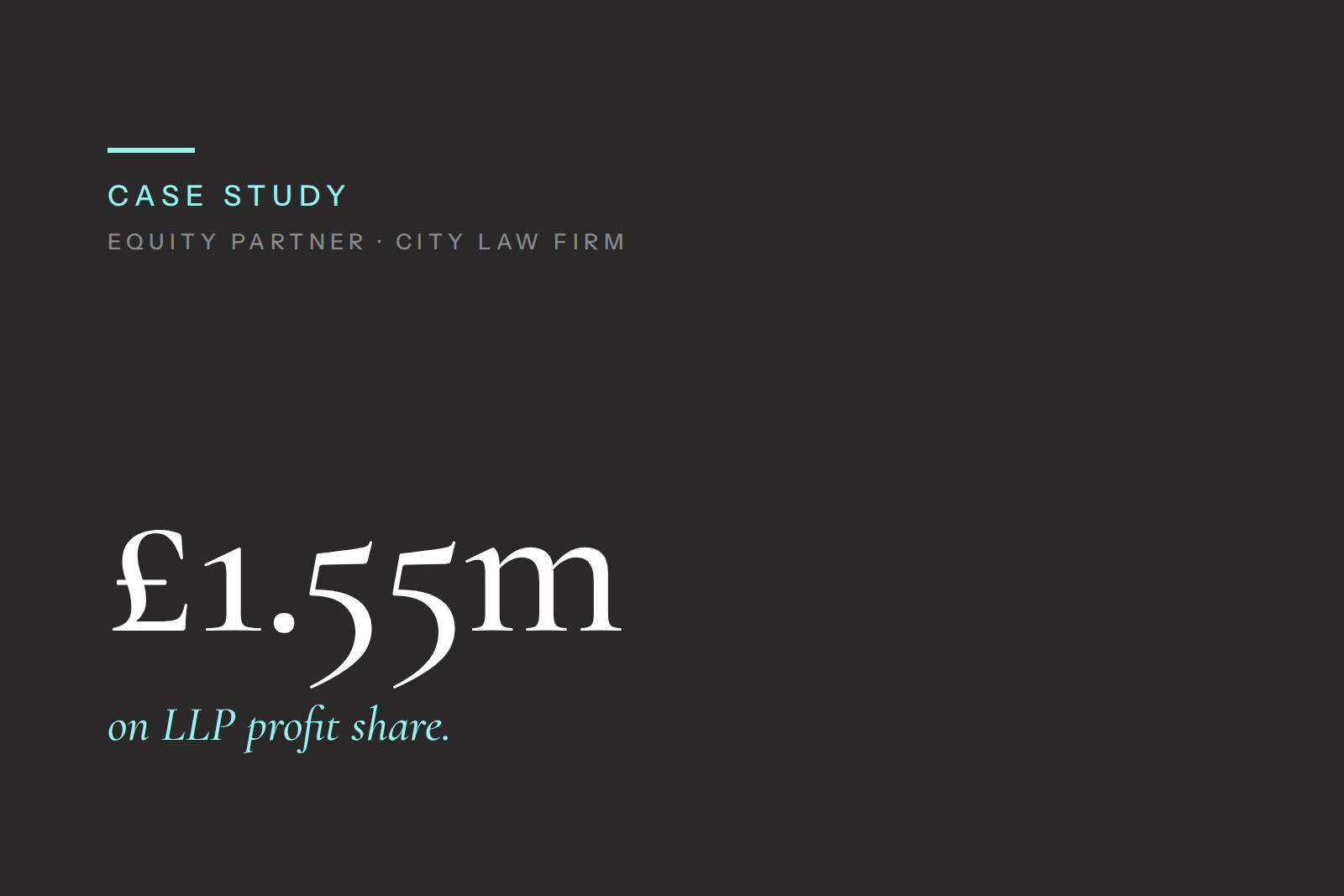
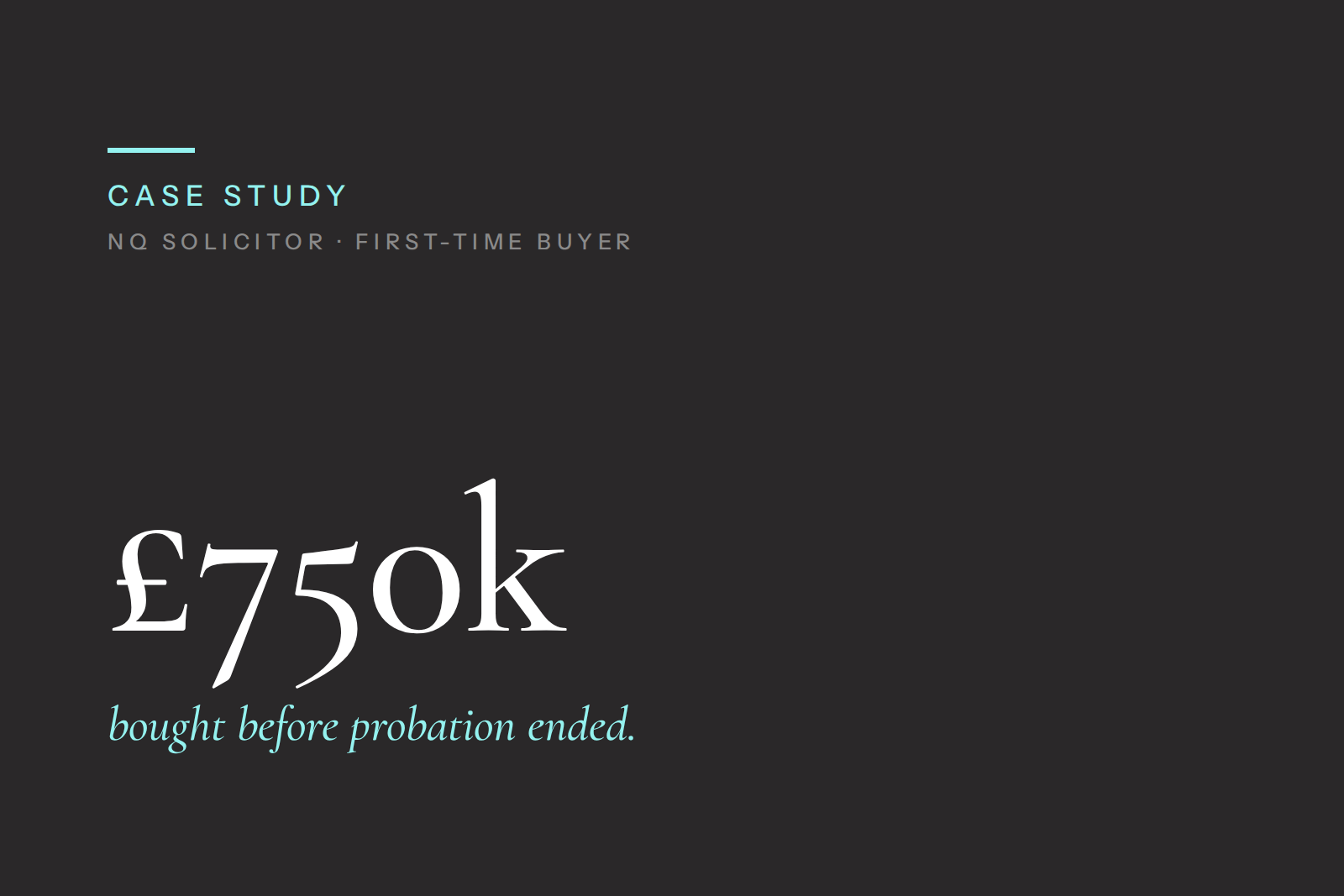
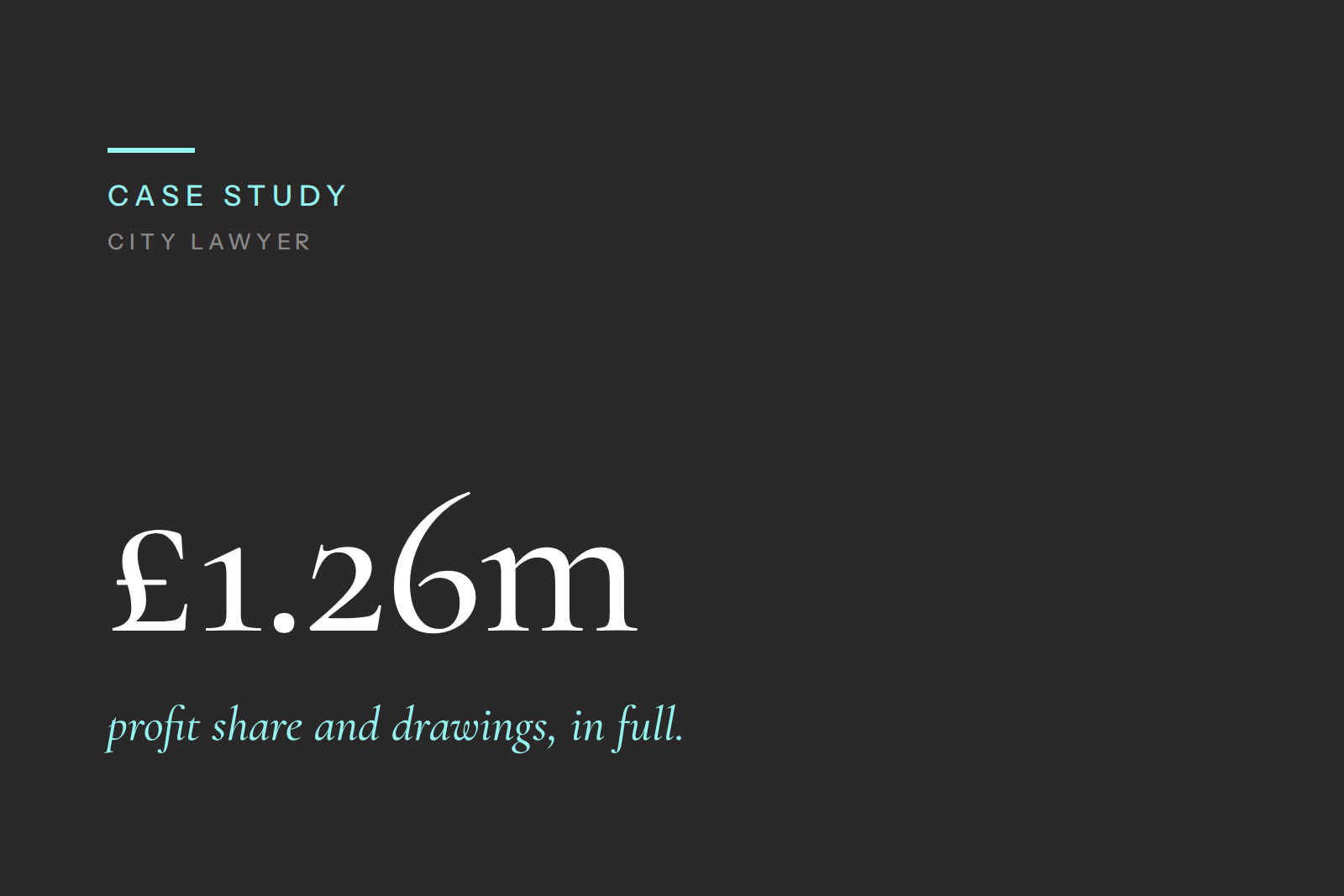
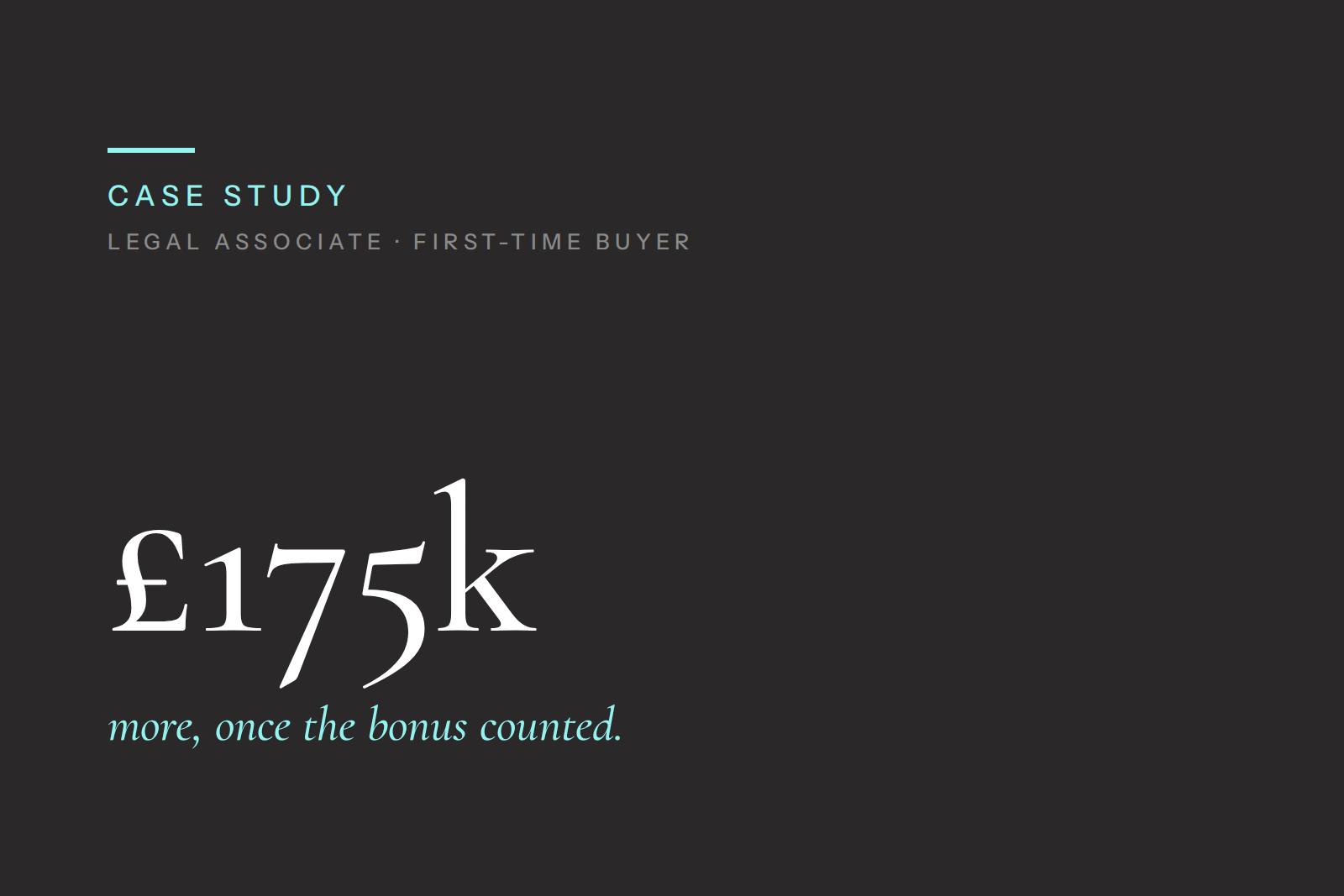
C A S E S T U D I E SHow we've helped solicitors and law firm partners










R E L A T E D G U I D E S
Explore related guides
Mortgages for Barristers
Dedicated guide for self-employed barristers and counsel
Bonus & Variable Pay
How lenders assess discretionary bonuses for solicitors and associates
Foreign Currency Income
For solicitors at US-headquartered law firms paid in USD
Interest-Only Mortgages
When interest-only makes sense for lawyers and law firm partners
Offset Mortgages
Reduce interest while holding tax reserves — ideal for LLP partners paid gross
Protection for Professionals
Why employer cover leaves gaps — especially for self-employed partners
A R T I C L E SArticles for solicitors and law firm partners








F A Q sFrequently Asked Questions
-
Most lenders look at your fixed drawings or a two-year average of total income including profit share. Some will accept projected income if you've recently made equity partner, but this varies significantly between lenders. On your self-employed tax calculation, your income will show as "Profit from Partnerships" — and the way lenders calculate that figure can produce very different borrowing outcomes. We match your income profile to the lender that treats it most favourably.
-
Yes, but treatment varies widely. Some lenders average your last two years of profit share, others use the lower of the two years, and some will only count fixed drawings. The difference in borrowing power between lenders can be hundreds of thousands of pounds on the same income. This is why using a broker who understands these variations is essential.
-
Most salaried and fixed-share partners in LLPs are classified as self-employed for mortgage purposes, even if your drawings are fixed and predictable. Your total compensation will appear as "Profit from Partnerships" on your tax calculation. This means lenders need tax calculations (SA302s) and Tax Year Overviews rather than payslips — and the way they assess your income differs significantly from PAYE associates.
-
In many cases, yes — from day one. If you have a fixed element of pay, such as a minimum drawing confirmed by your firm, several lenders will use that income straight away without waiting for two years of tax returns. Some lenders will also look at your previous salary as an associate to support the application. We know which lenders are flexible on this and can often secure lending for newly promoted partners much sooner than they expect.
-
Not necessarily. Several mainstream lenders will accept newly made-up partners with less than two years of history, particularly at well-known law firms with a large number of partners and transparent partnership structures. The key is matching your situation to the right lender — some have specific professional ranges designed for exactly this scenario.
-
Most lawyers can expect to borrow between 4.5 and 6 times their income, depending on the lender, deposit level, and structure. However, there are two assessments: the income multiple (a cap) and the affordability calculation (based on your actual outgoings). A lender might offer 6x income as a multiple, but the affordability assessment may bring the actual figure lower. We'll run both calculations on your first call so you know exactly where you stand.
-
Our default recommendation is high street if it fits. Rates and fees are lower, and mainstream large-loan teams are now very capable with complex partnership income. Private banks make sense when you need flexibility that mainstream lenders can't offer: very high LTV on large loans, fully bespoke income assessment, or a revolving credit facility. We'll always show you both options so you can make an informed decision.
-
Several UK lenders accept USD income, but each applies a different currency haircut — typically reducing the income they'll use by 10 to 25% to account for exchange rate risk. We work with all four major lenders that accept foreign currency income and know how to maximise what they'll count. The difference between lenders on a £200k USD salary can be over £100k in borrowing power.
-
If you're a partner paid gross of tax, you may have significant cash sitting in reserve for your tax bill — potentially for up to 18 months. An offset mortgage links your savings to your mortgage, so you only pay interest on the balance minus your savings. You keep full access to the cash for when HMRC needs paying. The rate is slightly higher than a standard product, but the net effect is significant if you're routinely holding £100k+ in reserves.
-
Yes. Barristers and self-employed counsel often have income that arrives unpredictably through brief fees and staged payments. We structure applications around your tax calculations and fee statements to present a clear picture of sustainable income to underwriters. For barristers at every stage — from tenancy through to senior silk — we know how to position the application.
-
Within 24 hours of receiving your documents. For solicitors and barristers, that typically means tax calculations (SA302s), Tax Year Overviews, recent bank statements, and a partnership agreement or income confirmation letter. We'll tell you exactly what's needed after our first call — no guessing, no back-and-forth.
-
Yes. Our fees are fixed and depend only on the complexity of your case, not on the size of the loan. Standard cases, which cover the majority of residential mortgages, are £750. Specialist cases, which involve additional structuring or documentation (for example foreign currency mortgages, equity compensation including Restricted Stock Units (RSUs), and expatriate or overseas mortgages), are £1,250. Whichever applies, the fee is payable in two stages: part on receipt of your mortgage offer and the balance on completion. Each payment is non-refundable once made. We also receive a commission from the lender, which will be shown on your mortgage illustration. We will tell you which fee applies, and when each part is payable, on our first call and confirm it in writing before any work begins. Existing Kite Mortgages clients pay no fee to remortgage their current home. Full details are on our fees page.
C L I E N T R E V I E W S
What our clients say
H O W I T W O R K SFour steps to your mortgage
01
Initial call
30–40 minutes. Indicative figures the same day.
02
Documents & DIP
P60s, payslips, bonus letters. DIP within 24 hours.
03
Application
We manage the lender, solicitors, and agents throughout.
04
Monitoring
Rates checked every 2 weeks. We flag when to review.
We also review your protection needs alongside the mortgage. Many investment bankers have employer-provided cover that lapses if you leave the firm. We'll highlight gaps and give you the option to put personal protection in place.