
I N T E R E S T O N L Y & P A R T I N T E R E S T O N L Y
Interest-only mortgages for high earners: when it makes sense and how to structure it
Interest-only isn't just for buy-to-let. Used well, it's a cash-flow tool that aligns your mortgage with how you're actually paid — smoothing lumpy income and preserving liquidity for what matters. Used badly, it's a problem at maturity.
Y O U R T E A MYou'll speak with a broker who structures interest-only and part & part mortgages every week.

David Walsh
Director & Mortgage Broker
Founder of Kite Mortgages. Specialist in complex income structures for City professionals. Advises on mortgage strategy for high earners with partnership income, bonus-heavy pay, equity compensation, and foreign currency earnings.
View profile →
Simon Hart
Mortgage & Protection Adviser
Mortgage adviser at Kite Mortgages. Specialises in high-value purchases and remortgages for City professionals. Works with clients navigating complex income structures including variable pay, carried interest, and multi-currency earnings.
View profile →W H Y I N T E R E S T O N L YWhen Interest-Only Actually Makes Sense
Most of our clients don't choose interest-only because they can't afford repayment. They choose it because it's a better structural fit for how their income works.
If you're a law firm partner whose profit share arrives once a year, paying £8,000 a month on capital repayment while waiting for a £200k distribution in April doesn't make much sense. If you're an investment banker whose bonus dwarfs your base salary, committing to high monthly repayments when the real money lands once a year creates unnecessary cash-flow pressure.
Interest-only — or more commonly, part interest-only — keeps your monthly outgoings manageable and lets you reduce the balance in larger chunks when the cash actually arrives. The logic is straightforward: pay less each month from salary, then apply bonus, profit share, or RSU proceeds to the capital when they vest or pay out.
That said, interest-only isn't a free pass. Lenders require a credible plan for how the capital gets repaid. The underwriting is detailed, the rules are specific, and getting it wrong means either a decline or a structure that doesn't actually serve you.
Three Situations Where IO Works Well
You have lumpy but predictable cash flows. Partner distributions, annual bonuses, RSU vesting schedules, carried interest realisations — if your income arrives in large periodic payments, structuring part of your mortgage on interest-only lets you align capital reductions with when the money actually lands.
You value liquidity during a specific period. School fees, a property refurbishment, building an investment portfolio, or the early years of partnership when income is still ramping up. Interest-only preserves cash for the things that matter now, with a clear plan to accelerate repayment later.
You're at prime or super-prime values and optimising your overall position. At £1.5m+ loan sizes, the monthly difference between interest-only and repayment is substantial. On a £2m mortgage at 4.5%, repayment costs roughly £11,100 per month while interest-only costs roughly £7,500 — that's £3,600 per month freed up. For clients with strong assets and a clear exit strategy, that liquidity often works harder deployed elsewhere.
Why maximum borrowing isn't always the right outcome for high earners →
L E N D E R C R I T E R I A
What Lenders Typically Allow on Interest-Only
Rules vary significantly between lenders, and the detail matters. Here are the common parameters we navigate every week.
Maximum LTV on Interest-Only
No mainstream lender currently allows any element of interest-only above 85% total LTV. That's the hard ceiling — and most are stricter than that.
The IO element itself is typically capped well below the total LTV. A handful of lenders will allow up to 75% of the loan on interest-only with a further 10% on repayment, even when the repayment strategy is sale of the subject property. Others cap the IO element at 60% or 50% LTV, with the remainder on capital repayment. A maximum total LTV of 75% for any IO involvement is still fairly common across mainstream lenders.
This is the basis of a part & part structure — and it's the most common arrangement we use. The IO portion sits within the lender's cap, the remainder goes on repayment, and the total LTV stays within policy.
Minimum Income Thresholds
Many lenders set a minimum income for interest-only borrowing — typically £75,000 sole income or £100,000 joint. Some have no minimum at all if the repayment plan is strong enough. Others set the threshold higher for full IO versus part & part.
For the professionals we work with, income thresholds are rarely the binding constraint. The real challenge is how the lender treats your specific income mix — whether they'll accept bonus, profit share, or equity compensation in the affordability assessment, and whether the interest-only policy interacts with their variable income rules.
Term and Age Limits
Residential interest-only terms typically range from 25 to 40 years, depending on the lender. Most won't allow the interest-only element to run beyond retirement age — which creates a planning consideration for younger borrowers taking long terms and for older borrowers approaching 55 to 60.
There's an important detail here that catches people out: the maximum age at maturity for interest-only is typically 70, whereas on full repayment it's usually 75. That five-year difference can reduce your available term — and a shorter term means higher monthly payments and potentially a lower maximum loan. If you're 45 and applying for a 25-year term, both structures work. If you're 50, a repayment mortgage could run to age 75 but an IO mortgage may need to end at 70 — cutting your term to 20 years and increasing the monthly stress-test figure.
Some lenders will extend IO past retirement if you can demonstrate robust retirement-age income (defined benefit pensions, investment income, rental portfolios). Others have hard cut-offs regardless of income.
R E P A Y M E N T S T R A T E G I E S
Repayment Strategies Lenders Accept
This is where interest-only applications succeed or fail. "I'll figure it out later" doesn't pass underwriting. You need a specific, documented plan — and different lenders accept different vehicles.
One thing worth understanding upfront: the repayment strategy on your application is there to satisfy the lender that the capital can be repaid. It's not a binding commitment to follow that exact route. We often use sale and downsize as the stated strategy because it's straightforward to evidence and widely accepted — but in practice, most of our clients never actually downsize. Their income increases over time, they make capital repayments as and when it suits them, and the balance reduces naturally. By the time the term ends, the mortgage is either paid off or close to it. The strategy gets you approved; what you actually do with your money over the next 25 years is up to you.
Sale of the Mortgaged Property
The most common repayment strategy for residential interest-only. You're committing to sell or downsize at the end of the term, using the equity to clear the balance. Lenders typically require a minimum equity threshold at outset — for example, your property must be worth significantly more than the loan from day one. Some lenders require minimum equity amounts (often £300,000+ in London/South East), not just percentages.
Not all lenders accept sale of the main residence as a repayment plan. Check before assuming.
Investments and Savings
Stocks and shares ISAs, investment portfolios, bonds, and other liquid assets can serve as the repayment vehicle. Lenders generally require the portfolio to be listed, liquid, and sterling-denominated (though some accept international holdings with a discount). Statements must usually be within 12 months, and the portfolio value needs to comfortably cover the interest-only balance.
Sale of Another Property
If you own a second property — a buy-to-let, inherited property, or overseas home — some lenders will accept its planned sale as the repayment strategy. Expect equity tests and proof of ownership.
Bonus, Profit Share, and RSU-Funded Staged Reductions
This is the approach most relevant to our clients — and the one that requires the most careful structuring. Rather than repaying the entire balance at maturity, you commit to making regular capital reductions as income events occur: annual bonus payments, partner profit distributions, RSU vesting tranches.
Critically, most lenders won't accept variable income as the sole repayment plan for interest-only. But they will accept it alongside a part & part structure — where the repayment element steadily reduces the balance, and periodic overpayments from variable income accelerate the reduction.
Proof of bonus income — what lenders want to see →
Pensions
Worth addressing because it comes up frequently: pensions can be used as a repayment vehicle, but lenders typically only credit 25% of the current fund value. The logic reflects the tax-free lump sum — the portion you can access without income tax — rather than the full pot. On a £400,000 pension, a lender will treat £100,000 as available for repayment.
This means pensions rarely work as the sole repayment plan for a large interest-only balance. They're more useful as a supporting element alongside other strategies — for example, sale of property as the primary vehicle with pension as additional evidence of retirement-age capacity.
P A R T & P A R T
Part & Part — The Structure Most Clients Actually Use
Full interest-only gets the attention, but part & part is the structure we use most often. It's practical, it's widely available, and it gives you the cash-flow benefits of IO without the concentration risk of relying on a single repayment event at maturity.
A part & part mortgage splits your borrowing into two tranches: one on interest-only, one on capital repayment. The repayment tranche steadily reduces the balance over the term. The interest-only tranche preserves your monthly cash flow and gives you the flexibility to make lump-sum reductions when variable income arrives.
The monthly saving is meaningful — and for clients whose income arrives in irregular patterns, it's often the difference between a structure that works and one that creates unnecessary pressure.
A F F O R D A B I L I T Y
How Interest-Only Affects Affordability
A common misconception: interest-only means lower monthly payments, therefore I can borrow more. In practice, it doesn't always work that way.
Most lenders stress-test affordability on a capital-and-interest basis — even if you're applying for interest-only. The stress test asks whether you could afford repayments if rates rose to the lender's stressed rate (typically 6.5% to 8.5%). This stress test is applied to the full loan balance as if it were on repayment, not just the IO payment.
The result is that your maximum borrowing is often similar whether you apply for repayment or interest-only. What changes is your monthly payment — not necessarily your borrowing ceiling.
That said, there are exceptions. Some lenders — particularly private banks and certain large-loan teams — stress-test on an interest-only basis for the IO portion. Where this applies, interest-only can genuinely increase borrowing power because the stressed monthly payment is lower. We know which lenders take this approach and when it makes a material difference.
Understanding mortgage affordability for high earners →
The Affordability Trap to Avoid
If you're using interest-only purely to stretch into a higher loan amount — rather than as a structural choice aligned with your income pattern — you may be creating a problem for yourself. A mortgage you can only afford on an interest-only basis, with no realistic plan to repay the capital, is not the same as a mortgage structured on interest-only because it fits your cash-flow cycle.
We always check whether the motivation for IO is structural (aligning with lumpy income) or arithmetic (reaching a bigger number). The first is sound planning. The second needs a conversation.
And for older borrowers, interest-only can actually reduce affordability rather than improve it. Most lenders cap IO at age 70 versus 75 on repayment. If you're 50, that shorter maximum term means higher stress-tested payments and potentially a lower maximum loan than you'd get on full repayment with the extra five years. We model both scenarios so you can see which structure actually delivers the better outcome.
L E N D E R L A N D S C A P E
Which Lenders Offer Interest-Only for Residential Mortgages?
The market is broader than most borrowers realise. Interest-only isn't restricted to private banks or specialist lenders — several high street names offer residential IO, though the criteria vary enormously.
The lender that offers the best rate on repayment may not be the lender that offers the best interest-only structure. We model both — because for many of our clients, the monthly saving from a well-structured part & part deal outweighs a marginal rate difference.
C O M M O N P I T F A L L S
Common Pitfalls With Interest-Only Applications
We see the same mistakes regularly. Avoiding them is straightforward if you know what to watch for.
Vague repayment plans. "I'll sell the house eventually" or "my investments should cover it" doesn't meet underwriting standards. Lenders want specifics: which assets, what current value, what evidence supports the plan, and when the repayment will happen.
Assuming all lenders accept sale of the main residence. Some don't. Others accept it only at lower LTVs or with minimum equity thresholds that may not work for your situation.
Ignoring the stress test. If you're counting on lower IO payments to boost your borrowing, check whether the lender stress-tests on a repayment basis. If they do, the IO structure helps your monthly cash flow but not your maximum loan size.
Letting short-term debts accumulate. Credit cards, car finance, and personal loans all reduce affordability — even for high earners on interest-only.
Pushing IO beyond retirement without a plan. If you're 45 and taking a 30-year term with interest-only, the IO element extends past 65. Lenders will ask how you'll service the mortgage — or repay the capital — after retirement.
D O C U M E N T R E Q U I R E M E N T SDocuments You'll Need for an Interest-Only Mortgage
The documentation for interest-only is everything you'd need for a standard application — plus the evidence to support your repayment strategy.
Employed Applicants
Latest three months’ payslips
Including any payslip that shows bonus or variable pay credited
P60 for the most recent tax year
Confirms total earnings including bonus and variable pay
Bank statements (3–6 months)
Showing income credits, regular outgoings, and any large cash movements
Bonus or variable income evidence
Award letters, employer confirmation, or vesting schedules for RSUs where relevant
LLP Partners & Self-Employed
Tax calculations (SA302) — last 2 years
These replace payslips and P60s for self-employed and LLP partners. Lenders use these to assess your income
Tax year overviews — last 2 years
From HMRC, confirming that the SA302 figures match what was submitted
Partnership accounts or company accounts
Certified by your accountant. Some lenders require the full accounts; others accept an accountant’s certificate
Bank statements (3–6 months)
Showing drawings, profit distributions, or dividend payments credited to your personal account
Partnership confirmation letter
From your firm confirming your equity status, current drawings level, and expected profit share — useful where accounts are dated
Repayment Strategy Evidence
Investment portfolio statements (within 12 months)
If investments are the repayment vehicle — showing current value, asset allocation, and liquidity
Property schedule
If sale of property is the strategy — ownership evidence, current value estimate, and equity calculation
Repayment plan narrative
A clear written summary of how and when the capital will be repaid — we help you prepare this
Pension statements (if supporting)
DB pension forecast or DC valuation — lenders typically credit only 25% of the current fund value
Additional property evidence
For second properties intended as repayment vehicles — title, valuation, and equity position
Timing Considerations
Investment statements must be recent
Most lenders require portfolio evidence within 12 months — stale statements get queried
Line up repayment plan evidence before applying
This is the document most commonly missing at submission and the most common cause of delays
If your plan involves future income events
Bonus letters, vesting schedules, or partnership profit forecasts strengthen the application — gather them early
W H O T H I S A P P L I E S T OWhich Professionals Use Interest-Only?
Interest-only structures are relevant across all six of the professions we work with, though the reasons and structuring differ. Start with the guide below that matches your role.
Lawyers & Law Firm Partners
Equity partners with variable profit share are the classic IO profile. Part & part aligns monthly payments with drawings, and annual distributions reduce the balance.
View guide →
Investment Banking Professionals
Bonus-led income makes IO attractive. Monthly salary covers the IO payment; annual bonus goes to capital reduction. Lender selection matters — some cap overpayments.
View guide →
Private Equity Professionals
IO bridges the gap before carried interest crystallises. Salary and bonus service the monthly payment; carry distributions reduce capital when fund exits generate cash.
View guide →
Hedge Fund Professionals
Variable income and high-water mark cycles make IO structurally sensible. Part & part keeps commitments manageable during weaker performance years.
View guide →
Trading & Investment Professionals
Base salary is often a small fraction of total pay. IO keeps monthly commitments affordable from salary alone, with bonus-funded capital reductions.
View guide →
Tech & Product Leaders
RSU vesting creates periodic liquidity events. IO aligns capital reductions with vesting schedules rather than forcing repayment from base salary alone.
View guide →
R E L A T E D G U I D E S
Explore related guides
Bonus Income Mortgages
How lenders treat annual and quarterly bonuses — averaging methods, caps, and which banks count 100% vs 50%
Equity Compensation & RSU Mortgages
RSUs, stock options, ESPP, and deferred equity awards — how lenders assess non-cash compensation and what counts towards affordability
Large Mortgage Loans
Routes to borrowing above £1m via high street large-loan teams and private banks — where interest-only is most commonly used
Offset Mortgages
How offset structures work alongside or instead of interest-only — particularly for self-employed professionals holding tax reserves
A R T I C L E SArticles on interest-only and mortgage structures








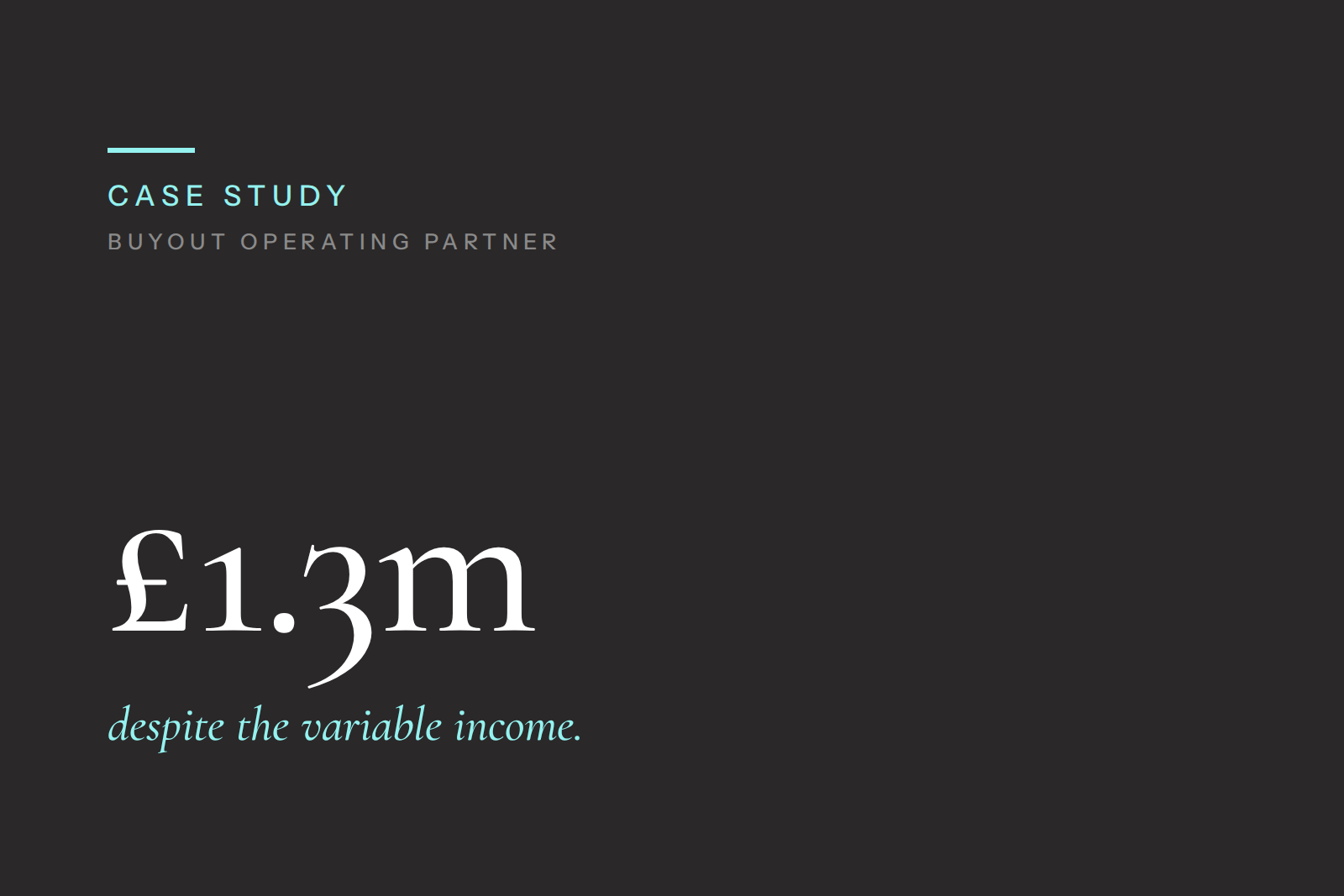
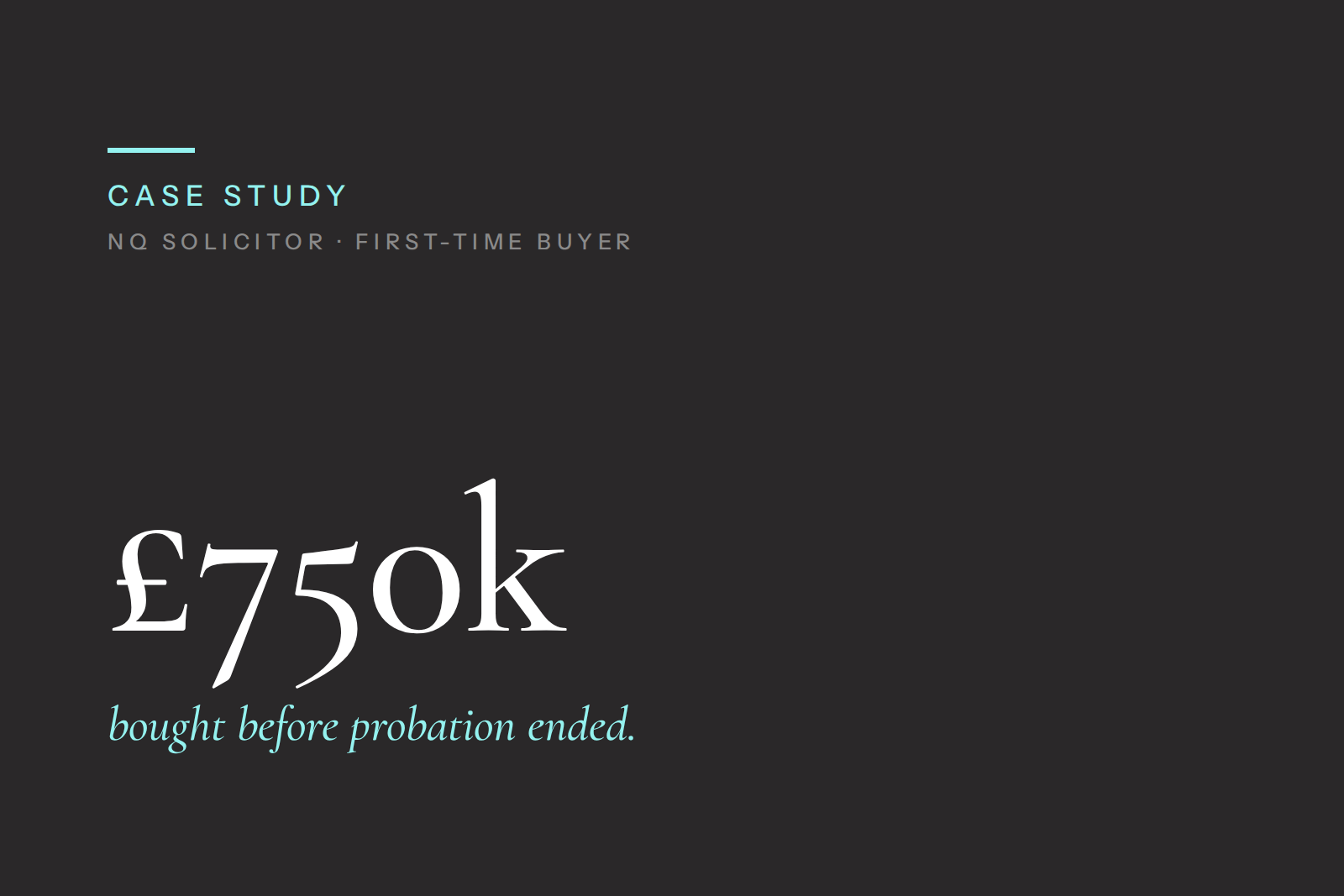
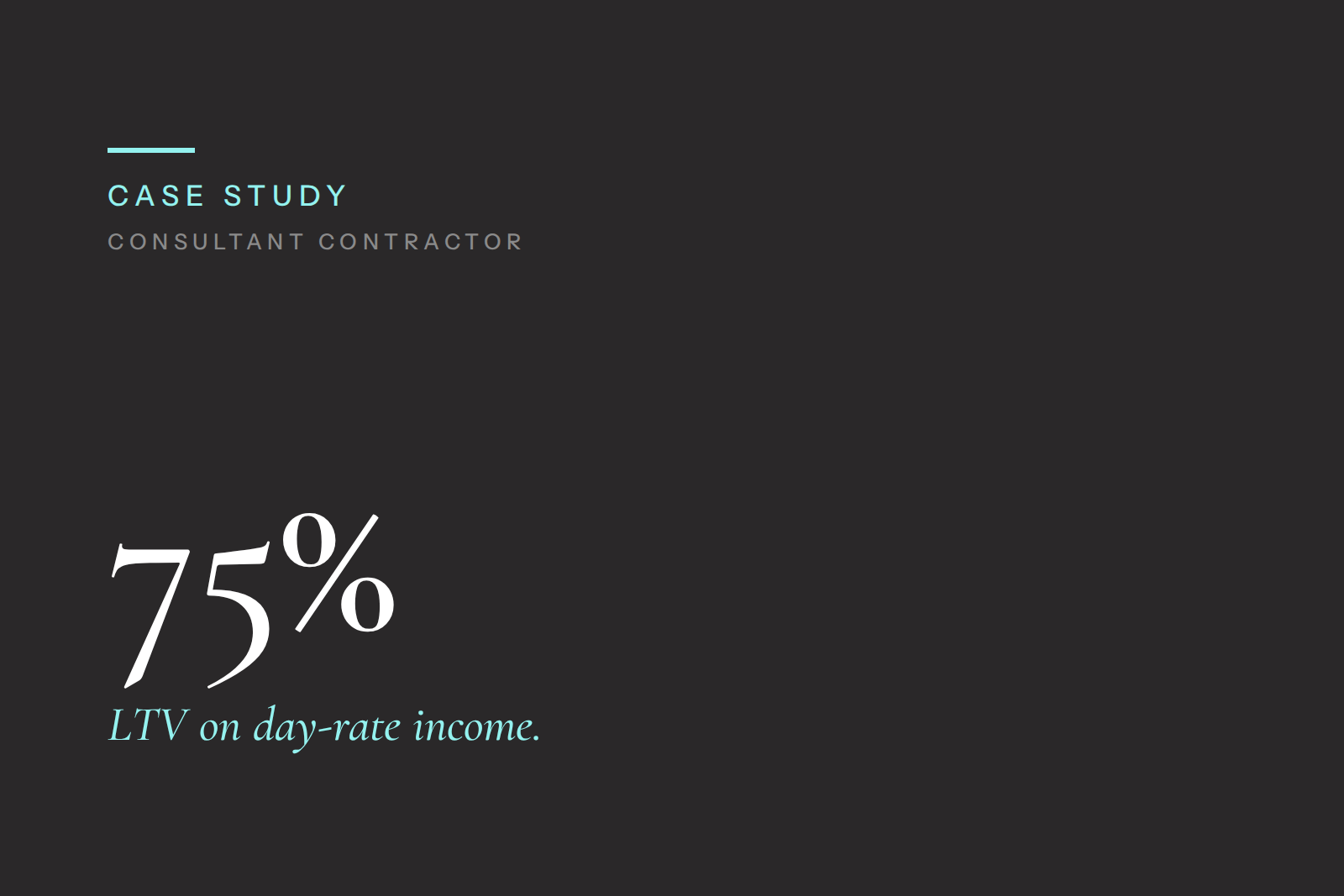
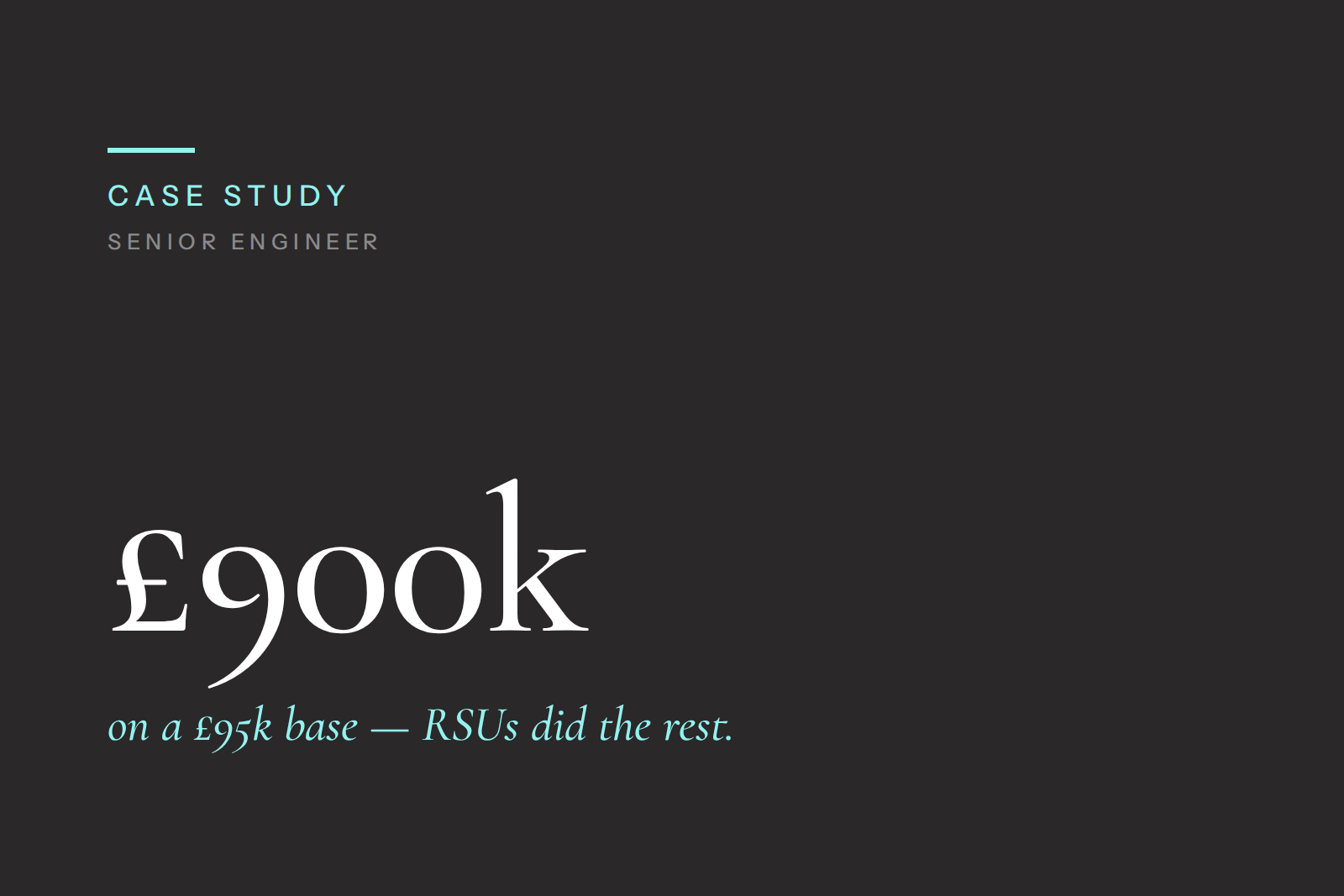
C A S E S T U D I E SHow we've helped clients with interest-only structures





















F A Q sFrequently Asked Questions
-
Yes. Several high street lenders, large-loan teams, and private banks offer residential interest-only or part interest-only mortgages. The criteria vary significantly — most require a minimum income (often £75,000+), a credible repayment strategy supported by evidence, and no mainstream lender currently allows IO involvement above 85% total LTV. The IO element itself is typically capped at 50–75% LTV, with any additional borrowing on repayment. It's not as widely available as repayment lending, but for the right profile it's very much achievable.
-
A part & part mortgage splits your borrowing into two tranches: one on interest-only and one on capital repayment. It's the most common interest-only structure for residential borrowers. The repayment portion reduces the balance over the term, while the interest-only portion keeps monthly payments lower. You then make lump-sum capital reductions on the IO tranche as cash allows — typically from bonuses, profit share, or other periodic income.
-
Not necessarily. Most lenders stress-test affordability on a capital-and-interest basis, even for IO applications. This means your maximum borrowing is often similar regardless of the repayment structure. What changes is your monthly payment — which can be significantly lower. Some lenders, particularly private banks, do stress-test the IO portion on an interest-only basis, which can increase borrowing capacity. It depends on the lender.
-
The main accepted strategies are: sale of the mortgaged property (with minimum equity thresholds), investments and savings (listed, liquid portfolios with recent statements), sale of another property you own, and — for part & part structures — staged capital reductions from variable income such as bonuses or profit share. Pensions can be used but lenders typically only credit 25% of the current fund value, so they rarely work as the sole plan. Each lender has its own list of approved vehicles, and the evidence requirements are specific.
-
It can be, though it's less common. First-time buyers typically have lower equity and fewer assets to evidence as a repayment vehicle, which makes qualifying harder. Where a first-time buyer has high income, strong savings, or a clear investment plan, some lenders will consider it — particularly on a part & part basis where the repayment element provides built-in capital reduction.
-
Yes, on the IO portion. Because you're not reducing the capital balance on the interest-only tranche, you pay interest on the full amount for the entire term. Over 25 years, this adds up. The trade-off is liquidity and flexibility — the cash you're not putting into monthly repayments can be deployed elsewhere (investments, school fees, business). Whether the trade-off is worthwhile depends on what you do with the freed-up cash and whether your repayment strategy is genuinely on track.
-
In most cases, yes. Switching from IO to repayment is usually straightforward — lenders prefer it because it reduces their risk. Switching from repayment to IO mid-term is harder and may require a full reassessment including a new repayment plan. If flexibility to switch is important, we'll ensure the product terms allow it.
-
Generally, yes — or at least more equity than you'd need for a standard repayment mortgage. No mainstream lender allows any IO element above 85% total LTV, and many cap total LTV at 75% where IO is involved. The IO element itself is typically limited to 50–75% of the property value, with the rest on repayment. At lower LTVs (60% and below), more lenders offer IO, the range of acceptable repayment plans broadens, and the requirements are generally less restrictive.
W H Y U S E A B R O K E RHow Kite Mortgages Structures Interest-Only for High Earners
We structure interest-only and part & part mortgages every week for lawyers, investment bankers, private equity professionals, hedge fund managers, traders, and senior tech leaders. We know which lenders offer the best IO terms at each LTV bracket, which accept sale of main residence versus investments versus staged reductions, and which stress-test on an IO basis rather than repayment.
We'll assess your income mix, equity position, and repayment timeline, then map those to the lenders whose IO policies fit best. We prepare the repayment plan documentation, position the application so underwriters see a clear and credible strategy, and handle the structuring so the monthly payment, term, and IO/repayment split all work together.