DIRECTOR AND MORTGAGE ADVISER
Specialist broker for high-earning professionals and complex income cases.
Request your fee free mortgage consultation today. No obligation, just sound advice.
Mortgages For Law Firm Partners
Eligibility: LLP partners often assessed as self-employed; criteria vary.
Income Method: Some lenders may average 2–3 years’ profit share.
Enhanced Affordability: Certain lenders recognise qualified professionals.
Documents: SA302s/tax calcs, partnership statements, drawings letters.
Structure: Part interest-only may be available with a credible plan.
Lender Type: High street or private bank depending on complexity.
Client Profile
Persona: City lawyer, LLP partner
Total Compensation: ~£420,000 (fluctuating profit share + drawings)
Assets/Liabilities: Active capital account; recent capital drawdown
Credit File: Limited UK credit history
Objective
Purchase a £2.1m family home in London with a 60% LTV mortgage (£1.26m), combining part interest-only with repayment, and securing long-term rate certainty.
The Challenge
Income Variability: Profit share fluctuates year-on-year.
Capital Account Movements: Recent drawdown needed clear context.
Thin Credit History: Minimal UK credit footprint due to career commitments.

Speak To An Expert Today
Whatever it is, the way you tell your story online can make all the difference.
Strategy And Lender Selection
Target Underwriters Comfortable With LLPs
We shortlisted lenders known to consider professional partners and who may average three years of profit share (or take a sensible view where one year is demonstrably anomalous).Evidence The Capital Account
We prepared a concise memo explaining capital contributions, recent drawdown purpose, expected replenishment, and liquidity across personal accounts. Supporting items included partnership schedules, drawings letters, SA302s/tax calculations, and bank statements.Optimise Affordability Presentation
We modelled affordability across multiple lenders, highlighting stable multi-year earnings, pipeline visibility, and conservative personal outgoings. Where appropriate, we included firm confirmation of the current year’s anticipated distribution.Structure: Part Interest-Only With Repayment Plan
We proposed a blended structure: a portion on interest-only (within policy) supported by an evidenced repayment strategy—annual profit distributions swept to a ring-fenced investment/savings account—alongside a capital-repayment tranche to reduce balance over time.
Note: Interest-only availability and accepted repayment vehicles vary; some lenders may require additional assets or minimum incomes.Product And Term Selection
We prioritised five-year fixed options for stability, with flexibility for overpayments and a pragmatic view on professional income.
The Outcome
Approval Secured: Underwriters accepted averaged profits and the documented capital account position.
Loan Agreed: £1.26m at 60% LTV, part interest-only / part repayment.
Pricing: Competitive five-year fixed aligned with market leaders at this loan size.
Process: Smooth valuation at agreed purchase price; legal and completion timelines held.
Why It Worked
Narrative + Numbers: Clear, consistent story across tax returns, partnership statements, and bank flows.
Professional Policy Alignment: Targeted lenders that may offer enhanced affordability for qualified professionals.
Risk-Appropriate Structure: Interest-only proportion matched to a credible, evidenced repayment plan.
What This Means For Law Firm Partners
If your income is driven by profit share, drawings, or variable distributions, a generic approach can undershoot your potential. The right lender—paired with the right evidence—may recognise the full picture and offer more flexible structuring than headline multiples suggest.
Request your fee free mortgage consultation today. No obligation, just sound advice.
Related Case Studies
Three advisers read her as self-employed: two years of £45 to 60k drawings, capacity under £270k. Her 22% post-round stake put her below some lenders' ownership line. Assessed as an employee on a £180,000 board-set salary, she borrowed £770,000 at 4.3x.
She expected the structuring she had seen partners need. Her pay was a £120k base and a cash bonus. Half the two-year bonus average counted, recognised income was £157,500, and a top-five clearing bank lent £680,000 at 85% LTV on its standard range at 4.3x.
Buy the townhouse, renovate for a year, then move and sell the flat. Base salaries supported £1.39m; the plan needed £1.725m across two loans. Full bonus recognition made it 4.2x, with a no-ERC tracker on one side and an offset catching the proceeds on the other.
His RSUs were worth £400k on paper and nil to a lender until the listing. The £1.1m purchase stood on a £210k base at roughly 5.2x, on a tracker with no early repayment charges. After the listing £300k went into the balance without penalty, and £800k was fixed at 55% LTV.
His private bank facility had done its job five years ago. At renewal it still asked for £500,000 of his assets to stay with the bank. Refinanced interest-only at 60% LTV with a clearing bank's large-loan team, at 4.4x recognised income, the condition ended.
Paid CHF 480,000 in Zurich, living in Twickenham, mid-fifties: three reasons most lenders hesitate. One high street lender counted the converted £428,500 in full and refinanced £730,000 over a 14-year term, with unlimited overpayments to finish early.
A Big Tech Principal Engineer whose base had sat at £200k for three years needed £1.3m for a £1.75m Sevenoaks home. A building society counted half of his latest twelve months of vested RSUs, recognised £290,000 of income and lent at roughly 4.5x.
Four months into partnership, paid entirely in USD, and needing £2.48m at 80% LTV. An international bank’s large-loan team worked from the firm’s own schedule, applied no currency haircut and recognised £550,000 of income, roughly 4.5x.
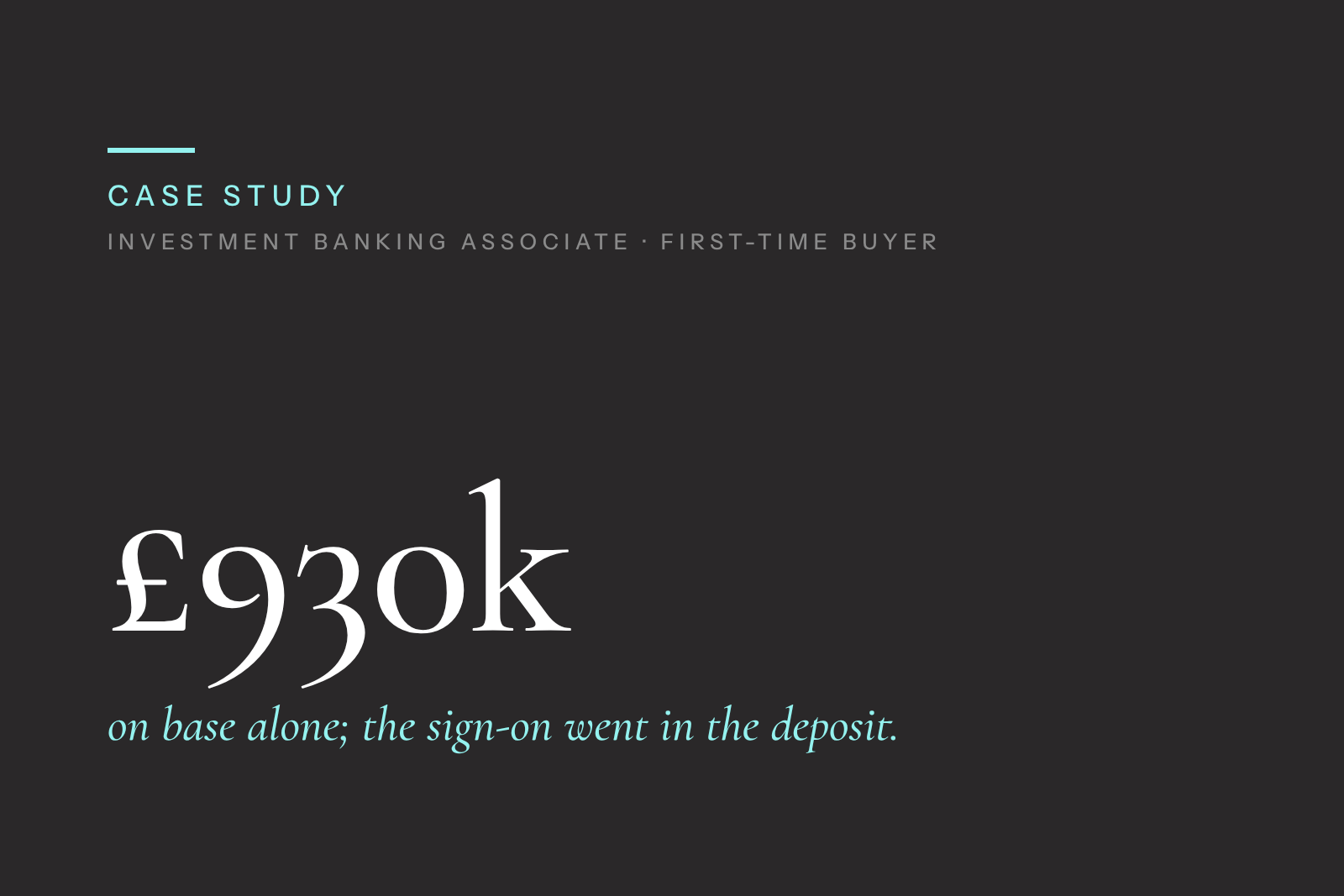
An M&A associate had just moved banks with a £60k sign-on and a £90k guaranteed bonus. Neither counted. Her first home, £930k on a £1.1m Earlsfield house at under 85% LTV, was placed at 6x her £155k base salary alone.
Standard bonus averaging supported £791,000; the buyout needed £1.24m. A clearing bank recognised £235,000 of income, the full latest bonus, and lent at roughly 5.3x, keeping her in the family home and her former partner’s share released in full.
Two solicitors on £242,000 of combined basic salary needed £1.45m for a £1.725m St Albans house. At 4.49x and 5.5x they fell short. A professional range at up to 6x lent the full amount at 84% LTV, once the deposit was resized to fit the band.
Half his deposit was a developer incentive and he had received one bonus. A high street lender accepted both — £157,500 of recognised income, £675,000 at 90% LTV, roughly 4.3x, with a new-build offer that flexes to the completion date.
A hedge fund portfolio manager on a £180k base, paid a fixed share of his book’s performance fees, needed £2.4m interest-only on a £3.25m home. A clearing bank’s large-loan team recognised £453,000 of income and lent at roughly 5.3x.
Told to wait two years for accounts, a software developer on a £575 day rate bought his first home instead. A high street contractor policy annualised the rate to £132,250 and lent £570,000 at 95% LTV, roughly 4.3x, with his renovation fund intact.
An equities trader on a £160k base and a £200k average annual bonus was ending a fix on an £850k mortgage against his £1.2m London home. A remortgage to a clearing-bank offset product recognised £260,000 of income at roughly 3.3x — and each bonus now works against the balance from the day it lands.
A hedge fund COO with half his bonus deferred needed to refinance £1.8m on a £2.5m home before his fix expired. A clearing bank counted the vested tranches paid through payroll, recognising £400,000 of income, and the remortgage completed at 4.5x.
An American VP on a Skilled Worker visa, 18 months into a London posting, needed £900,000 for a £1.2m house. A large international bank whose criteria let income override residency recognised £238,400 including his USD bonus; completed at 75% LTV.
A PE Partner refinancing £2.4m on a £3.2m home saw mainstream calculators read his carry as zero. A holistic underwrite credited a smoothed share of four years of distributions and the refinance completed interest-only at 4.8x recognised income.
A macro trader earning a £200k base with a bonus that swung between £180k and £420k needed £1.7m for a £2.3m family home. A clearing bank averaging three full years recognised £386,000 of income and agreed the loan interest-only at roughly 4.4x.
A hedge fund analyst on a £150k base needed £1.1m for a £1.4m home after his bonus fell to £120k from £270k. A lender applying 60% of a two-year average recognised £267,000 of income, and the loan completed at roughly 4.1x with the deposit unchanged.
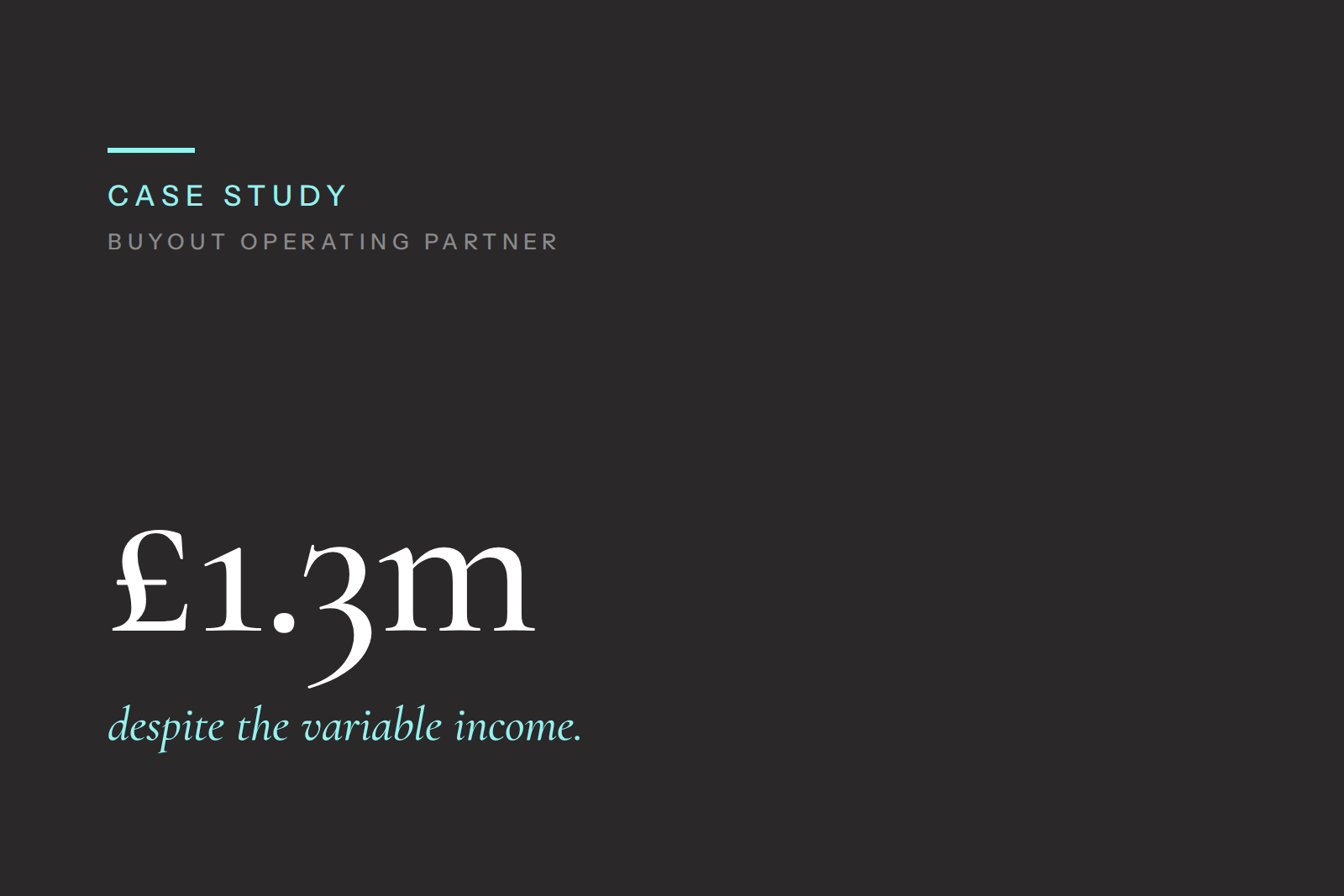
An operating partner at a mid-market buyout firm needed £1.3m on a £1.7m home, with income spread across fixed drawings, board fees and a volatile profit share. Built on the stable layers at roughly 4.4x, it completed on mainstream large-loan terms.
A mid-market PE director needed £1.6m for a £2.1m home; salary and bonus reached £1,425,000 at most. A private bank recognised three years of crystallised co-investment gains, taking recognised income to £375,000 and the loan to roughly 4.3x.
A sole director drawing £90k while his company retained its profit needed £1.2m of borrowing. A lender assessing salary plus share of net profit after corporation tax recognised £267,570 of income, and the loan completed at just under 4.5x with no change to his dividends.
An investment banking Director secured a £990k mortgage on a £1.1m London flat at 90% LTV using multi-year bonus income. This case study shows how bonus averaging supported borrowing while retaining funds for property works.
A private equity VP secured a £1.9m mortgage on a £2.4m family home using salary and bonus income. This case study shows how part interest-only structuring and a five-year product aligned borrowing with future carry payments.
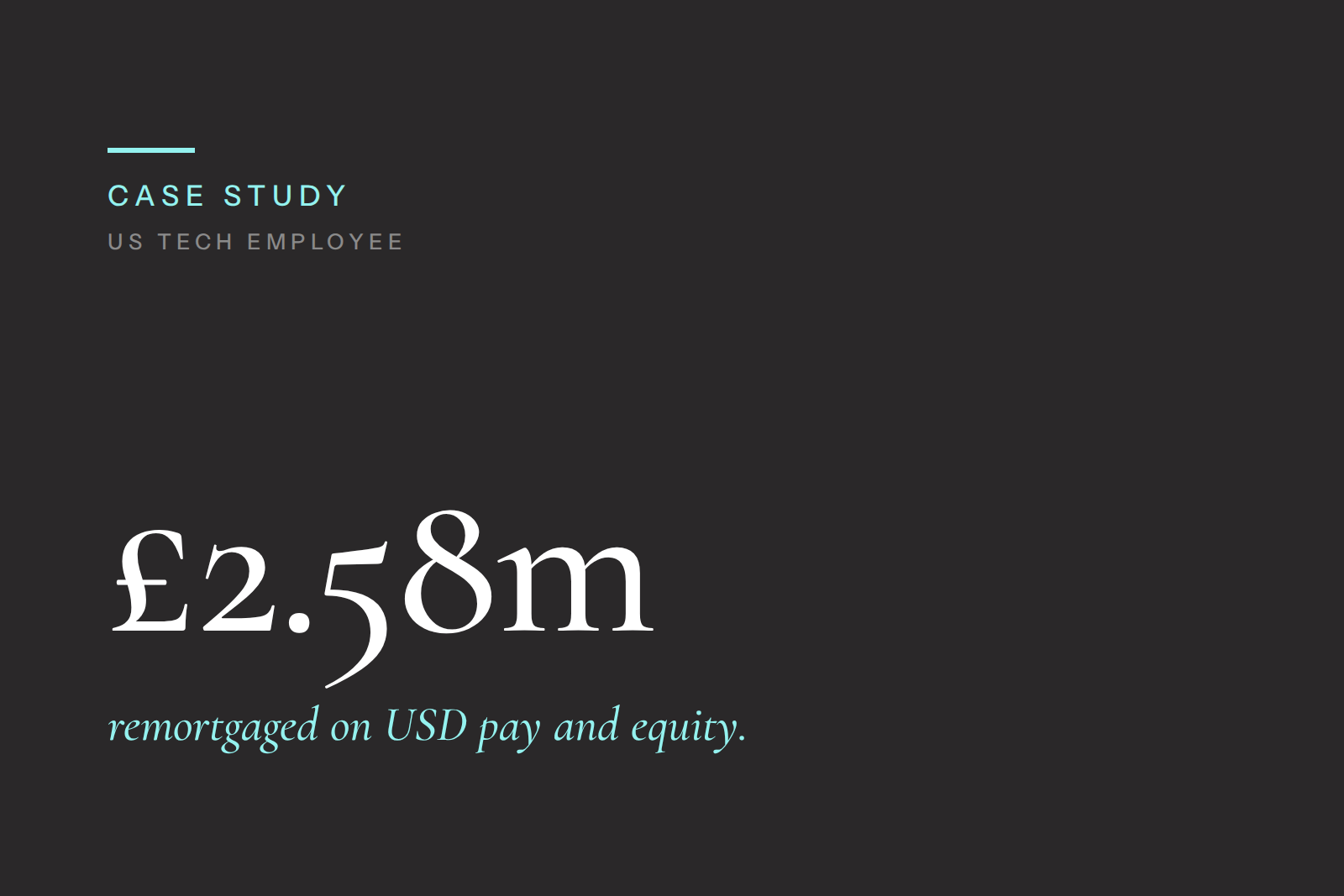
A UK-based employee of a US technology firm secured a £2.58m remortgage using USD salary, bonus, and RSUs. This case study explains how equity compensation and foreign currency income were assessed through a private banking solution.
An equity partner at a City law firm secured a £1.55m mortgage on a £1.85m family home using LLP income. This case study shows how part interest-only structuring supported affordability during a period of higher household costs.
A fixed-income trader secured a £1.5m mortgage on a £2.1m purchase using bonus-led income. This case study explains how lender selection and income structuring supported affordability despite restrictive bonus caps.
A senior finance professional returning from Singapore secured a £950k UK mortgage on a £1.45m London apartment using overseas USD income. This case study explains how foreign currency income was assessed ahead of UK relocation.
YOUR HOME MAY BE REPOSESSED IF YOU DON’T KEEP UP REPAYMENTS ON YOUR MORTGAGE
Kite Mortgages is a trading style of Kite Financial Ltd which is an appointed representative of The Openwork Partnership, a trading style of Openwork Limited which is authorised and regulated by the Financial Conduct Authority.
APPROVED BY THE OPENWORK PARTNERSHIP ON 24/09/2025