Doctor & Consultant Mortgages: Training Grades, Locum Income & NHS vs Private

DIRECTOR AND MORTGAGE ADVISER
Specialist broker for high-earning professionals and complex income cases.
Who This Guide Helps
Foundation doctors, registrars, SAS doctors and consultants with any mix of NHS salary, banding, PAs, on-calls, bank/agency locums, and private practice income (including limited company or LLP).
How Lenders View Training Grades & Contracts
Recognised grades: FY1–FY2, CT/ST, Registrar, SAS, Consultant.
What counts: basic pay plus regular, sustainable allowances (e.g., banding, on-call).
Variability: variable pay is often averaged or weighted.
What to provide: latest contract, three payslips, P60, and any rota/banding evidence.
Tip: A signed future contract (start date and salary) can help if you’re mid-rotation or moving to consultant level.
Request your fee free mortgage consultation today. No obligation, just sound advice.
Locum, Bank & Agency Income (Including Junior Doctors)
Evidence standard: expect 12 months of locum history. Some lenders will use the lower of YTD on your latest payslip or P60 to smooth spikes.
Day-rate contractors: a common approach is day rate × 5 × 46 weeks; gaps may be pro-rated.
Junior doctor flexibility: a few lenders may accept shorter histories for junior doctors.
Pack to bring: current/next contract(s), locum invoices or payslips, and 1–3 months’ bank statements showing credits.
NHS PAYE Versus Private Practice (Ltd/LLP)
NHS PAYE: typically 100% of basic salary plus a prudent portion of regular extras.
Private practice: assessed as self-employed.
Limited company: salary + dividends (supported by accounts/SA302s).
LLP/partnership: share of net profit.
Track record: two years is common; some lenders may use the latest year if the trend is clearly improving.
Make it easy: clean, timely accounts and an accountant’s letter reduce back-and-forth.
How We’ve Helped Clients Like You
These clients faced similar challenges - here’s how we helped them secure the right deal.

An American VP on a Skilled Worker visa, 18 months into a London posting, needed £900,000 for a £1.2m house. A large international bank whose criteria let income override residency recognised £238,400 including his USD bonus; completed at 75% LTV.
A PE Partner refinancing £2.4m on a £3.2m home saw mainstream calculators read his carry as zero. A holistic underwrite credited a smoothed share of four years of distributions and the refinance completed interest-only at 4.8x recognised income.
A macro trader earning a £200k base with a bonus that swung between £180k and £420k needed £1.7m for a £2.3m family home. A clearing bank averaging three full years recognised £386,000 of income and agreed the loan interest-only at roughly 4.4x.
A hedge fund analyst on a £150k base needed £1.1m for a £1.4m home after his bonus fell to £120k from £270k. A lender applying 60% of a two-year average recognised £267,000 of income, and the loan completed at roughly 4.1x with the deposit unchanged.
An operating partner at a mid-market buyout firm needed £1.3m on a £1.7m home, with income spread across fixed drawings, board fees and a volatile profit share. Built on the stable layers at roughly 4.4x, it completed on mainstream large-loan terms.
A mid-market PE director needed £1.6m for a £2.1m home; salary and bonus reached £1,425,000 at most. A private bank recognised three years of crystallised co-investment gains, taking recognised income to £375,000 and the loan to roughly 4.3x.
A sole director drawing £90k while his company retained its profit needed £1.2m of borrowing. A lender assessing salary plus share of net profit after corporation tax recognised £267,570 of income, and the loan completed at just under 4.5x with no change to his dividends.
An investment banking Director secured a £990k mortgage on a £1.1m London flat at 90% LTV using multi-year bonus income. This case study shows how bonus averaging supported borrowing while retaining funds for property works.
A private equity VP secured a £1.9m mortgage on a £2.4m family home using salary and bonus income. This case study shows how part interest-only structuring and a five-year product aligned borrowing with future carry payments.
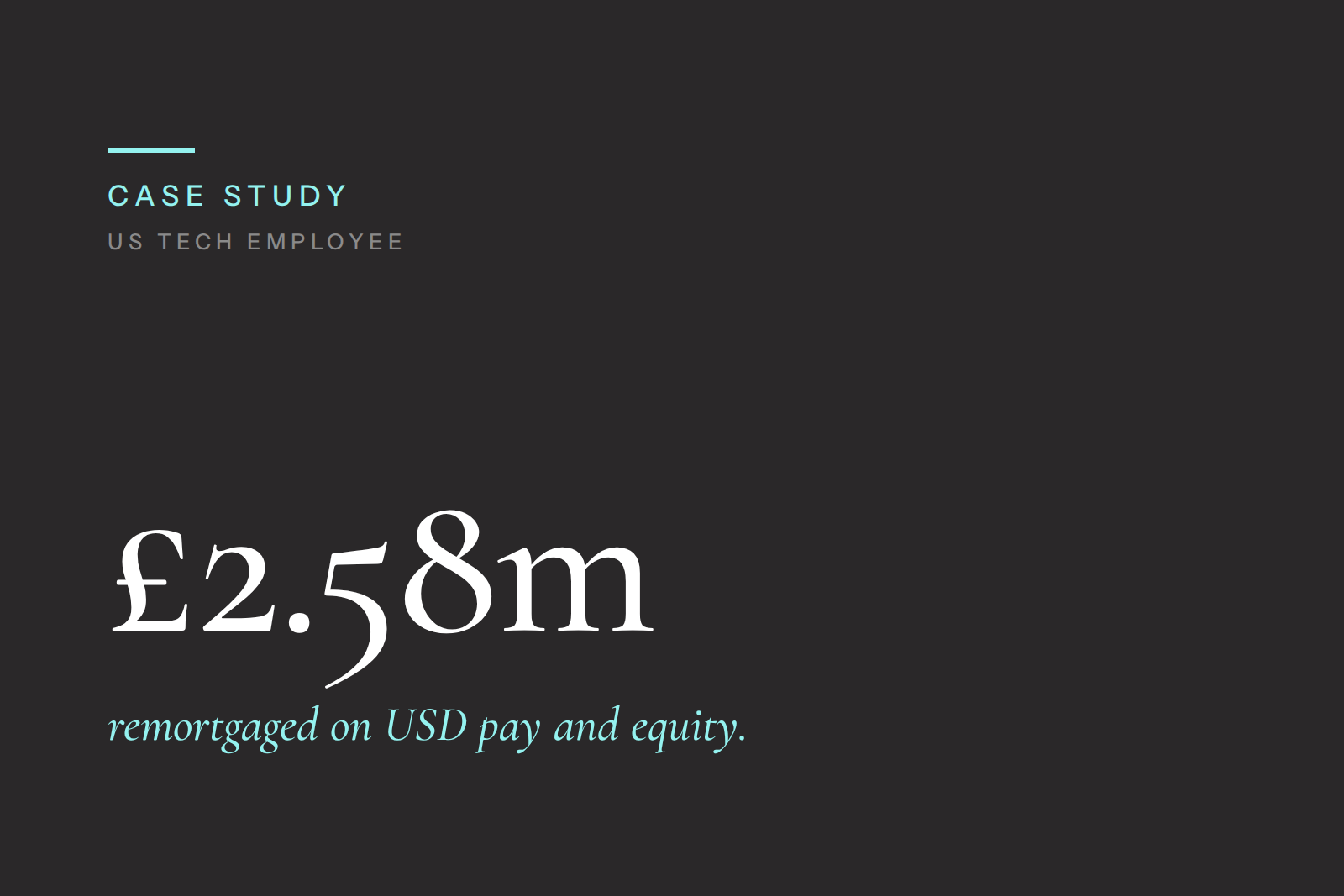
A UK-based employee of a US technology firm secured a £2.58m remortgage using USD salary, bonus, and RSUs. This case study explains how equity compensation and foreign currency income were assessed through a private banking solution.
An equity partner at a City law firm secured a £1.55m mortgage on a £1.85m family home using LLP income. This case study shows how part interest-only structuring supported affordability during a period of higher household costs.
A fixed-income trader secured a £1.5m mortgage on a £2.1m purchase using bonus-led income. This case study explains how lender selection and income structuring supported affordability despite restrictive bonus caps.
A senior finance professional returning from Singapore secured a £950k UK mortgage on a £1.45m London apartment using overseas USD income. This case study explains how foreign currency income was assessed ahead of UK relocation.
An established equity partner at a UK law firm secured a £2.25m family home using fixed drawings and partnership profit share. This case shows how lender selection and part interest-only structuring supported uneven income and long-term affordability.
HNW client, strong liquid assets but modest declared income, needed £3m for a £5m townhouse. We placed assets under management, built an asset-based underwrite and used an investment portfolio as the repayment plan—securing a bespoke interest-only facility at 60% LTV.
Newly qualified solicitor on £110k, buying a £750k flat while in probation. We targeted a lender that may accept a signed contract and start date, leveraged a strong deposit, and packaged the case cleanly—securing an offer before probation completed.
Locum consultant doctor with £140k mixed NHS/private income secured a £770k mortgage on a £1.2m home. We used 12–24 month averaging, full contract history and locum-friendly criteria to align with a mainstream lender—delivering a clean, timely approval.
Director–shareholder, £60k salary and £120k retained profits, needed £1m borrowing without ramping dividends. We targeted a lender that may use salary + share of net profit, evidenced sustainability, and explained a one-off expense—achieving approval at an effective 5× multiple.
Management consultant contractor on £650/day (PSC), two-month gap, and IR35 scrutiny. We used day-rate modelling, a credible gap narrative, and an accountant’s letter to align with mainstream policy—achieving approval at 75% LTV on a £1.1m home.
Returning British expat paid in USD, thin UK credit, and a 60-day deadline. We secured a lender that accepts foreign income with a haircut, used a US credit report, and ran a pre-arrival application—agreeing the mortgage at 65% LTV on a £1.6m home.
Skilled Worker and Spouse visa clients, £160k income, <18 months in the UK, needed a fast new-build purchase at £800k. We shortlisted a lender comfortable with shorter residency, secured a rapid AIP, perfected the AML trail—and achieved a full offer inside 10 working days.
A senior software engineer on £95k with quarterly RSU vesting bought a £900k house. By averaging 12–24 months of vested RSUs and packaging award letters, brokerage statements and payslips, we evidenced sustainable equity income—resulting in approval with a part interest-only structure.
An investment banking associate on £120k base with a USD bonus needed 75% LTV on a £1.25m flat. We used a two-year average bonus, applied a foreign currency haircut, and built a strong evidence pack—resulting in c.5.2× income and a successful offer.
A City lawyer and LLP partner with £420k variable profit share bought a £2.1m London family home at 60% LTV. We targeted a lender that may average three years’ profits, clarified the capital account, and structured part interest-only with an evidenced repayment plan.
With renewals and short gaps, this IT contractor needed day‑rate treatment. We evidenced continuity, explained the gaps, and matched them with a lender that assesses on day‑rate—securing borrowing aligned to realistic annualised earnings.
A newly qualified solicitor with limited employment history needed clarity and pace. We used her offer letter and first payslips, applied professional‑criteria know‑how, and packaged a clean, conservative case—helping a mainstream lender say yes without over‑promising.
Briefs, arrears, and variable fee sheets—this barrister’s earnings were anything but tidy. We evidenced sustainability and secured a suitable mortgage at pace—without over‑promising.
A senior partner had to choose between a private bank and a high‑street lender for £2m. The private bank’s full interest‑only structure won—keeping monthly payments steady and letting annual profit share reduce the balance without hassle.
A newly made‑up equity partner needed a high‑value mortgage against uneven drawings and profit share. We evidenced sustainability, clarified tax and capital contributions, and matched them with a lender that considers partner income—without overstretching.
An IT Sales Director and Teacher with two children needed £800k to upsize to a £1.2m home. We secured 5.5x income using 100% of bonuses and structured part of the loan on interest-only — keeping monthly payments affordable with a plan to reduce the balance using future bonuses.
How Much Can Doctors Borrow?
Start with affordability, not a multiple.
Professional ranges: some lenders may offer up to ~5.5× income for eligible profiles, subject to LTV caps and expenditure.
When to consider private banks: larger loans, multiple income streams, interest-only or bespoke structuring.
Foreign Currency & Overseas Income
If any income is paid in foreign currency, many lenders discount it before affordability. Accepted currencies and the size of the discount vary. Keep the core case affordable on sterling income where possible, and treat overseas income as supportive.
International Medical Graduates & Visa Holders
UK-resident foreign nationals are considered subject to status (settled/pre-settled or acceptable work visa), UK residency length, and a clear documentation trail.
Speak To An Expert Today
Get in touch for a fee free, no-obligation chat about how we might be able to help you.
Documents Checklist For Doctors
Passport/visa and recent UK address history
Employment contract(s), 3 payslips, P60
Locum: 12-month contract trail, invoices/payslips, matching bank statements
Private practice: 2 years’ accounts and SA302s, accountant letter
Any foreign currency income: proof of currency, source and credits
Typical Hurdles — And Practical Fixes
Short rotations or contract gaps: use a signed future contract and explain gaps briefly.
Spiky locum income: lean on YTD vs P60 or a day-rate method to stabilise the figure.
Multiple income streams: map each stream to the right evidence; choose lenders that credit regular variable pay.
Large loans/complex cases: consider professional ranges or a private bank for bespoke terms.
How Kite Mortgages Helps Medics
Whole‑of‑market access for first charge mortgages across high street, specialist and private banks
Profession‑aware structuring for paye, locum income and private practice
Tight packaging of documents to minimise queries and keep large‑loan underwriting moving
Request your fee free mortgage consultation today. No obligation, just sound advice.
FAQs
-
Yes. NHS PAYE with probation is typically acceptable. Some lenders are flexible on contract length for junior doctors.
-
Usually with 12 months’ evidence. Affordability may be based on YTD/P60 or a day-rate formula, with allowances for sensible gaps.
-
Sometimes. Enhanced multiples are selective and always affordability-led.
-
No. It’s assessed as self-employed. Clear accounts and SA302s are key.
-
Many lenders accept it but discount the amount. Policies differ by currency.
Related Articles

Run an interest-only mortgage on an offset facility and you stack two features: the low committed payment of interest-only, and the interest reduction of an offset. For City professionals holding large, fluctuating cash balances, that combination can mean a smaller monthly outgoing, less interest paid, and savings that stay within reach.
Two lenders can look at the same banker's P60 and reach borrowing figures hundreds of thousands of pounds apart. The difference is rarely the income. It is how each lender treats the bonus: how much of it counts, how it is averaged, and whether the deferred portion registers at all. Here is how the assessment varies across the panel.
Carry doesn't arrive in neat annual instalments. It lands deal by deal, clusters in realisation years, and goes quiet in between, and a mortgage model built for regular pay reads that shape badly. The question is rarely whether your carry is real. It's whether the pattern has been evidenced, and the application timed, so a lender can use it.
Operations and business-side pay at a hedge fund is often more legible to a lender than a portfolio manager's, yet the discretionary bonus and the deferred element still decide how much you can borrow. Here is how mainstream lenders read a non-front-office income, and where a specialist changes the outcome.
A quant's pay rarely looks like a payslip. A share of strategy profit, deferred awards split between cash and fund units, a base that is a fraction of the total, and a lender model built for salary. How much of that income actually counts, and why the same numbers can swing borrowing by a six-figure margin.
You earn well, so you will probably be fine. But "fine" can leave a lot of borrowing on the table. The same payslips can produce very different numbers depending on the lender, how your bonus is presented, and your deposit. These are the levers that actually move a lawyer's borrowing power, and when each one is worth pulling.
You pay yourself a modest salary and leave the profit in the company, which is tax-efficient and quietly makes you look like a low earner to a high street lender. The income is there. Whether a lender can see it depends on how it reads your accounts, and that varies more than most directors expect.
For hedge fund professionals, the variability of performance-linked pay isn't what limits mortgage borrowing — lender methodology is. The same P60 can produce borrowing figures that differ by over £500k depending on how each lender averages your bonus, caps it, and reads a down year.
Your co-investment is real money, but a mortgage lender may not see it. A capital call isn't a credit commitment, so it may not be on a credit search and you have no obligation to declare it. The work of a specialist broker is asking the questions a lender may not, and structuring borrowing so liquidity is there when calls land.
You earn well, so why does the mortgage offer capture a fraction of it? With hedge fund pay the problem is rarely the amount. It's that the right answer depends on which lender, applied for when, through which route. That's what structuring means, and why a generalist misses it.
As a PAYE associate you'll probably be fine, but "fine" understates it. Your base is taken at face value; your bonus is where lenders disagree, sometimes by hundreds of thousands of pounds of borrowing power. This is how associate income is actually assessed, and where the right lender choice changes the number.
Buying your first UK home after years overseas combines two profiles lenders rarely see together — first-time buyer and returning expat. Standard FTB rates and 95% LTVs are still on the table, but only at the right lender, and only if your credit, currency, and SDLT position have been read correctly before submission.
Your total compensation and your assessed income are rarely the same number. For City professionals, the gap between what you earn and what a lender will count — and at what percentage — is often the difference between the mortgage you want and the one you're offered.
Restricted Stock Units (RSUs) can significantly increase what you're able to borrow — but many mainstream lenders either exclude them or apply steep discounts. The lender you choose, and how your equity income is packaged, can sometimes make a difference of hundreds of thousands of pounds in borrowing power.
Loan sizes in seven figures need a different conversation. This guide covers how private banks and specialist lenders actually underwrite HNW cases — asset-based affordability, AUM, interest-only structuring, and complex income — plus how to know which route is right for your profile.
The rate on a professional mortgage is often identical to a standard deal. The difference shows up in how much you can borrow, how lenders treat variable income, and which structures they'll offer. That gap can be worth far more than a few basis points.
As an LLP partner you're treated as self-employed by every mainstream lender, even when your income is more reliable than most PAYE roles. Some lenders default to needing two years of tax calculations — others will lend on day one of partnership. The difference can be hundreds of thousands in borrowing power.
Mortgage affordability for markets professionals often extends beyond payslips and P60s. This article explains how lenders assess bonus-led and complex income, and why documentation alone rarely tells the full story.
Private equity income rarely fits standard mortgage models. This article explains why salary, bonus, and carry are treated differently by lenders and when specialist mortgage structuring is often required.
Foreign currency income often causes confusion when applying for a UK mortgage. This article separates common myths from reality and explains how lenders assess overseas income, currency risk, and affordability.
Bonus income plays a major role in mortgage affordability for investment bankers. This article explains how bonuses are typically calculated by lenders, why averaging and caps apply, and what factors influence borrowing capacity.
Equity compensation can complicate mortgage affordability. This article explains how RSUs are typically assessed, why some lenders exclude them, and what factors influence whether equity income is considered.
Becoming a partner doesn’t automatically make mortgages easier. This article explains how lenders assess newly promoted partners, what changes after promotion, and why income structure often matters more than job title.
Traders and structurers are often assessed conservatively for mortgages due to variable bonus income. This article explains why standard income models can fail to reflect front-office compensation and what typically drives lender affordability decisions.
Maximum borrowing isn’t always the best outcome for high earners. In this article, we explain why many professionals choose flexibility, cash-flow resilience, and future options over pushing affordability to its limit.
London prices stretch affordability. A JBSP (Joint Borrower, Sole Proprietor) lets family boost borrowing without going on the deeds. Learn who it suits, how lenders may assess it, risks for helpers, and clean exit strategies—plus alternatives like gift, JBSP+offset, or family springboard.
Bonus-heavy or RSU-led pay doesn’t have to derail your remortgage. Learn how lenders may treat variable pay and vesting equity, what typically counts, and the documents that help—plus a clean packaging strategy, worked example, and risk controls.
Multiple income streams? This guide shows how lenders may assess salary, bonus, RSUs and rental income together—what typically counts, common hurdles, and how to package your case so more of your genuine earnings may be considered, without overpromising.
Irregular income doesn’t have to mean uneven cashflow. See how offset mortgages can reduce interest, keep cash liquid for invoices and tax, and flex with day-rate or self-employed earnings—plus when lenders may consider it and how to set your accounts up for success.
Your deal is ending. Do you remortgage to a new lender or accept a product transfer with your current one? This guide compares pricing, fees, speed, affordability checks and extra borrowing—plus a simple decision framework and timeline so you choose with confidence.
YOUR HOME MAY BE REPOSESSED IF YOU DON’T KEEP UP REPAYMENTS ON YOUR MORTGAGE
Kite Mortgages is a trading style of Kite Financial Ltd which is an appointed representative of The Openwork Partnership, a trading style of Openwork Limited which is authorised and regulated by the Financial Conduct Authority.
APPROVED BY THE OPENWORK PARTNERSHIP ON 26/11/2025.