
U S D I N C O M E M O R T G A G E S
UK mortgage with USD income: how lenders treat US dollar earnings and what it means for your borrowing
If you're a lawyer at a US-headquartered firm, a banker at a US investment bank, or a tech leader at a US company — working in London but paid in dollars — your mortgage application is straightforward in principle but requires the right lender. We know which banks accept USD income, how each one converts and discounts it, and how to structure your application so you borrow the maximum your income supports.
Y O U R T E A MYou'll speak with a broker who structures USD income mortgage applications for City professionals every week

David Walsh
Director & Mortgage Broker
Founder of Kite Mortgages. Specialist in complex income structures for City professionals. Advises on mortgage strategy for high earners with partnership income, bonus-heavy pay, equity compensation, and foreign currency earnings.
View profile →
Simon Hart
Mortgage & Protection Adviser
Mortgage adviser at Kite Mortgages. Specialises in high-value purchases and remortgages for City professionals. Works with clients navigating complex income structures including variable pay, carried interest, and multi-currency earnings.
View profile →W H O T H I S A P P L I E S T OWho Earns in US Dollars in the UK — and Why It's So Common in the City
USD is by far the most common foreign currency we see among City professionals in London. It's not an edge case — it's a routine feature of how large US-headquartered firms pay their London employees.
The most common scenarios among our clients:
Lawyers at US-Headquartered Firms
Associates and partners at US law firms with London offices — firms with headquarters in New York but significant London operations — are typically paid in USD. Some firms use a cap-and-collar mechanism that sets a floor and ceiling on the GBP equivalent you receive each month, smoothing out exchange rate fluctuations. Others pay the straight dollar amount and let the rate move. Either way, your employment contract and payslips show USD, which is what lenders see.
See our dedicated guide for lawyers and law firm partners →
Investment Bankers at US Banks
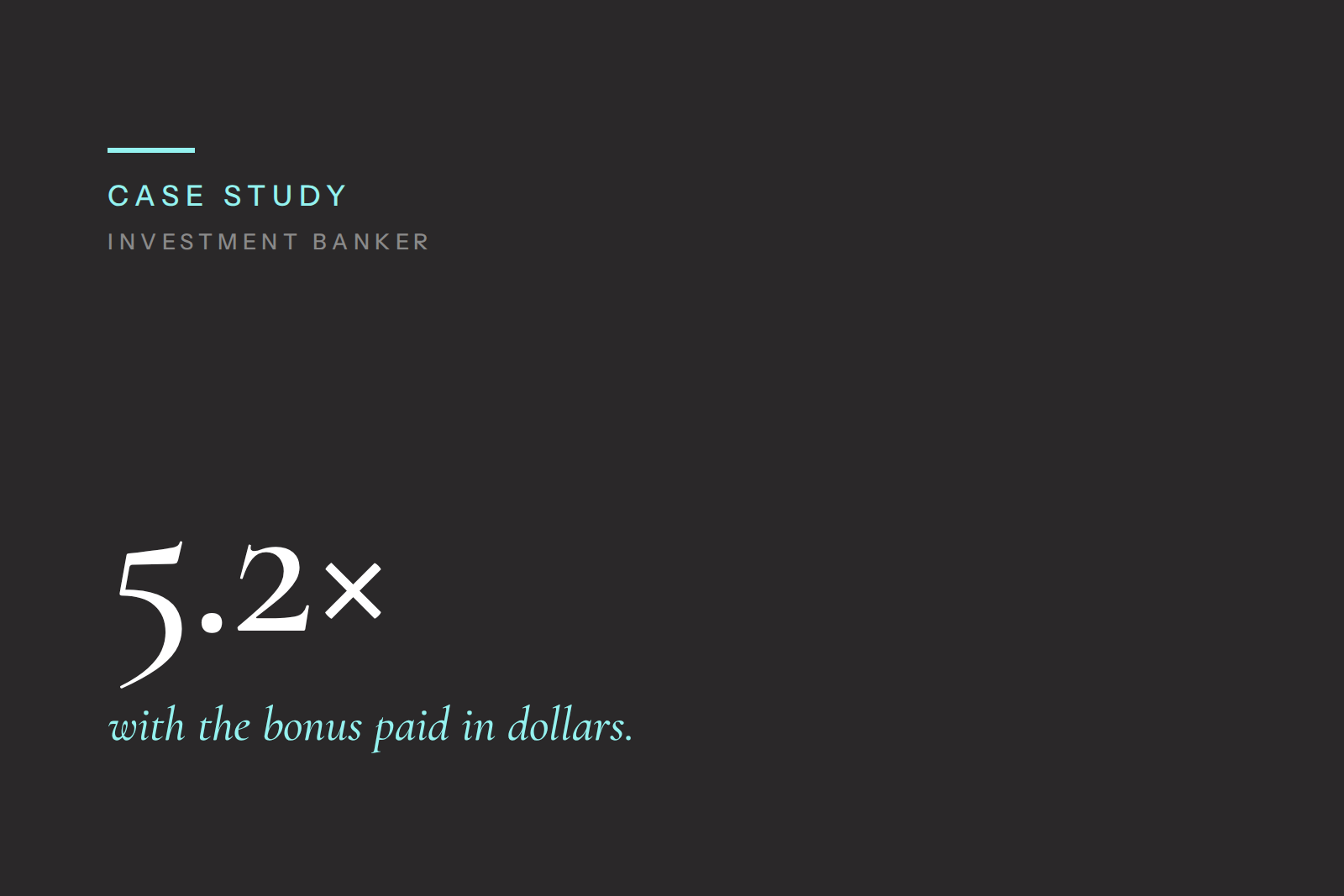
Professionals at US investment banks in London often receive part or all of their compensation in USD. Base salary may be denominated in sterling or dollars depending on the institution and the role, but bonuses — particularly discretionary bonuses — are frequently paid in USD. For mortgage purposes, this creates a dual-currency income: a GBP base with a USD bonus (or vice versa). The lender needs to assess each component separately, applying a currency haircut to the USD portion only.
See our dedicated guide for investment banking professionals →
Tech Professionals at US Companies
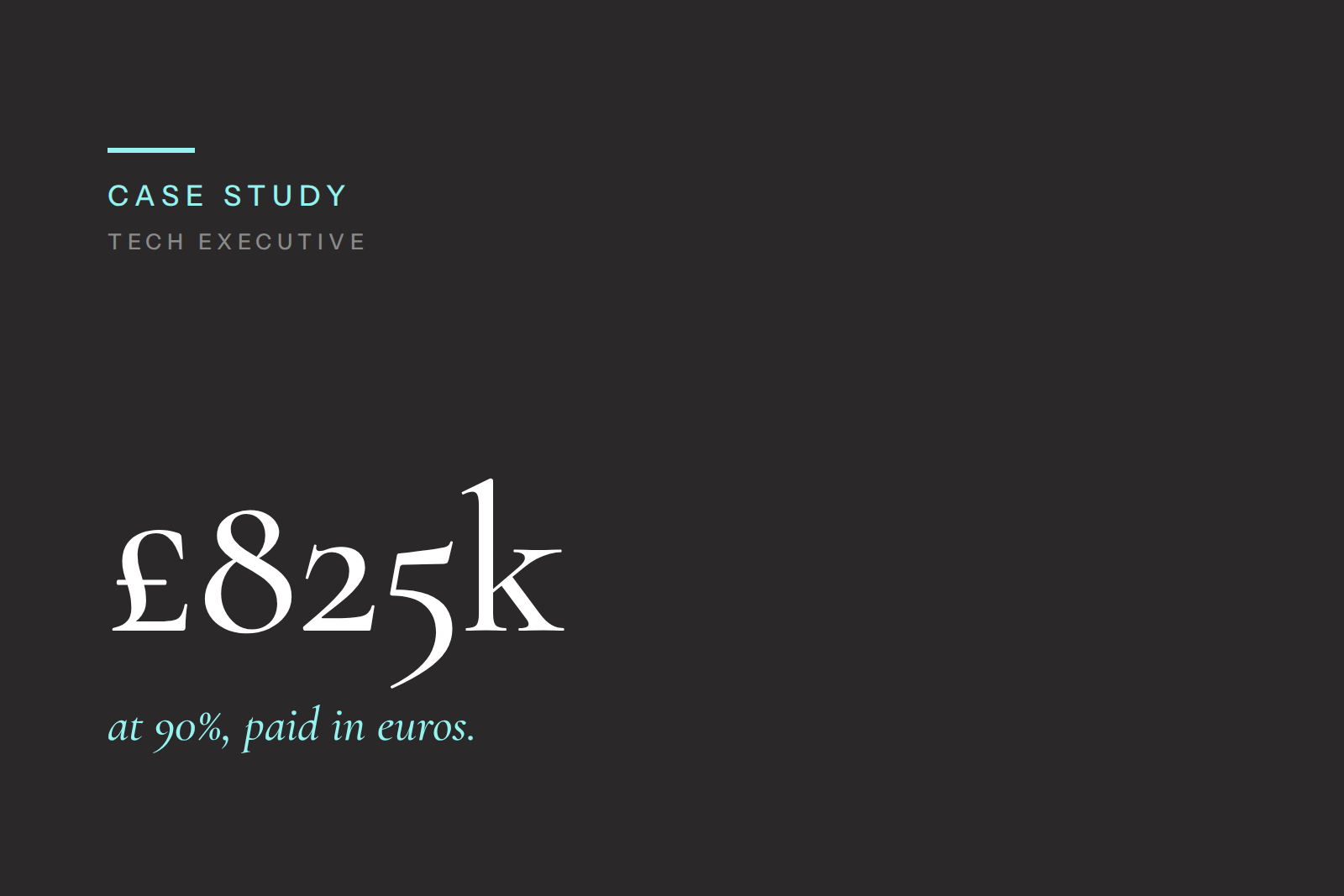
Software engineers, product managers, and senior leaders at US tech companies based in London often have multi-layered compensation: a USD base salary, a USD or GBP annual bonus, and RSUs (Restricted Stock Units) that vest in USD. The currency question sits on top of an already complex income structure. Lenders need to assess the USD salary, decide whether and how to count the RSUs, and convert everything to sterling — applying haircuts at each stage where relevant.
See our dedicated guide for senior tech and product leaders →
Private Equity, Hedge Fund, and Other Finance Professionals
Senior professionals at US-headquartered PE firms, hedge funds, and asset managers may receive base salary, bonuses, or carried interest distributions in USD. The complexity here is less about the currency itself and more about how variable and irregular the income components are. Currency is one layer on top of an income structure that already requires careful presentation to lenders.
C U R R E N C Y C O N V E R S I O N
How Lenders Convert USD to GBP — and Why the Haircut Matters
The process itself is simple. We take your USD income, convert it to GBP using a reference exchange rate (typically sourced from xe.com), notify the lender of the rate and the date, and then the lender applies their discount — or doesn't, depending on their policy.
That discount — known as a "haircut" — exists to protect the lender against currency fluctuation. If the dollar weakens against sterling over the life of the mortgage, your effective income in GBP terms drops. The haircut builds in a buffer.
The size of that buffer varies enormously between lenders, and for a USD earner, this is the single biggest variable in how much you can borrow.
What the Haircut Means in Practice
Take a USD salary of $300,000. At an illustrative exchange rate of $1.27 to £1, that converts to approximately £236,200 in GBP.
NatWest
Haircut: None
100% of converted USD income used. One of 17 accepted currencies. Exchange rate fixed at underwriting stage. Strong UK ties required; permanent overseas residents not accepted. The most favourable high street option for USD earners on pure borrowing power.
NatWest foreign income guide →
Halifax
Haircut: 20% salary / 10% bonus
USD is one of five accepted currencies (USD, EUR, AUD, INR, CHF). Exchange rate fixed at Decision in Principle stage — no movement risk after that point. Accepts employed, LLP partner, and contractor income in USD.
Halifax foreign income guide →
HSBC
Haircut: 10%–30%
USD typically at the lower end of the range. Extensive currency matrix covering hundreds of currencies. Minimum income £75,000 p.a. for overseas applicants. Exchange rate based on end of previous month. Can also lend to non-UK residents in approved countries.
HSBC foreign income guide →
Santander
Haircut: 25%
Flat 25% across all foreign income — the steepest of the four. USD is one of four accepted currencies (USD, EUR, CHF, AED). Employed income only — does not accept self-employed or LLP partner foreign income. Straightforward criteria but the most conservative conversion.
Santander foreign income guide →
The Four High Street Banks That Accept USD Income
Four mainstream UK banks routinely accept USD income. Each treats it differently.
Private Banks — When High Street Doesn't Work
If the high street haircuts reduce your borrowing below what you need, or if your income combines USD with other complex elements — USD base plus RSUs, USD salary plus carried interest — private banks assess income on a case-by-case basis rather than applying fixed haircut percentages.
Private banks are particularly relevant for USD earners when: you're borrowing above £1m and need a lender that evaluates income holistically; the haircut from a high street bank cuts too deeply into your borrowing capacity; or your USD income is combined with equity compensation, partnership drawings, or other non-standard components that high street criteria struggle with.
The trade-off is cost. Private bank rates are typically higher, and most have minimum loan requirements around £1m. For many of our USD-earning clients, the additional borrowing capacity more than offsets the rate premium.
See our guide to private bank mortgages →
Borrowing above £1m? See our large mortgage guide →
I N C O M E S T R U C T U R I N G
USD Plus Other Income: How Combined and Multi-Currency Scenarios Work
Most of our USD-earning clients don't have a single, clean dollar salary. Their income is layered — and lenders treat each layer separately.
USD Salary + GBP Bonus
This is common among investment bankers at US banks. Your base salary is denominated in USD; your annual discretionary bonus is paid in GBP (or occasionally also in USD). The lender assesses each component independently. The USD salary is converted and potentially discounted. The GBP bonus is assessed under the lender's standard bonus policy — typically 50% to 100% of a two-year average, depending on the lender. The two assessed figures are then combined for affordability. The currency haircut only applies to the USD component; it doesn't contaminate the sterling income.
USD Salary + RSUs Vesting in USD
This is the standard tech compensation pattern. Your base salary arrives in USD. Your RSUs vest according to a schedule — typically quarterly — and the shares are denominated in USD. Not all lenders will count RSUs at all, and those that do usually require evidence of a defined vesting schedule and at least one year of vesting history. The currency question applies twice: once to the base salary and once to the RSU income. For larger loan sizes, a private bank is often the most pragmatic route because they can assess base, bonus, and equity compensation together rather than applying separate exclusions to each component.
See our guide to RSUs, stock options, and equity compensation →
Dual-Currency Couples
If you're applying jointly and only one applicant earns in USD, the process is straightforward. Each income is assessed independently. The sterling income is treated as normal; the USD income is converted and discounted. The two figures are combined for affordability. The haircut only applies to the USD earner's income — it doesn't affect the co-applicant's GBP salary.
This can actually work in your favour. Some lenders that restrict foreign-currency-only applications are more flexible when there's a sterling-earning co-applicant providing a domestic income base.
Self-Employed USD Income
If you're self-employed and paid in USD but tax-resident in the UK, your income is converted to sterling for tax purposes on your SA302. This simplifies the lender's job — they see UK tax calculations showing income in GBP, and the standard self-employed assessment applies (typically a two-year average of net profit or share of partnership profit).
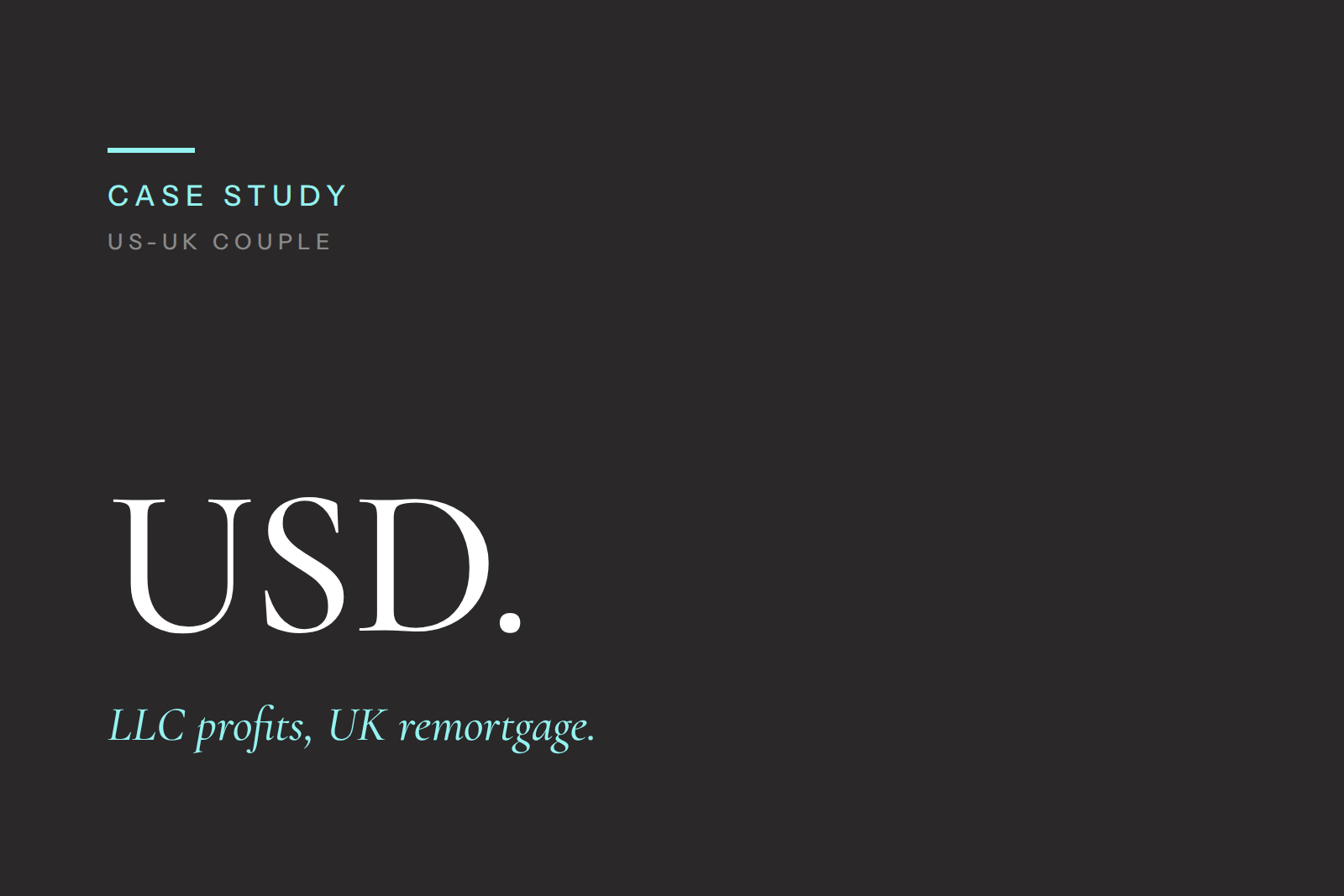
If you're self-employed and tax-resident overseas — running a US LLC, for example — lenders will want to see equivalent tax documents from the US, and may need them formally translated if they're not in English. Fewer lenders accept this structure, but it's not prohibitive.
For lawyers joining or returning to UK firms as partners, see our guide →
T H E P R O C E S S
What the Application Process Looks Like for USD Earners
If USD income is the only non-standard element of your application, the process is not materially different from a standard mortgage. Lenders that accept USD income offer standard terms — the same interest rates, the same product fees, and the same deposit requirements as sterling earners. You're not paying a premium for earning in a different currency.
The steps are: we convert your USD income to GBP using xe.com, notify the lender of the exchange rate and date, apply any haircut the lender requires, and use the resulting figure for the affordability assessment. From that point on, the application proceeds as normal.
Documents You'll Need
Standard document requirements apply — passport, proof of address, proof of deposit, bank statements. On top of these, the key USD-specific documents are:
Payslips showing the USD amounts. If you're employed, lenders generally need your last three months' payslips. These should show your salary in USD.
Cap-and-collar evidence. If your employer uses a cap-and-collar mechanism, evidence of the collar arrangement can help. Some lenders will use the floor of the collar as your guaranteed monthly income, which provides certainty in the assessment.
Bank statements for non-UK accounts. If your USD income is paid into a non-UK bank account, you'll need bank statements for that account. It doesn't need to be a UK bank.
Self-employed documentation. UK tax calculations (SA302) if you're UK tax-resident, or equivalent US tax documents if you're US tax-resident. US documents may need formal translation.
Employment Status Makes Less Difference Than You'd Think
For permanent employees paid in USD, the four high street banks we named only need one payslip as evidence. You could have been in the job for a month. Some will even use income up to three months before you start, based on your confirmed basic pay from the employment contract.
Variable pay — monthly commissions, quarterly bonuses, annual bonuses — is assessed under the lender's standard policy. They might use 50% or 100% of a two-year average, or they might use the latest figure. All of that is lender-specific, but the treatment is no different because the income is in USD. The conversion is just an additional step at the front of the process.
Contractors paid a day rate in USD follow the same pattern as sterling contractors: lenders that accept day-rate income annualise the rate and use it for affordability, with the currency conversion applied on top.
Remortgaging with USD Income
The same criteria apply whether you're purchasing or remortgaging. The same lenders accept USD income, the same haircuts apply, and the same documents are needed. The one consideration is timing: if you're remortgaging to a new lender, the exchange rate at the point of your new application determines how much income the lender will assess. If GBP/USD has moved significantly since your original mortgage, your borrowing power may be higher or lower than when you first applied — even if your dollar salary hasn't changed.
F U L L G U I D ELooking for Broader Foreign Currency Guidance?
This page covers the specific case of USD income. If you earn in euros, Swiss francs, or another currency — or if you want a detailed comparison of how all four high street banks treat foreign income — our comprehensive foreign currency income guide covers every scenario.
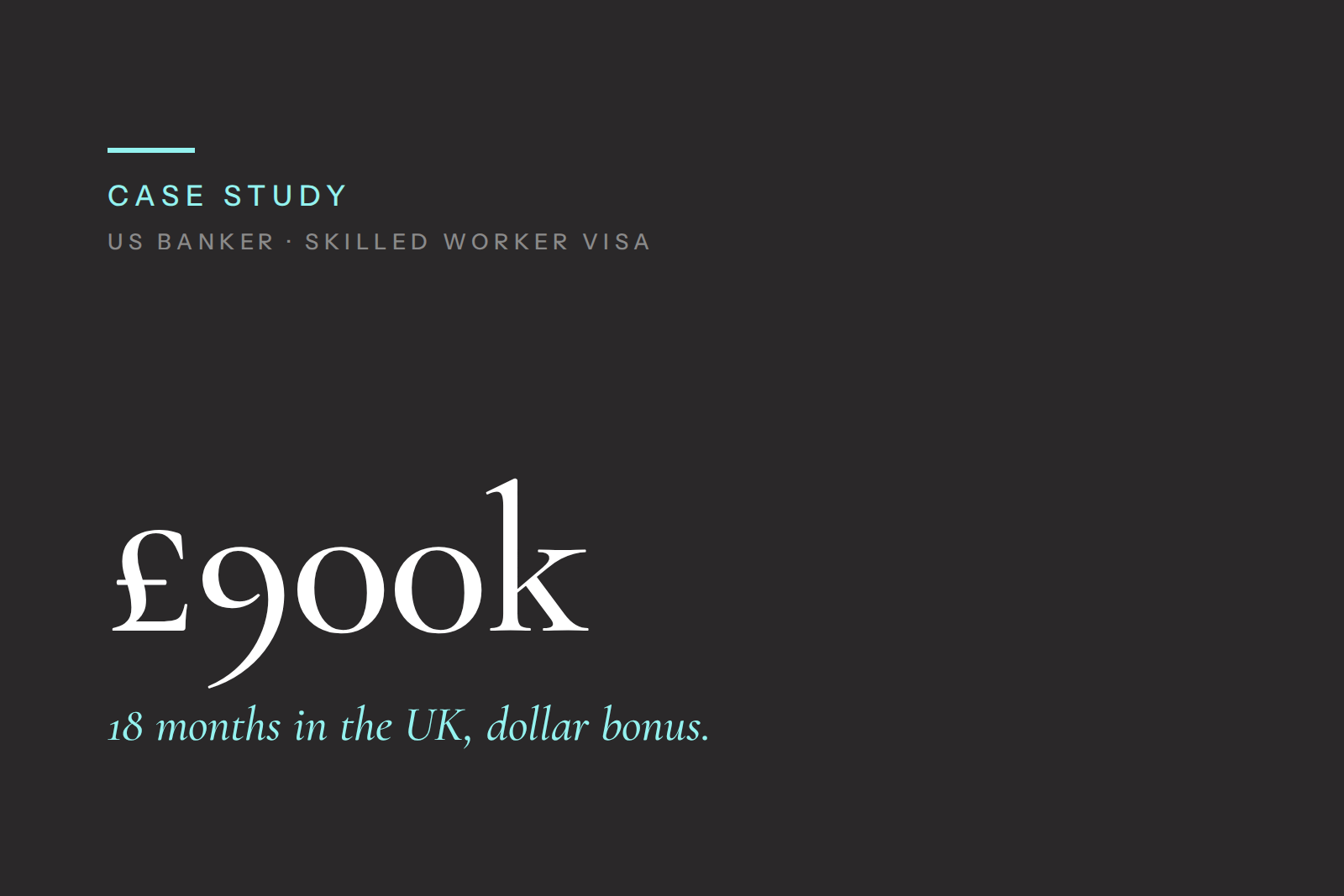
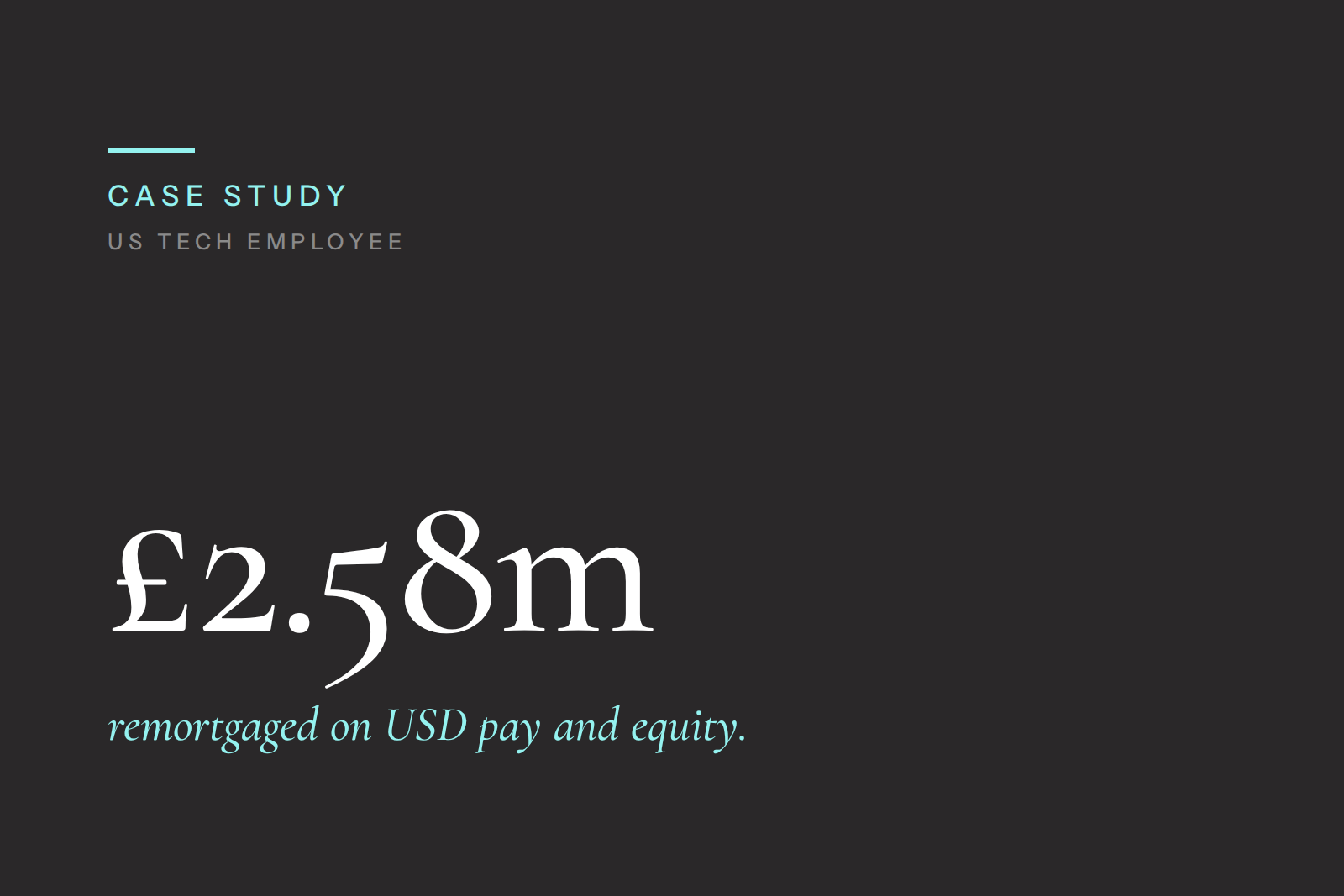
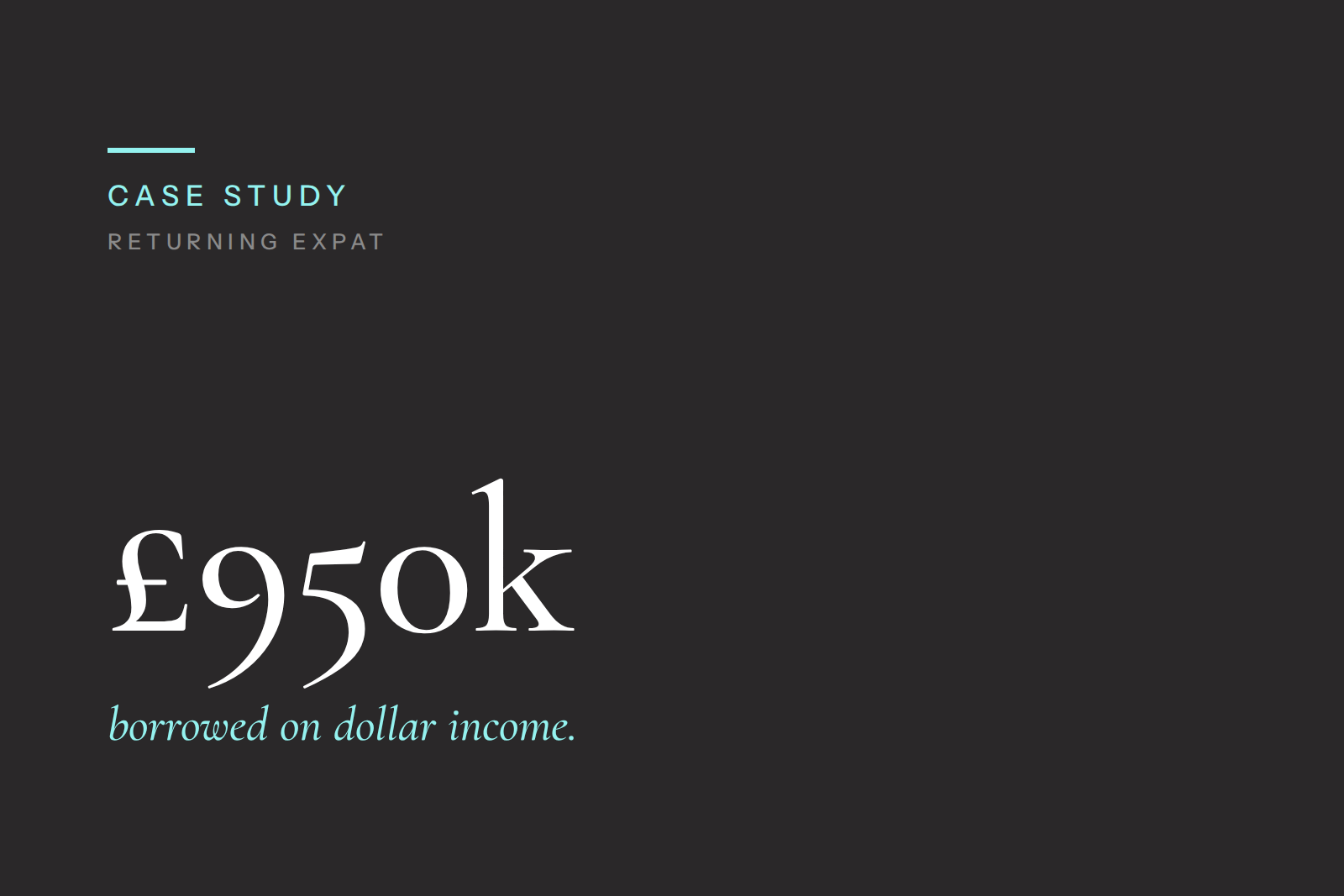
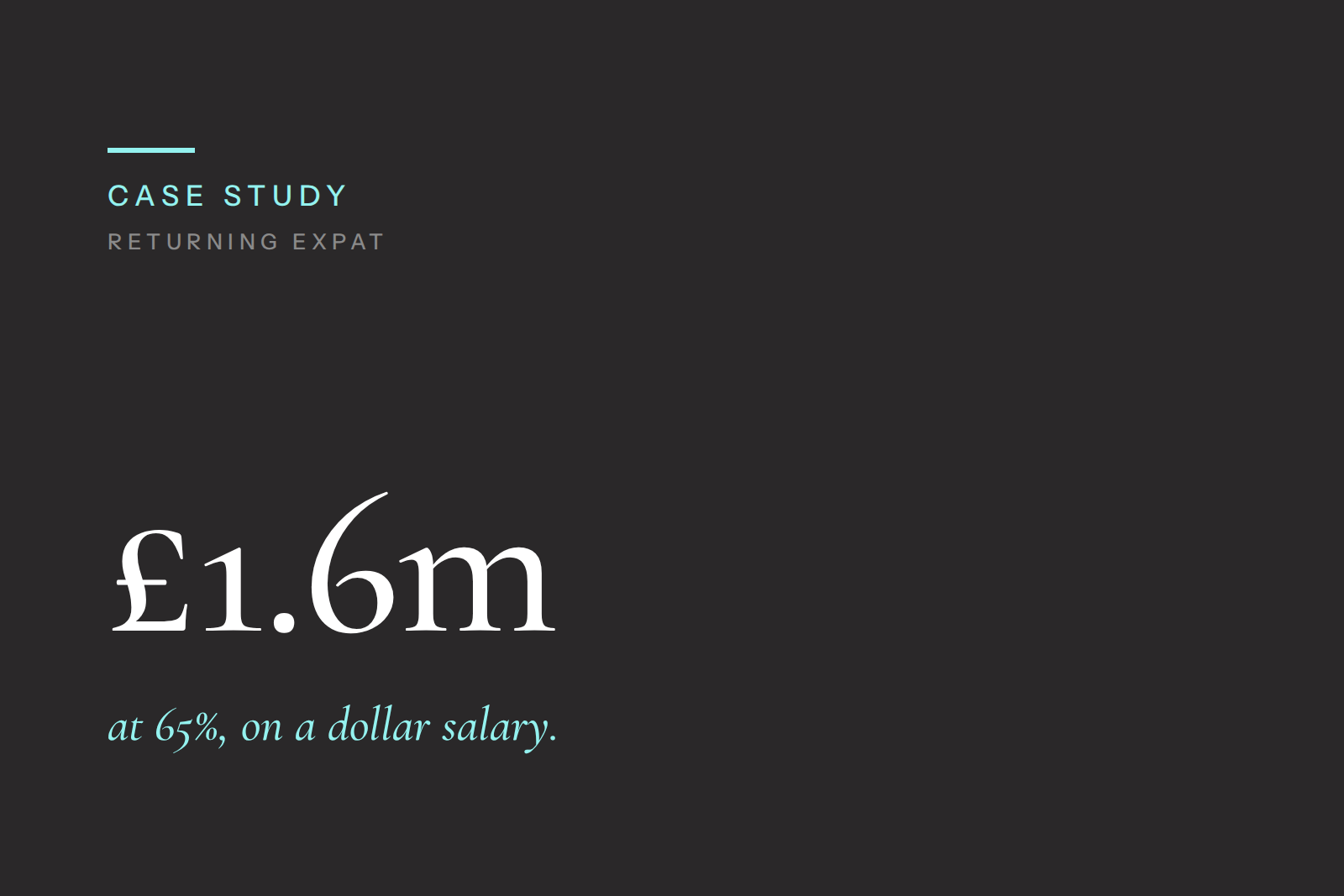
C A S E S T U D I E SHow we've helped clients with professionals with USD and foreign currency income

A R T I C L E SArticles on foreign currency income and USD mortgages



F A Q sFrequently Asked Questions
-
Yes. Four high street banks — NatWest, Halifax, HSBC, and Santander — routinely accept USD income for UK mortgage applications. Each converts your income to GBP and applies a discount (or in NatWest's case, no discount at all) to account for exchange rate risk. Beyond the high street, private banks also accept USD income with more flexible, case-by-case underwriting. If you're UK-based and employed, the process is largely standard — the currency conversion is an additional step, not a barrier.
-
It varies significantly. NatWest currently applies no haircut — they use 100% of your converted USD income. Halifax applies 20% on salary and 10% on bonus. HSBC applies 10% to 30% depending on the currency. Santander applies a flat 25%. The difference in assessed income directly affects how much you can borrow, which is why lender selection is critical for USD earners. See our lender-by-lender comparison →
-
No. If you're UK-resident and the only non-standard element is your currency, the four high street banks offer standard terms — the same rates and product fees as sterling earners. You're not paying a premium. If you need to go to a private bank because of loan size or income complexity, rates are typically higher — but that's a function of the private banking route, not the currency.
-
Yes, provided the lender accepts both USD income and bonus income. Most will use 50% to 100% of a two-year bonus average, depending on their policy. The currency haircut applies to the bonus amount just as it does to salary. If your bonus is paid in USD and your base is in GBP (or vice versa), the lender assesses each component separately — converting and discounting only the USD portion.
-
This is common among tech professionals at US companies. Not all lenders count RSUs, and those that do typically require a defined vesting schedule and at least one year of vesting history. For the USD salary component, standard conversion and haircut rules apply. For RSUs, you'll likely need a private bank if the equity compensation is a significant part of your total package — high street lenders either exclude RSUs entirely or apply severe limitations. See our guide to RSUs, stock options, and equity compensation →
-
No. If you're UK-resident, standard deposit requirements apply regardless of your income currency. A 5% deposit opens up lending to around £250,000. A 10% deposit extends that significantly. For loans above £1m, most lenders require at least 15%. Your deposit can be held in a USD account — lenders just need to see a clear paper trail showing the source of funds.
W H Y U S E A B R O K E RHow Kite Mortgages Helps USD Earners
We model your affordability across all four high street banks — and private banks where relevant — before we approach any lender. We'll tell you which bank gives you the highest assessed income after their haircut is applied, which one is realistic given your employment status and income structure, and what you can expect to borrow. If your income combines USD with bonuses, RSUs, or partnership drawings, we know how to layer those components so the lender sees a complete, clean picture from day one.
First calls are free and without obligation. We'll give you indicative figures the same day.